PFAS in soil
Choose a balanced and proportionate approach
PFAS in soil
PFAS is turning up everywhere. In case files, in permits, in meetings where no one is quite sure anymore what 'safe' or 'acceptable' means. The result? Projects slow down, budgets spiral. And in the meantime, standards, insights and expectations keep shifting.
In this uncertain context, Witteveen+Bos helps clients translate PFAS into clear, defensible project decisions. Always guided by one principle: remediate effectively to a level that is both necessary and achievable. What does that mean for your project?
Our approach
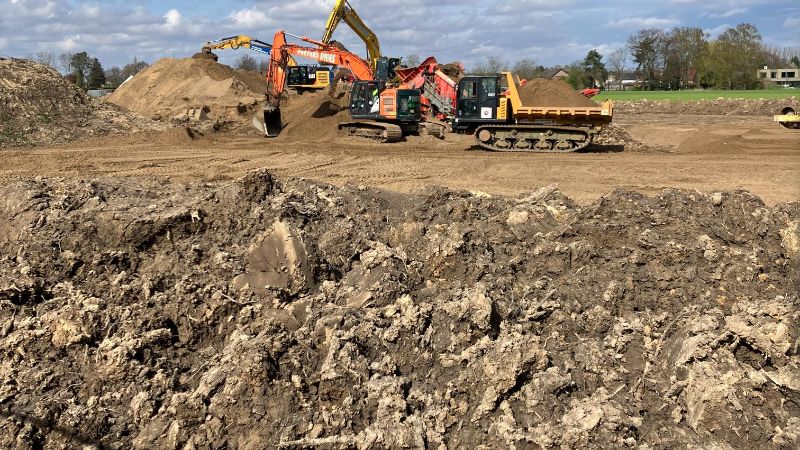
Witteveen+Bos works on PFAS across all types of soil investigations: exploratory, orienting and descriptive investigations, as well as remediation and soil movement. We also contribute to large-scale PFAS studies. In these studies, we examine how PFAS behaves and develop new remediation techniques.
An internal research team closely monitors policy, science, methods, tools and solutions. This helps us refine our approach and respond quickly to new insights.
At the heart of our PFAS vision is a social cost-benefit analysis. To what level does remediation make sense for society? Which benefits justify which costs? Which side effects affect the surrounding environment?
Our position is clear: aim for a balanced and proportionate approach. One that removes contaminants effectively, up to a level that is necessary and feasible.
For the remediation of groundwater, wastewater and dewatering water, we stay closely involved in the latest developments. Witteveen+Bos pioneers scientific research and, in close cooperation with our clients, searches for practical, tailor-made treatment solutions.
Is your project stuck because of PFAS uncertainty? Let’s clarify it together.
PFAS is everywhere. Remediation is complex.
In 2021, VITO showed that PFAS is widespread in Flanders. Fifty samples from the top layer of unimpacted Flemish soils, at a depth of 0–20 cm, were analysed. This resulted in an anthropogenic background value of 1.5 µg/kg dry matter for PFOS and 1.0 µg/kg dry matter for PFOA.
In plain English: this is the “normal” level found in soil, purely as a result of human activity. If concentrations exceed this level, that points to additional contamination from a specific source.
In 2024, Witteveen+Bos and Arcadis jointly carried out a new study on PFAS in soil and groundwater, commissioned by OVAM. The study confirmed the previous findings for soil, but the conclusions regarding groundwater were more alarming. Especially given the stricter standards now applying to surface water.
'Science is moving forward. Rules are becoming stricter. Uncertainty is growing among companies, public authorities and developers.'
Why projects often reach a standstill today
The core issue? No one currently knows the full extent of PFAS risks to people and the environment. New studies continuously reshape our understanding of toxicity, dispersion and behaviour. This scientific uncertainty combined with media attention and public concern pushes policy towards ever stricter standards and regulations.
Additional challenges? PFAS originates from multiple sources that often intermingle. Causes are rarely traceable in isolation. That makes PFAS not only an environmental issue, but also a policy minefield. For soil, there are currently no fixed standards only guideline assessment values for investigation and remediation. The focus lies mainly on clear hotspots (e.g. former firefighting training sites) and diffuse contamination affecting soil movement.
PFAS remediation is also technically demanding. Many PFAS compounds degrade poorly and leach easily into groundwater, enabling rapid spread. Excavation and treatment are costly as is the complex remediation of PFAS in groundwater, wastewater and dewatering effluent.
Finally, ultra-short-chain PFAS compounds are barely on the radar. Yet they pose an additional challenge due to higher concentrations and difficult treatment.
.jfif.jpg)
More information?