Quickscan soil care
Unlocking the soil as the silent force beneath every project
Quickscan soil care
How Witteveen+Bos uses soil as a lever for sustainability and long-term resilience
Beneath our feet lies a living system we rarely see and make even less use of: the soil. When we seal or develop land, we close off that system. The soil remains, but it loses much of its natural functions: infiltrating, buffering, nourishing and regenerating. And that is precisely where problems often arise.
Witteveen+Bos helps clients give soil a voice early in the project. Not as a brake on development, but as an accelerator of quality, sustainability and long-term value.
'Curious how soil can strengthen your project? Contact us for a Quickscan Soil Care.'
Soil is a foundation
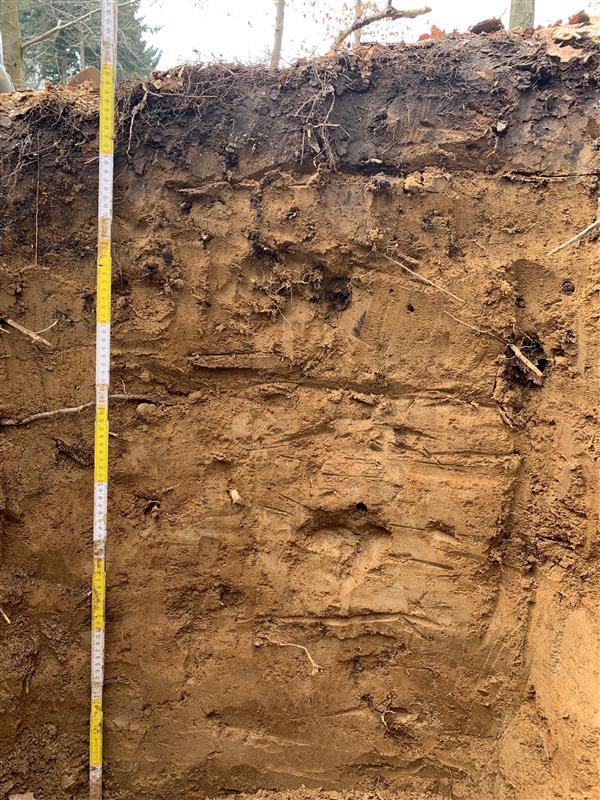
Healthy soil forms at a rate of barely 1 to 1.5 cm per 100 years. A one-metre soil layer therefore takes thousands of years to develop. Soil is virtually non-renewable, yet at the same time a crucial resource.
It forms the basis of every food chain, drives plant growth and buffers water and nutrients. Soil can also retain harmful substances, helping to limit their spread, although this requires careful management.
In other words: whoever degrades the soil quite literally undermines the resilience of their project.
Soil delivers what you would otherwise have to build at a cost
A well-functioning soil provides ecosystem services – free of charge.
Think of water buffering and infiltration, the storage and release of nutrients, and climate resilience during droughts and peak rainfall.
Degraded soils do the opposite: they drain water too quickly, dry out, lose fertility and demand ever more maintenance and intervention.
Major gains on construction sites
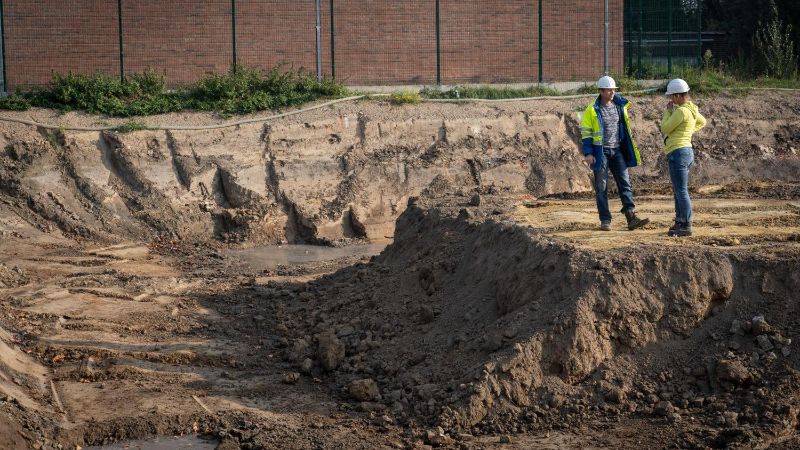
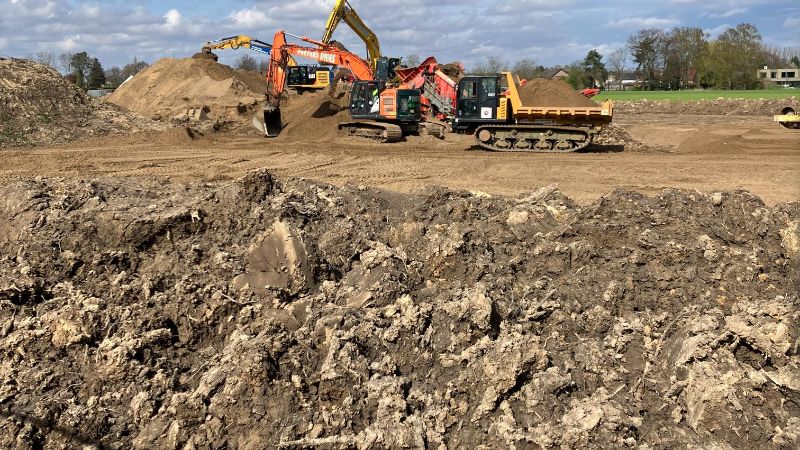
Soil care may sound like something for nature reserves. It is not. Construction sites offer significant opportunities. Besides the soil you build over, you often impact the surrounding soil as well: through heavy machinery, temporary storage, compaction and poor site organisation. On every site, not only the sealed area is disturbed. The surrounding soil also suffers from heavy equipment, temporary stockpiling, compaction and inadequate organisation.
Yet simple measures such as smart phasing, fixed traffic routes, clear demarcation and well-designed storage zones keep that soil intact. More importantly, soil that is treated with care during construction can recover through regenerative use.
This reduces costs, limits risks and improves the project’s sustainability score. And it preserves a particularly scarce resource.
Listening early pays off for people and budgets
The earlier soil is considered, the greater the impact:
- improved water management without additional buffers;
- stronger, healthier vegetation;
- less plant failure and lower maintenance;
- lower long-term failure costs;
- greater resilience to climate change.
All of this translates directly into lower life-cycle costs.
Our approach: soil as a design partner
Witteveen+Bos does not see soil as something to work around, but as a partner that actively shapes design and construction.
We link soil expertise with urban and landscape design, water management, planting strategies, site organisation, sustainability assessments and permitting processes. That makes soil care practical, feasible and project-driven.
Our Quickscan Soil Care quickly provides insight into:
- soil quality and vulnerability;
- risks associated with planned interventions;
- opportunities for water management, green infrastructure and climate adaptation;
- simple measures with major impact.
Those who work with the soil today deliver projects tomorrow that last longer, perform better and cost less. Witteveen+Bos helps you take that step. Contact us for the Quickscan Soil Care.
More information?