Lobroek Dock remediation
Conventional parameters
Lobroek Dock remediation
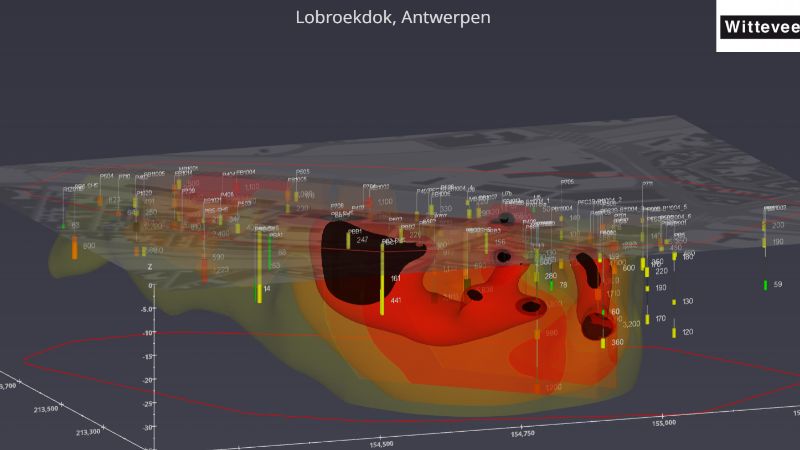
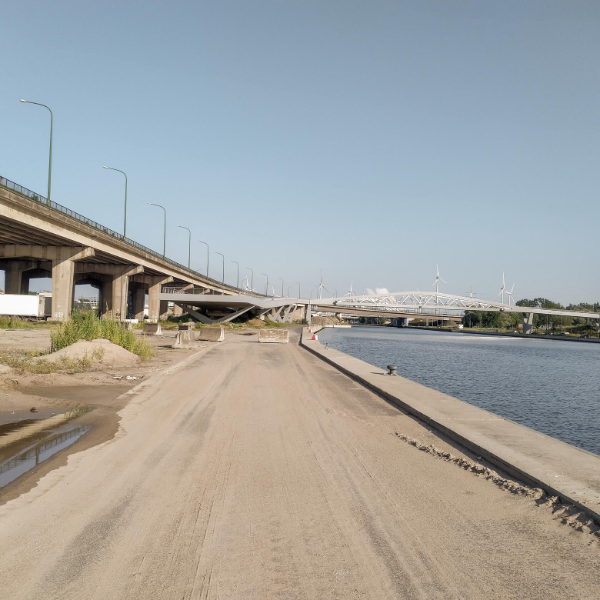
During the construction of the Oosterweel Link, part of the Lobroek Dock was occupied by road infrastructure. As a potential spreading risk (impact on the Albert Canal) could not be excluded, a soil remediation of the mixed contamination in the sediment was carried out. The contamination consisted of mineral oil, heavy metals and polycyclic aromatic hydrocarbons (PAHs).
This remediation was supervised by Witteveen+Bos.
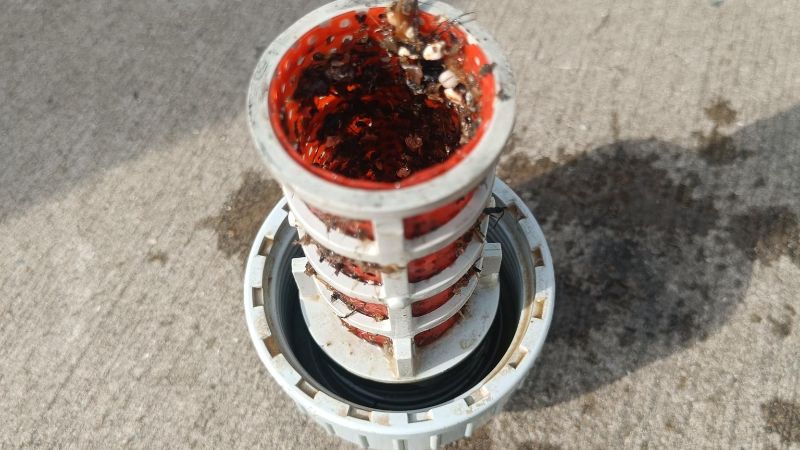
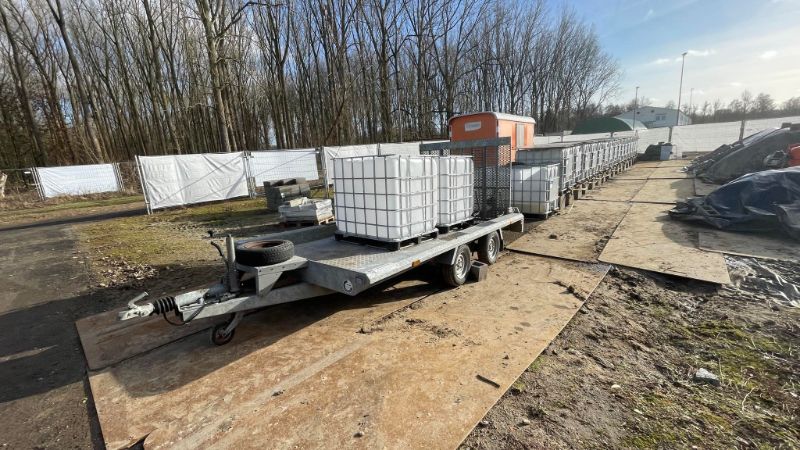
Before the start of the dredging works, the remaining vessels were removed. Some were towed away, others selectively dismantled. The following environmental measures were implemented: installation of floating bodies and oil-absorbing screens, deployment of an air curtain, removal of floating debris and closure of the IJzerlaan Canal connection.
Based on the quality and composition of the dredged material and its treatability, several subzones were defined and the final destination of the sludge was determined.
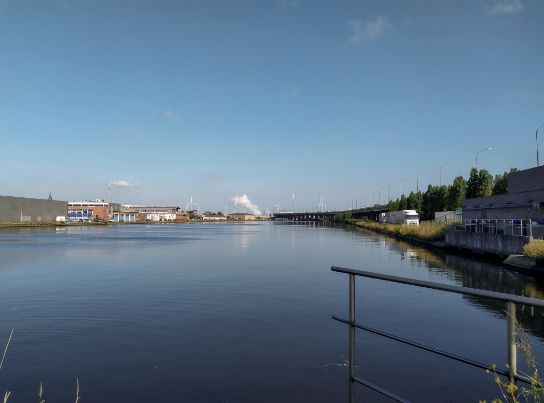
Dredging campaigns 1 to 7 were carried out using a large clamshell grab to remove the thickest sludge layers. Although the amount of collected water was limited, a loss factor of approximately 15% was taken into account (barge volume to in-situ volume factor of 0.85).
During dredging campaigns 8 to 10, the remaining thinner sludge layers were removed. A smaller clamshell grab was used for the thicker remaining layers (> approx. 100 cm), a backhoe bucket for thinner layers (< approx. 100 cm) and slopes, and a dredge pump where appropriate. The most suitable technique was selected each time to clean the dock efficiently. The efficiency of sedimentation of suspended solids in barges was also evaluated.
During dredging, waste was separated using a sieve installed on the barges. In total, an in-situ volume of more than 200,000 m³ was removed.
Due to significant efficiency decreases in the successive phases, not all sludge could be removed. Based on the technical feasibility, findings and calculations, continuing the dredging operations was not BATNEEC, as no risks arise from the residual contamination.
The risk assessment showed that the residual contamination poses no human health or ecotoxicological risks. The absence of spreading risks via surface water will, however, be further monitored. Surface water monitoring at the connection with the IJzerlaan Canal must be carried out once the connection to the Albert Canal is closed. To date, this connection remains open, and monitoring has therefore not yet been performed.