Lobroek Dock remediation
PFAS parameters
Lobroek Dock remediation
Background: PFAS identified during dredging
During Witteveen+Bos’ supervision of the remediation of the Lobroekdok in Antwerp for the parameters included in the Standard Analysis Package (mineral oil, PAHs and heavy metals) between May 2017 and August 2019, highly water-rich sludge was removed during dredging. During dewatering, this sludge proved to contain high concentrations of PFAS compounds.
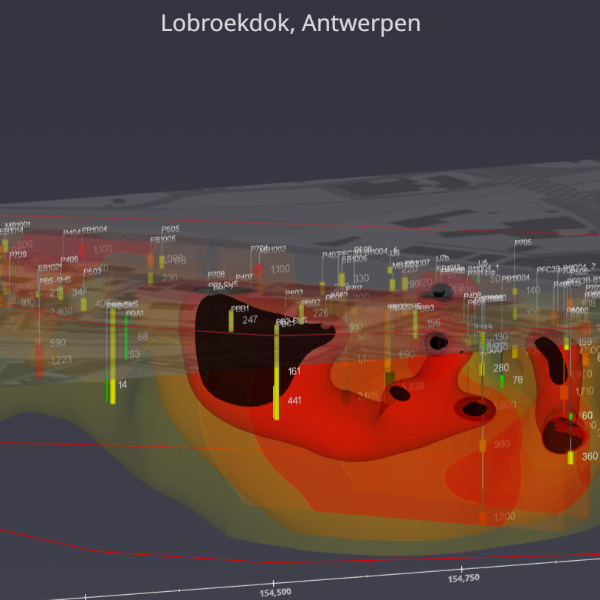
To characterise PFAS contamination in the aquatic sediment, we prepared a descriptive soil investigation (DSI). The contamination appears to extend down to a depth of 3 m below the sediment surface. At greater depth, elevated concentrations of PFAS compounds are also present. The deeper contamination is further described and addressed in a second phased soil investigation, which will still be submitted to OVAM.
The second phase of the DSI is complex due to the presence of additional sources of PFAS contamination. Completion of the report for this phase is planned for the end of February 2026.
Complex context requires a phased approach
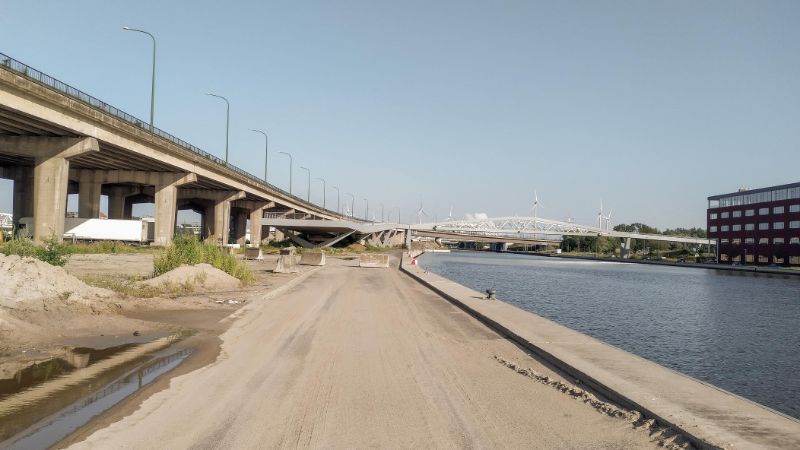
Based on the DSI for the aquatic sediment, we prepared a soil remediation project (SRP). The remediation works are fully integrated into the planned works for the construction of the sunken R1 as part of the Oosterweel Link project. This is a phased remediation project because, during the works, the effluent from the Deurne wastewater treatment plant and runoff water from the Ring road must still be discharged, meaning that part of the dock must remain open after the Oosterweel Link works. These sections will be addressed in a later phase.
For the removal of the soft, weak sludge found at the end of the remediation for the parameters from the standard analysis package, we developed an adapted removal technique within the SRP.
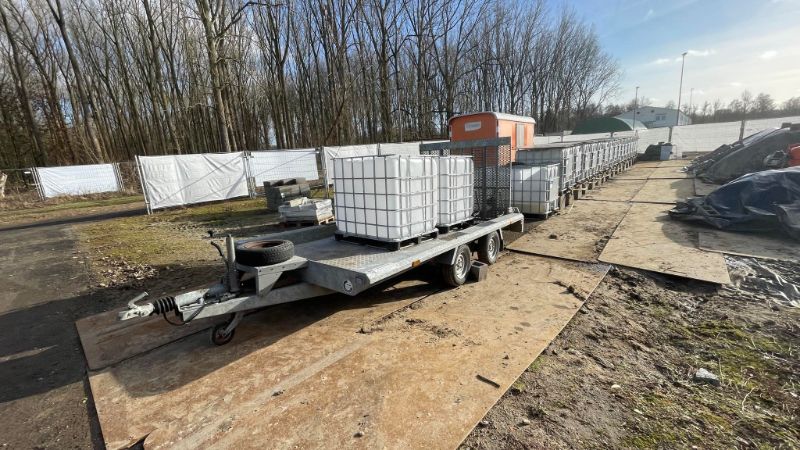
In this approach, the soft part of the sediment is first suctioned off and pumped to a dock zone where it can consolidate and, in a later phase, be dewatered on site. Once the soft part of the sediment has been removed, the remaining sludge to be remediated is removed in a conventional dredging phase using an environmental clamshell grab.
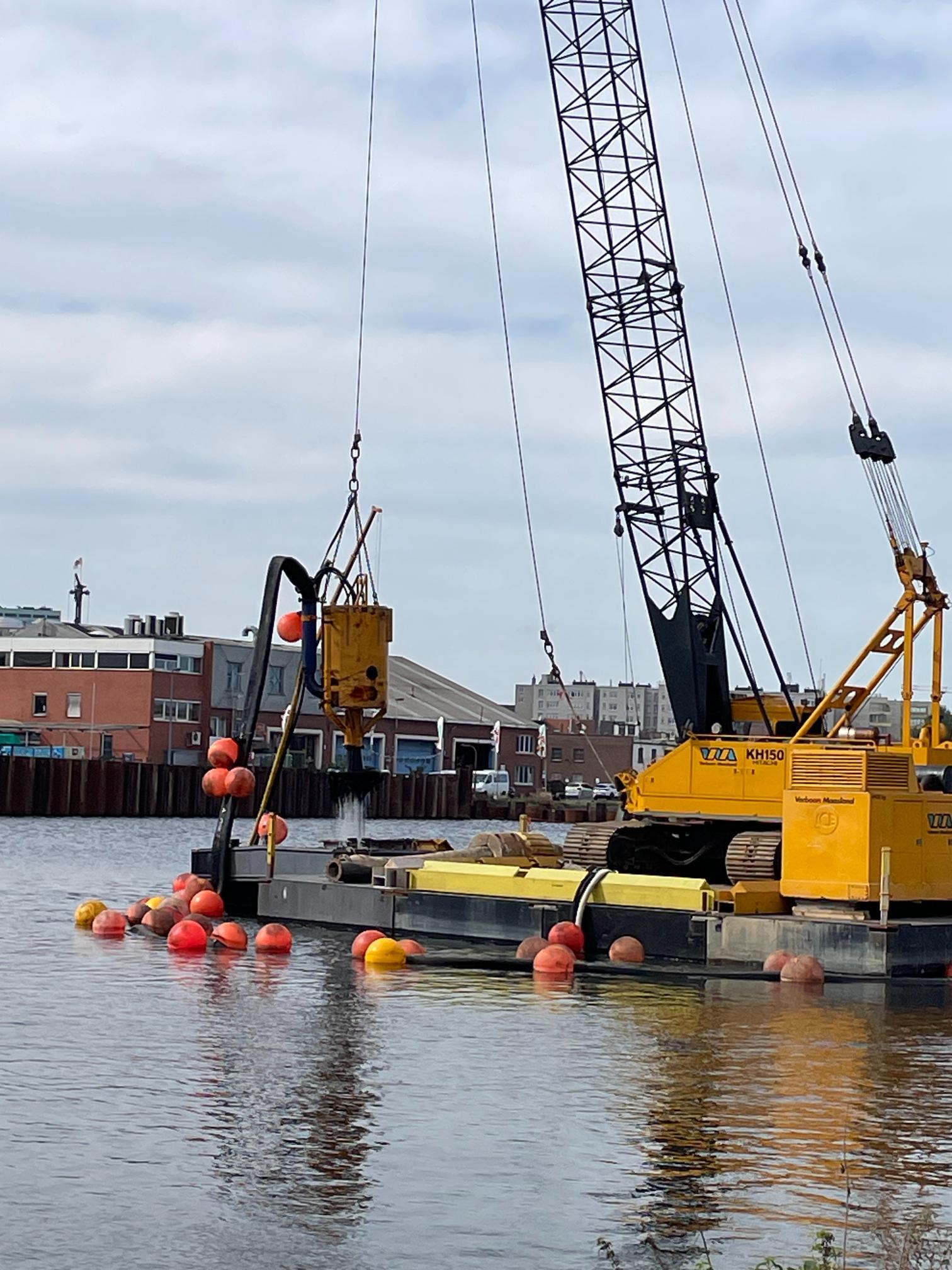
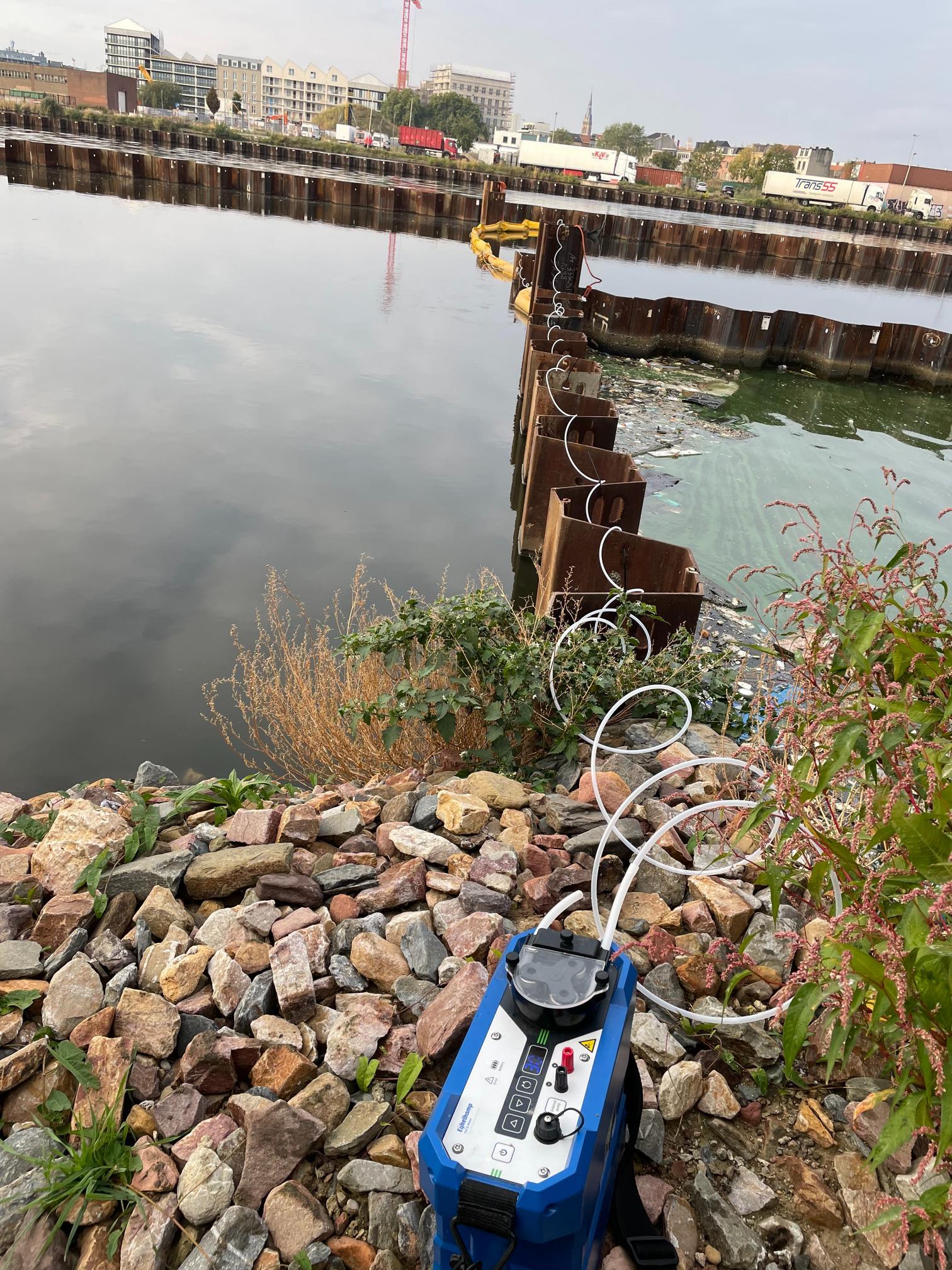
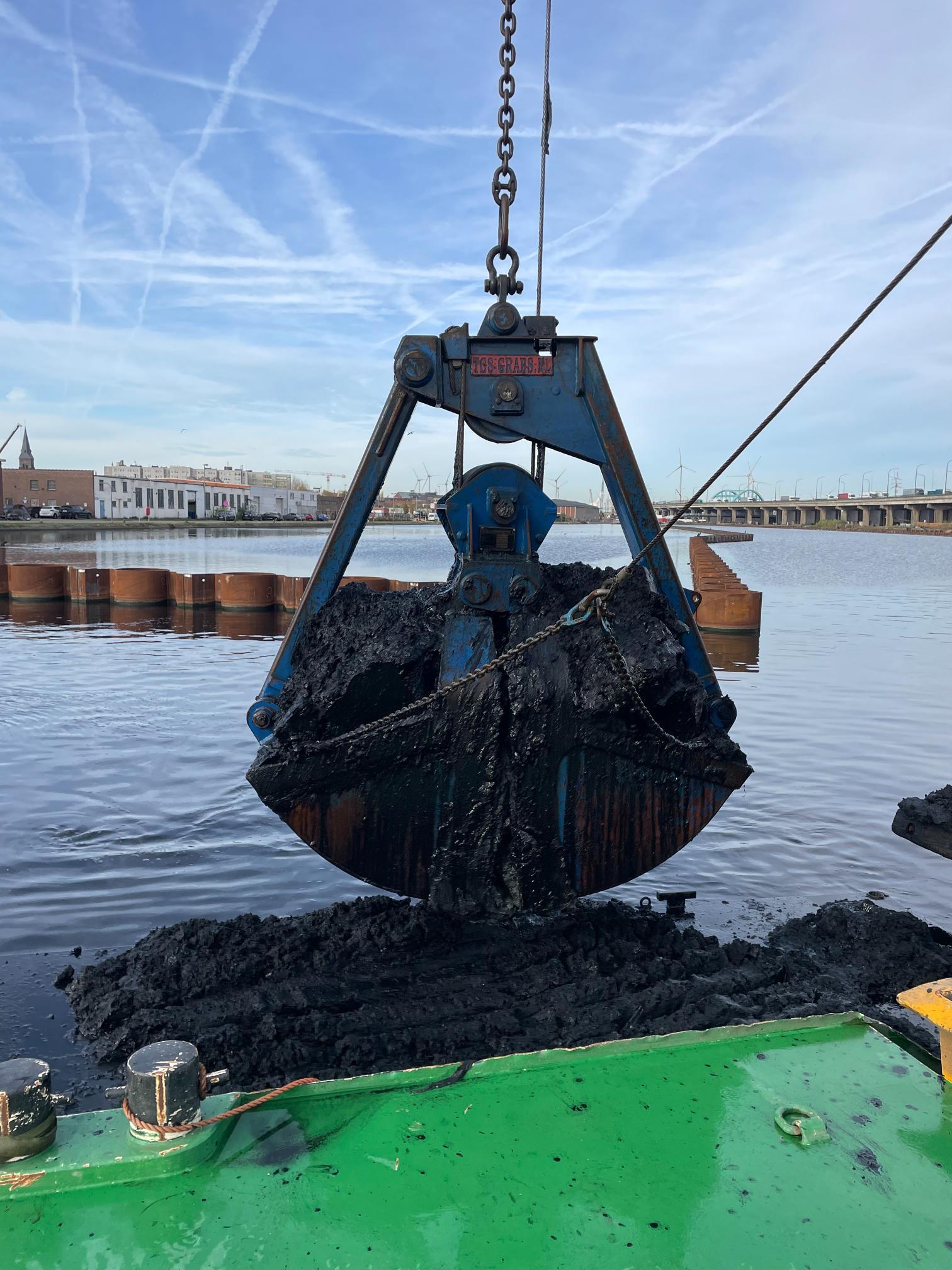
Remediation Lobroekdok: tight monitoring, zero room for environmental nuisance
The remediation works in the Lobroekdok started at the end of 2024 and will take several years. At present, the soft sludge is being pumped intensively. Our task is to supervise and monitor these works to ensure they are carried out in accordance with the soil remediation project. During the works, the execution methods are adjusted to optimise the project, with cost and timing considerations related to the Oosterweel works as a key focus.
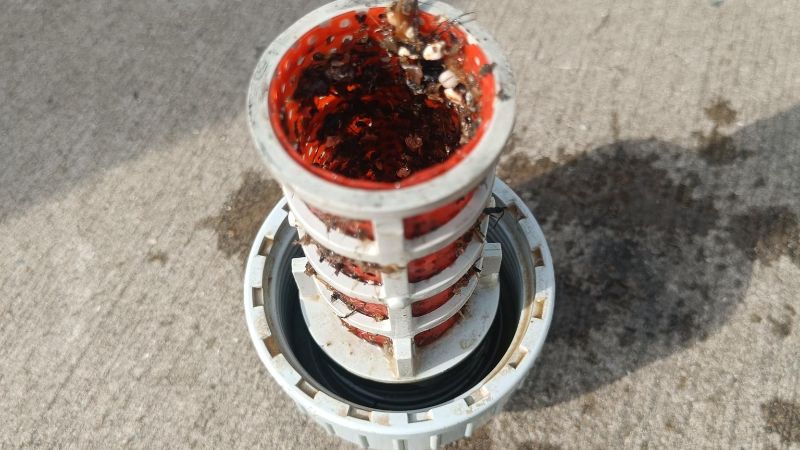
Tasks include monitoring turbidity measurements to prevent resuspension of sludge, checking monthly groundwater samples for PFAS to monitor further dispersion, analysing weekly surface water samples to detect any unauthorised negative impact on surface water quality, and more.
If adjustments to the remediation method are necessary, we ensure they are made within the permitted framework of the soil remediation project or that additional permits are requested. Our ultimate task is to guide the works so that the remediation objective is achieved with minimal additional environmental nuisance.