PFAS immobilisation testing
Turning uncertain risk into usable material
PFAS immobilisation testing
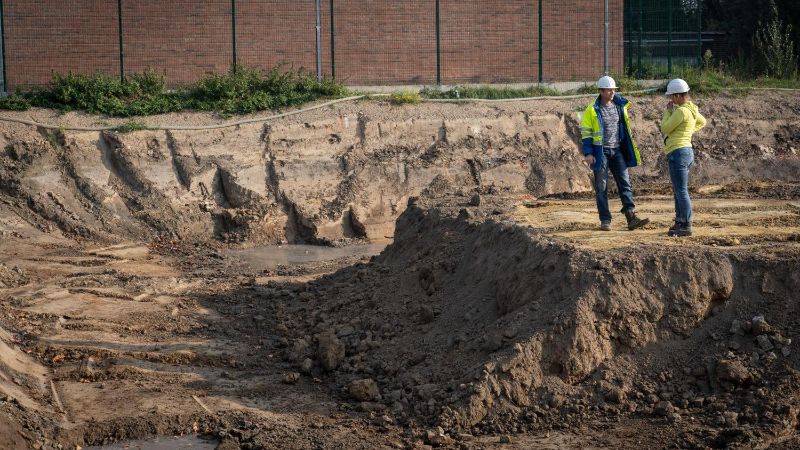
Lightly contaminated PFAS soils are piling up in Flanders. On paper, the contamination looks manageable, but once rainwater infiltrates, PFAS compounds can readily leach into groundwater. That very dispersion risk undermines reuse, drives up costs, and causes valuable soil components to be lost during conventional remediation.
To break that pattern, Witteveen+Bos investigated whether we can retain PFAS in the soil instead of washing them out. In other words: how do we make PFAS-containing soil usable again, without shifting the risks elsewhere?
From lab to pilot trial
To reduce leaching, our team tested a broad range of additives. We started in the lab to determine which products effectively bind PFAS, which dosage performs best, and how lime affects performance, especially for mixtures with activated carbon. Two additives emerged as promising: one fully mineral-based and one hybrid variant based on minerals and activated carbon. Both moved on to pilot trials, each tested at a low and a high dosage.
A realistic test set-up
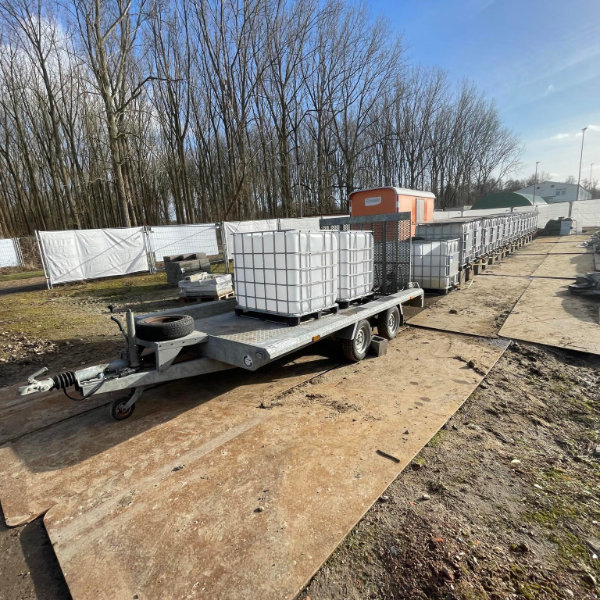
For the pilot phase, we worked in IBC containers holding 0.8 m³ of soil. Two soil types were used:
- loamy soil with a higher initial PFAS concentration;
- sandy soil with a low initial PFAS concentration;
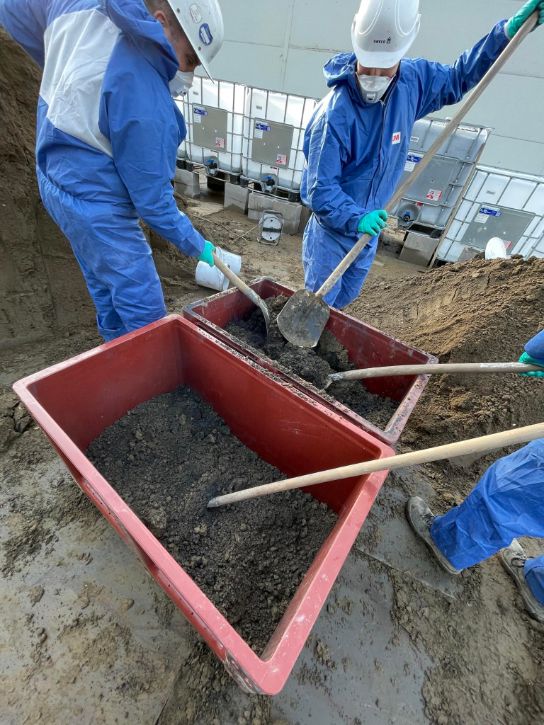
- we tested several mixing methods that mimic real-life practice. Two proved most promising:
- milling the additive into the soil using an agricultural rotary tiller;
- adding it as a concentrated layer at the bottom.
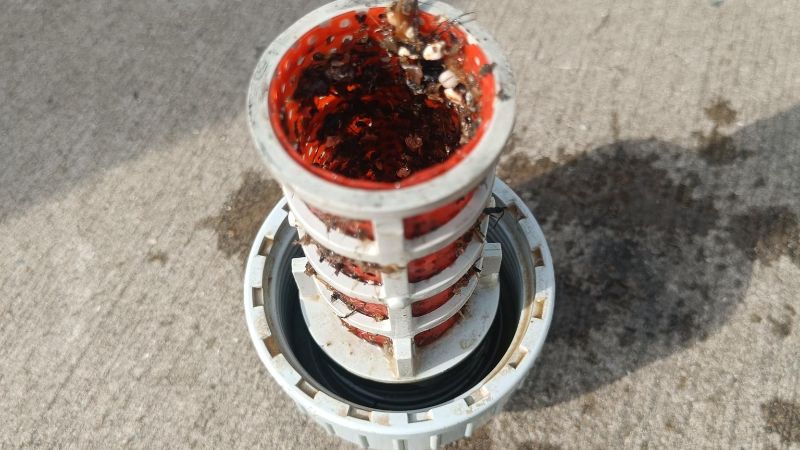
Then came the reality check: daily or every-two-days irrigation with 100 litres of rainwater or tap water, with sampling via the drain tap. In between, we analysed core samples from the soil itself.
- loamy containers: 32 flushing cycles;
- sandy containers: 19 flushing cycles.
What do the trials teach us?
The core message: additives bind PFAS effectively and reduce leaching strongly enough to make reuse more realistic. Notably, the effect holds up over the medium term, crucial for any real-world application.
Along the way, we also gathered insights that move the sector forward:
- PFAS in soil appears to be highly heterogeneous; representative sampling requires extra attention;
- there is considerable measurement uncertainty, especially at low concentrations;
- lab results sometimes differ from pilot trials due to scale, mixing, and water dynamics;
- lime can significantly downgrade the performance of activated carbon.
What progress have we made?
A few years ago, PFAS immobilisation was still hypothetical. Today, there is a substantiated method with demonstrable impact. It opens the door to:
- safe reuse of lightly PFAS-contaminated soils;
- less loss of soil quality;
- less need for expensive and energy-intensive processing.