Developing systems knowledge with eDNA
Developing systems knowledge with eDNA
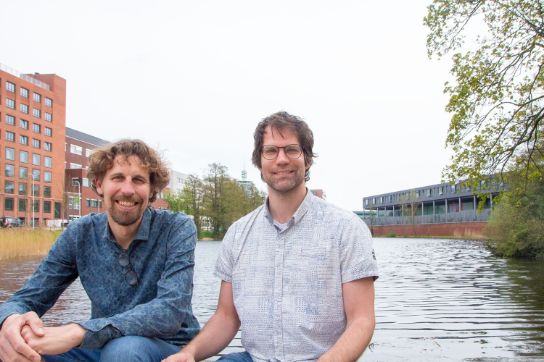
Successful collaborations are often the product of good personal relationships – people with the right knowledge or network who share an intrinsic motivation and a common ambition. A decade ago, Kees van Bochove of Datura Environmental Solutions and Sebastiaan Schep of Witteveen+Bos met at an inspiring STOWA conference on innovative techniques. Sebastiaan, with his knowledge of water management and ecosystems, and Kees, with his laboratory background and knowledge of DNA analysis, shared a propensity for systems thinking. They soon suspected that their combined knowledge could be very useful for water and nature managers.
Kees: ‘I’m a doer. Soon after our conversation and a few messages back and forth about suitable locations, I started taking water samples to see what kind of data they provided. That was in spring 2016.’ Sebastiaan adds: ‘In December, we were already meeting with several water managers to pitch the idea of measuring water quality using eDNA.’
Sebastiaan believes it is important to approach innovation development like a normal paid project as much as possible: ‘That hugely increases engagement, and it forces those involved to think in terms of application.’ Finding clients willing to pay for innovations can be difficult, but seven water managers were immediately enthusiastic about the idea. Enthusiasm and confidence, and involving water managers early, were the success factors.
Ten years on, almost every water authority has been involved for at least a year. Further developing the technology with these water authorities has also resulted in it being integrated into practice, with the biggest achievement being the Delfland water authority’s plan to use eDNA regularly from 2027. This proves that innovation is possible – but it requires patience. Sebastiaan: ‘It often depends on a couple of fanatical promoters. I sometimes think that we could have spent the time that went to promoting it on developing the idea instead, but that’s not how it works.’
Effective collaboration is all about trust. Matters such as budget allocation can be tricky, but having the courage to trust that the other party is fully committed to the project is essential. Occasionally, something will go wrong – for example, during sampling or the exchange of data – but that is to be expected from people’s work. Kees: ‘We both know that we have that drive to do better. No one wants it to fail. You need each other, and we fulfil our promises to one another.’ Sebastiaan: ‘Above all, you have to keep acknowledging the overall progress: not judge each other on small setbacks and focus on success.’
Sebastiaan: ‘The possibilities extend so much further than just surface water. You can get eDNA from soil and air too – or from drinking water or sewage. At Witteveen+Bos, we’ve set up an eDNA core team to look at what other opportunities exist and what we want to concentrate on in the near future.’
Kees: ‘Because Datura is not that large, we have to make choices about what we focus on. Over the next two years, we’ll be concentrating on using our eDNA technique for bats and soil quality. Development of the technology will continue for some time, which is also our strength. Witteveen+Bos is helping us remain involved in multiple topics.’
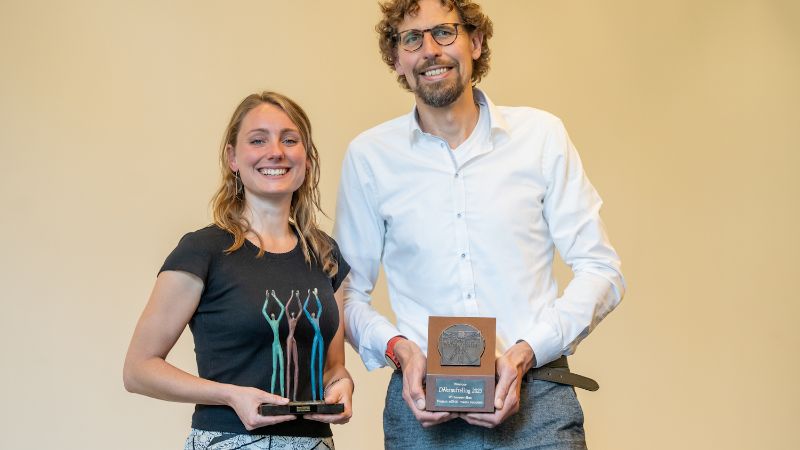
The collaboration that emerged from that chance meeting ten years ago has thus resulted in a successful innovation, which also received the Vernufteling prize. But Sebastiaan and Kees are only starting to achieve what will ultimately be many great things. Besides their personal relationship, this is due to the entrepreneurship they both possess and their ability to think in terms of possibilities. To do that, you need to look beyond your own company or clients. As Sebastiaan puts it: ‘If you just sit at your desk all day, there’s no possibility for chance encounters.’
eDNA food web analysis
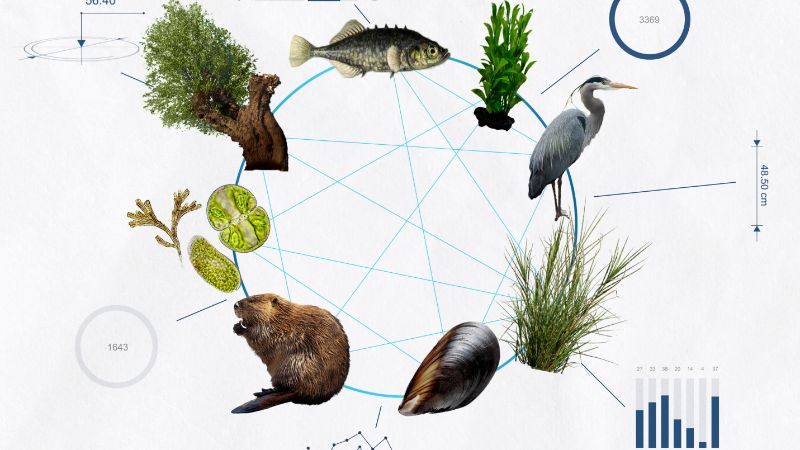
With the innovative eDNA food web analysis technique (development started in 2016), a single water sample can be used to map out virtually all underwater life. The biodiversity and ecological health of water bodies can be assessed and insight provided into key processes and dangers, such as nitrogen and chemical contamination.
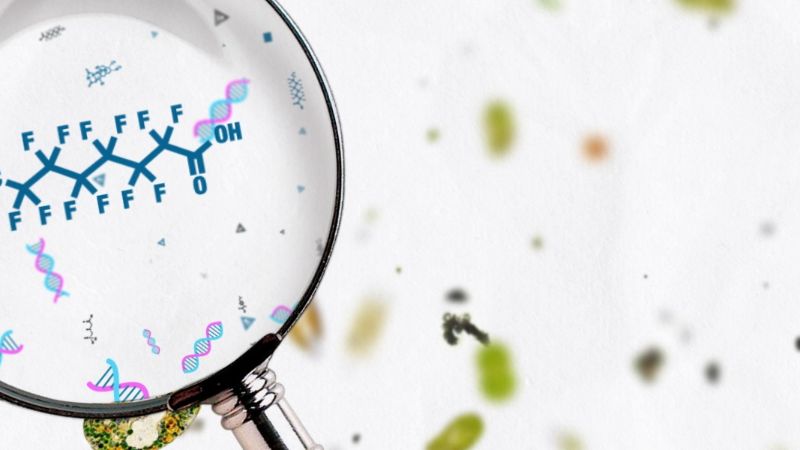
The eDNA Meets Toxicity study (2024-2025) demonstrated that this is even possible for toxic substances, which lays the foundation for an entirely new approach to toxicological studies. The new technique is much faster and significantly less expensive than conventional methods.
The resulting DNA profiles quickly provide an overview of which organisms are present, which are not, how they relate to one another, and what sources of contamination are involved (e.g. wastewater treatment plants, industry, greenhouse horticulture, or flower bulb farming).