eDNA points the way for future water resilience
From alerts, to predictive ecological data
eDNA points the way for future water resilience
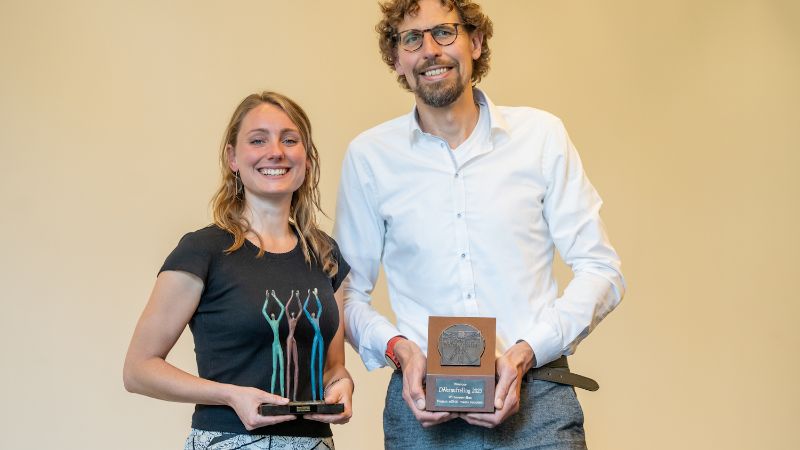
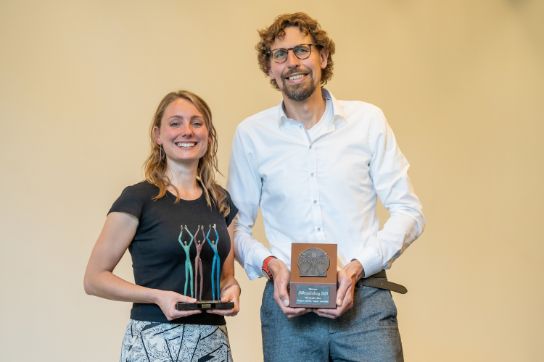
In June of this year, Witteveen+Bos won the 2025 De Vernufteling jury prize as well as the public prize for its project ‘eDNA Meets Toxicity’. This innovative method, which uses DNA from water samples to learn about the impact of chemical contamination on underwater life, was lauded as groundbreaking for the ecological monitoring of the future. But for the project team, the award was not so much an ending, but rather a new question: what now?
The value of eDNA
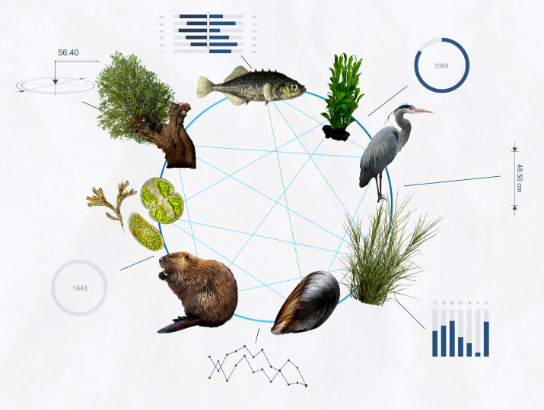
What is special about eDNA, in this case from water samples, is that it does not measure chemical contamination – it measures its effect on life. Every water sample contains genetic material from hundreds of species: from algae to fish. The patterns in the species that are present or absent paint a picture of how the ecosystem is responding to contaminants. This makes eDNA a powerful indicator not only of the current state of an ecosystem, but also of future risks.
‘With eDNA, we can “read” an ecosystem, so to speak,’ explains molecular ecologist Frederike Bijlmer. ‘Instead of looking at which limits are being exceeded, we see what the life itself is telling us. This biological response is often the best measure of ecological health, as well as an early warning that something is going wrong.’
The need for predictive ecological data
The question ‘what now?’ is increasingly urgent, especially after recent international developments. At the UN oceans summit last June in Nice, one topic took centre stage: how do we keep the oceans liveable in a time of biodiversity loss from human activities, such as seafloor destruction from bottom trawling and overfishing, coupled with the climate crisis and pollution? The conference highlighted what has long been an undercurrent of the eDNA project: we must look beyond the here and now. From monitoring to forecasting. From alerts to understanding. And above all: from clean-up to prevention.
Complex pressures
In the follow-up study, Witteveen+Bos once again explores largely unknown territory: the ecological impacts of combinations of factors. Ecosystems rarely face just one polluter. They are typically exposed to a mix of pesticides, drug residues, silt, plastics, nutrients, heat stress and habitat changes. The specific impact of these complex pressures on biodiversity is hard to predict, which is precisely what makes early detection so critical.
‘Toxic pressure is almost never an isolated issue,’ notes ecologist Sebastiaan Schep, one of the initiators of the project. ‘Ecosystems respond to a combination of influences. These responses are often subtle, but are in fact visible in the life that disappears, or even that arises from it. And that is precisely the value of eDNA: it shows us what is changing in the systems, sometimes even before you can point to the cause.’
The next step: salt water
One of the priorities in the next phase is to expand the method to salt water systems: coastal areas, estuaries and parts of the North Sea. The focus so far has been on freshwater, but impacts in salt water are at least just as urgent. Some examples here would be overfishing, acidification, rising temperatures, plastic waste, oil and chemical pollution, and agricultural run-off. With these dynamic processes in particular, early ecological detection can mean the difference between protection and degradation. But measurement alone is not enough: we need to turn alerts into real-world action.
‘Salt water monitoring with eDNA is promising, but still limited in large-scale applications,’ cautions Frederike. ‘Scientific research has already taken some major steps, but the method is still little used outside academia. Ecologically rich and vulnerable areas need early warnings to ensure effective remedial action.’ Just as with freshwater, the power of the Witteveen+Bos approach lies in using eDNA in the real-world: not in the lab, but in rivers and locks in collaboration with water authorities, and in time, in marine areas as well.
Outlook: collaborating on protection and remediation
The idea is to use eDNA to determine not only if remediation is possible, but also when a system is nearing its tipping point. This predictive value requires collaboration between ecologists, data scientists, chemists and hydrologists – a multidisciplinary approach that is right up Witteveen+Bos’ alley.
The project links up seamlessly with the broader social challenges of our time: the objectives of the Water Framework Directive, the European Green Deal, the global biodiversity strategy and coastal climate concerns. But above all, it heralds a fundamental shift in how we relate to nature. No longer as something we only protect after it is visibly in trouble, but something we interact with through data, models and even DNA.
Sebastiaan Schep sums it up: ‘It is great to be recognised with the De Vernufteling awards, but now the real work begins. With eDNA, we don’t just want to measure our water systems – we want to act in time to protect and fix them.’