eDNA Meets Toxicity
Measuring toxic pressure on water using environmental DNA
eDNA Meets Toxicity
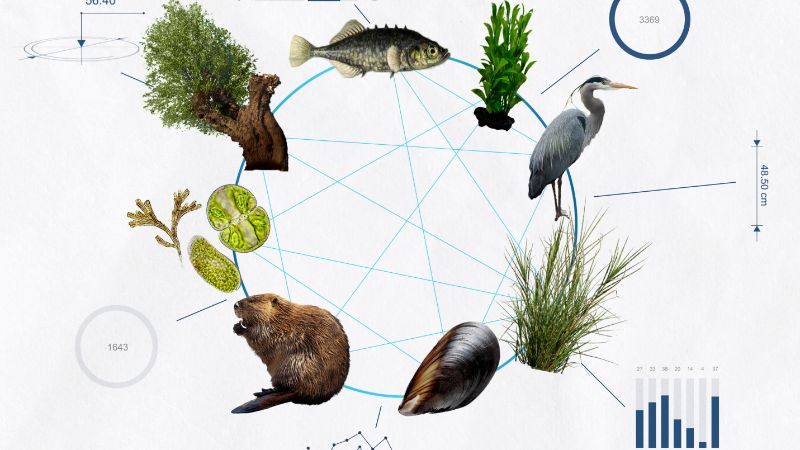
The eDNA Meets Toxicity project introduces a revolutionary new approach to assessing toxic pressure in water. Using eDNA food web analysis, a single water sample can be used to map virtually all underwater life and link it to toxicity.
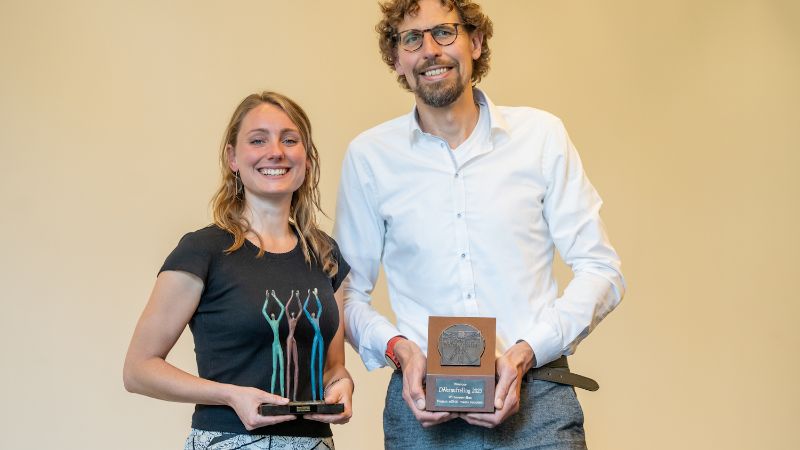
We were awarded De Vernufteling 2025 by Koninklijke NLingenieurs for this innovation. eDNA meets Toxicity received both the jury prize and the public prize.
Integrated overview
This project investigates how life in water reacts to pollution. Underwater organisms react to different types of toxic substances and combinations thereof. DNA profiles allow us to quickly obtain an overview of which organisms are present, which are absent and how they are related to each other.
Our preliminary results are promising and enable us to establish relationships between the ecological status and the degree of pollution. In future research, we want to use eDNA to obtain a detailed picture of the pollution pressure, its impact on underwater life, and to make specific diagnoses for various toxic substances.
Molecular biology x toxicology x data analysis
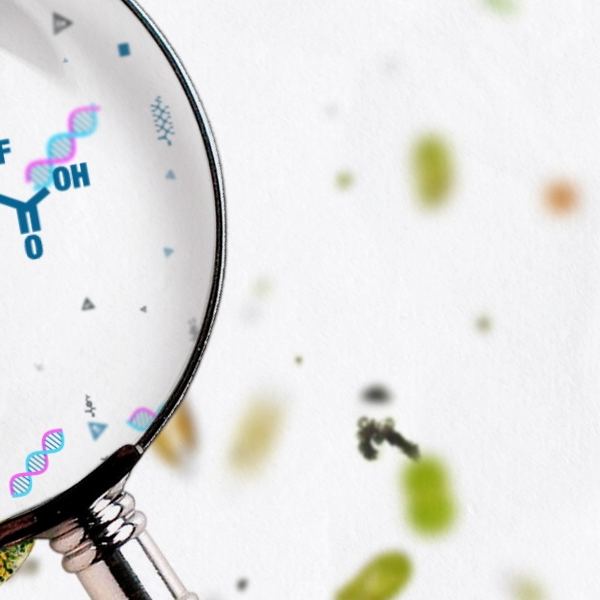
eDNA Meets Toxicity combines molecular biology with toxicology, ecology and complex data analysis to assess the biodiversity and ecological health of water bodies.
The sophisticated molecular techniques can detect even minimal amounts of DNA. This is crucial for detecting rare or difficult-to-sample species and requires advanced laboratory conditions.
Breakthrough in biodiversity loss
These new analytical methods enable us to monitor biodiversity much more effectively. We want to understand why biodiversity is declining and identify the contribution of toxic substances. This will enable us to take much more targeted and effective measures to combat biodiversity loss.
By providing insight into these pressures and their effects, while also offering tools for solutions, the project and its follow-up projects contribute directly to the preservation and restoration of good water quality and biodiversity (‘bending the curve’).
eDNA Meets Toxicity not only has a positive impact on the environment, but also on the community by reducing harmful substances and promoting healthy waterbodies.
Our eDNA analysis method is ready for widespread application. We are well advanced in analysing water, but eDNA Meets Toxicity can also be applied to soil and air, both nationally and internationally.
Knowledge and information freely available
Witteveen+Bos believes in making knowledge and information freely available. Only in this way can this technique be quickly applied on a broad scale with maximum value for society.
In-depth about our analysis method
5,000 unique DNA sequences
From a single water sample consisting of just one litre of water, we extract more than 5,000 unique DNA sequences. Each unique DNA sequence represents an individual organism. By comparing these DNA sequences with an extensive reference database, we can identify the specific organism.
PCR (Polymerase Chain Reaction) is used to multiply specific DNA sequences. Next-Generation Sequencing (NGS) is then applied to analyse a wide range of DNA sequences in parallel. Here, researchers are able to identify and catalogue the genetic information of different organisms in the sample.
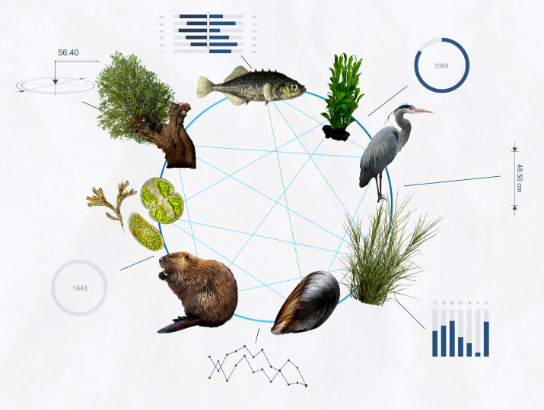
Unique fingerprint
The resulting dataset of DNA sequences forms a unique fingerprint for each sample. All DNA in a sample is included in the analysis, from fish to bacteria. This provides a complete and detailed picture of the ecological status, including fast-reacting microorganisms.
We can compare these “fingerprints” using multivariate analyses and thus discover relationships between species richness, the presence or absence of indicator species and pressure factors such as nutrients and toxic substances.
Together with powerful partners
eDNA Meets Toxicity is an initiative of Witteveen+Bos and Datura Molecular Solutions. Knowledge, expertise, belief and daring from the scientific and water sectors have been decisive in bringing our innovation to proof of concept.
We would therefore like to express our sincere thanks to the parties that have supported Witteveen+Bos and Datura in the development of eDNA Meets Toxicity:
The water authorities Aa en Maas, Brabantse Delta, Delfland, Drents Overijsselse Delta, Hollands Noorderkwartier, Hollandse Delta, Rijnland, Rivierenland, de Stichtse Rijnlanden, and Vechtstromen, as well as Datura, KWR, Microlan, the Ministry of Infrastructure and Water Management, the Province of South Holland, RIVM, STOWA, the University of Amsterdam, Het Waterlaboratorium, and Waternet.
More information