Ruth Cartuyvels
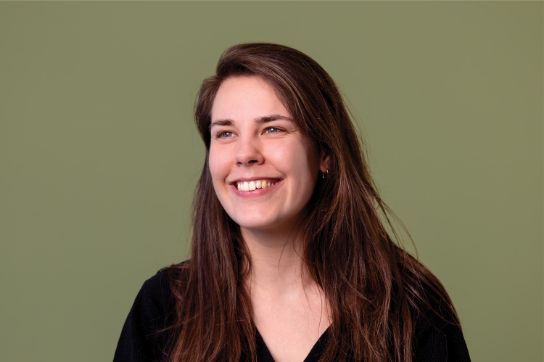
Employee portrait
Ruth Cartuyvels
‘Ultimately, quality isn’t about standards; it’s about behaviour’
‘My involvement in quality actually came about by chance. An audit was planned but hadn’t been well prepared, and I had room in my schedule. Together with a colleague, I put together a handbook in three days. That experience taught me that quality offers great tools for organising work more simply and effectively.’
Systems thinking
‘I studied biology and began working on the technical side of soil survey projects. But after producing that handbook, I gradually made an internal switch. Ultimately, the thought that I could improve processes and help colleagues do their jobs more easily gave me greater satisfaction.
‘That isn’t as strange as it might seem: being responsible for quality means I need to understand the bigger picture and identify connections. Systems thinking comes naturally to me, and it was very useful during my biology studies.’
Fast talker
‘Over the years, I’ve helped give shape to my own role. That kind of entrepreneurship is really supported here, which I like. Gradually, I’ve learned how things fit into different frameworks and which theory goes with what. I talk a lot with colleagues in the Netherlands. The work there is similar but the scale is completely different.
‘Sometimes quality comes down to individuals, which can be difficult. What should and can I do in a certain situation? I find it helps to discuss these issues with managers. That’s always helped me find a solution. In recent years – thanks in part to my managers – I’ve undergone a lot of personal growth. How do you organise working groups? How do you involve people in change? I talk quite fast, especially when I’m excited. I try to speak more slowly and leave space so that messages have time to sink in. But I suspect it’s something I’ll need to keep working on, ha ha!’
Nonsense
‘Part of my work involves certifications and audits; increasingly, it also concerns process optimisation. Where can efficiency be increased? What can be made simpler? We have a quality team in which all business units are represented, and together we look for possible improvements. Ultimately, quality isn’t about standards; it’s about behaviour. You can design processes, but if people don’t support them, nothing will happen.
‘I actually like it when colleagues are critical. I’d rather people say, ‘We think this is nonsense,’ than just remain silent. The biggest compliment is when, a year later, those same colleagues are talking about the importance of what you’re doing. My work requires me to listen and sense what’s going on. I notice quickly when something isn’t well received. Quality is about serving but also about guiding. You help colleagues but you also show them the way.’