Mangrove restoration in Sei Jang with nature-based solutions
Mangrove restoration in Sei Jang with nature-based solutions
Witteveen+Bos Singapore has successfully carried out a significant mangrove restoration project in Sei Jang, Bintan. By combining a holistic systems analysis approach with ecological expertise and local (stakeholder) knowledge, an impressive mangrove survival rate of 66 % was achieved. The project also resulted in significant benefits for local biodiversity and the community.
Carbon-neutral by working with nature
When Jaïr Smits became managing director of Witteveen+Bos Singapore in 2020, one of his first goals was for the office to become carbon-neutral. Jaïr: ‘Obtaining a ‘climate-neutral certificate’ is actually very easy. The necessary emissions rights can be bought for just a few dollars. But that didn’t feel as if we were really making a difference. So we decided to start a mangrove restoration project. Mangroves are one of the most carbon-dense ecosystems in the world and have the potential to act as long-term carbon sinks.’
Social engagement and community participation
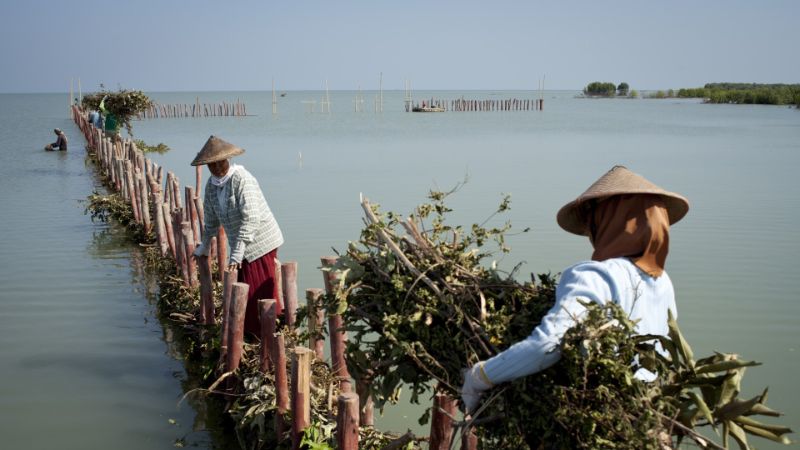
Witteveen+Bos already had experience with planting mangroves – for example, on the projects for semipermeable mangrove dams in Demak, Indonesia. We also understand the importance of local stakeholder engagement and community involvement, which is why we sought the support of local governors and residents. On this project, we partnered with Dr. Marc van Loo from LooLa Kommunitas and Professor Henky Irawan from the Universitas Maritim Raja Ali Haji.
Together with our own ecologists, they identified nine potential locations on Bintan. Kelurahan Sei Jang was the first to be replanted. The selection process considered many aspects, such as the preferences of specific mangrove species and the characteristics of the planting locations.
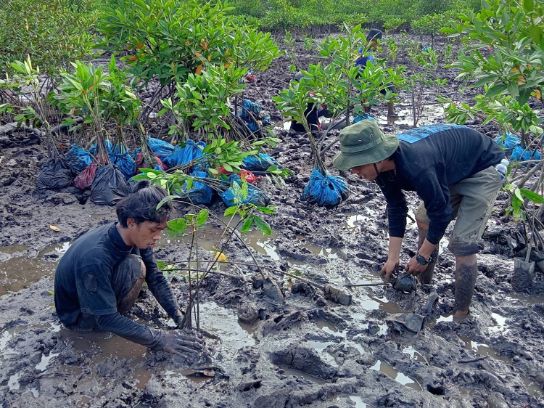
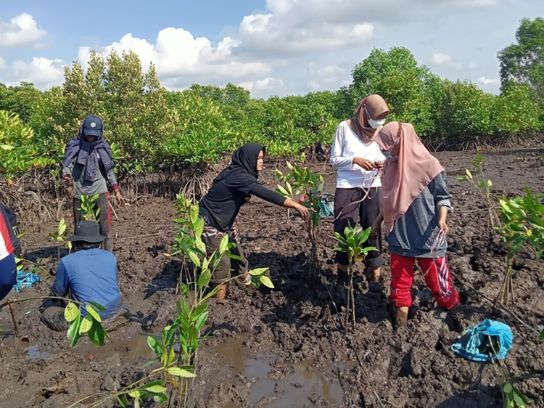
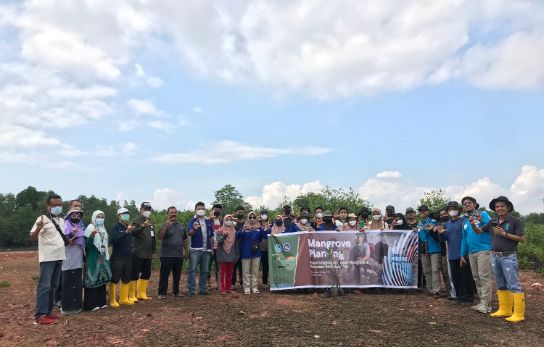
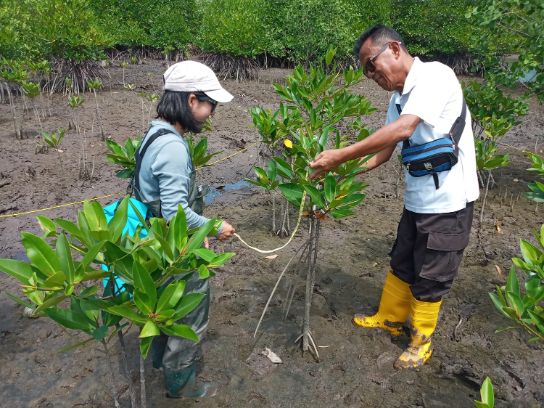
On 16 December 2021, the first trees were planted in the presence of Pak Aprizal Bahar (head of LHK Bintan), Pak Hendri (LHK head of Riau province) representing the governor’s office, and Ibu Desriyati (head of department, LHK Tanjungpinang). Erika Ng, ecologist at Witteveen+Bos Singapore: ‘We initially started with 570 mangrove trees. This eventually became 2,850. Locals participated in the planting phase, for which they received a small payment. This gave residents the opportunity to engage with the initiative. Also, a group from the Sustainable Executive Leadership of Executives’ Global Network (EGN) visited the site to learn about sustainable mangrove restoration practices and their significance for both ecology and local communities.’
Promoting local biodiversity and sustainable livelihoods
At the chosen location on Bintan (Kelurahan Sei Jang), many mangroves had been cut down for building plans that ultimately failed to materialise. The site is owned by the government. From an ecological perspective, the mangroves function as shelter for small organisms such as crabs and prawns, attracting them to the site by offering protection from larger predators. The mangrove leaves also function as a food source. It is noteworthy that approximately 90 % of fisheries in Indonesia are small-scale; this emphasises the importance of healthy mangrove ecosystems as nurseries for fish and as a source of food and income for local communities.
Results
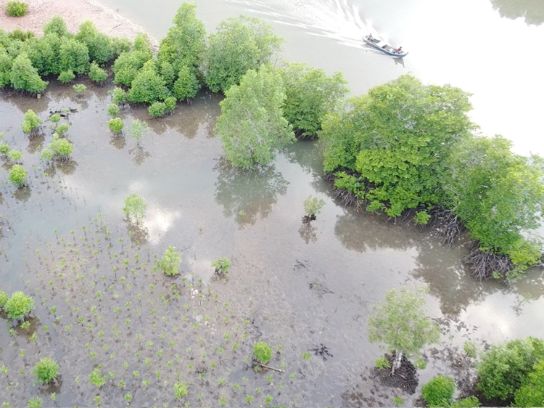
To ensure the project’s ongoing success, Witteveen+Bos is employing advanced monitoring techniques. Whereas initially biodiversity assessments were conducted manually, the project now utilises satellite monitoring technology. By employing the normalized difference vegetation index (NDVI), we can track the density of vegetation growth. The NDVI value has shown a positive increase from 0.56 (prior to planting) to 0.79, which indicates robust growth among the planted mangroves. In addition to satellite data, annual ecological surveys are conducted to monitor the health and development of the mangrove seedlings.
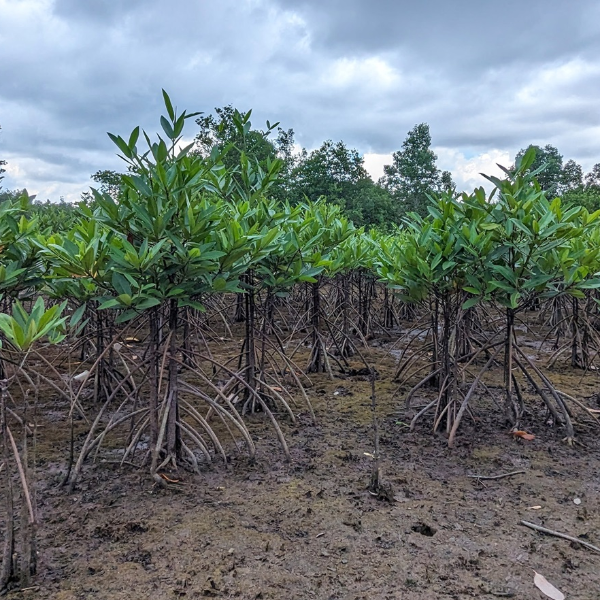
Four years after the first mangrove trees were planted, we note a survival rate of 66 % – substantially higher than the global average of 40 % (some sources report rates as low as 10-20 %). Erika: ‘In February 2025, we observed the first flowers on the mangroves. Flowers are a sign that the mangroves are starting to mature, which is a good sign and a testament to the effectiveness of our strategic planting approach.’
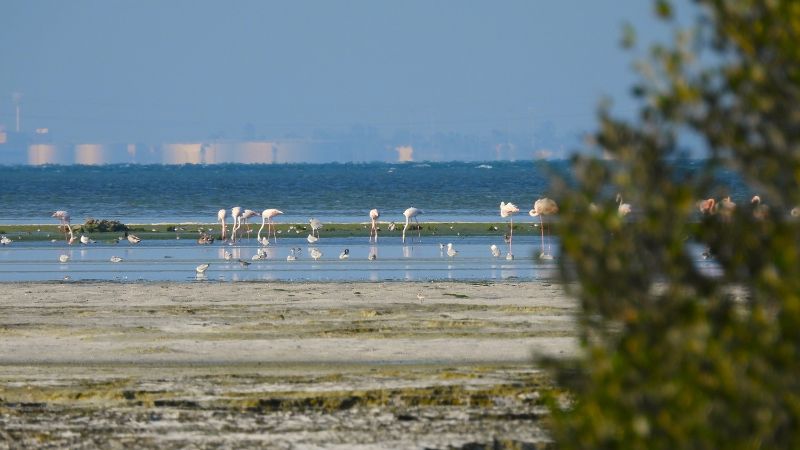
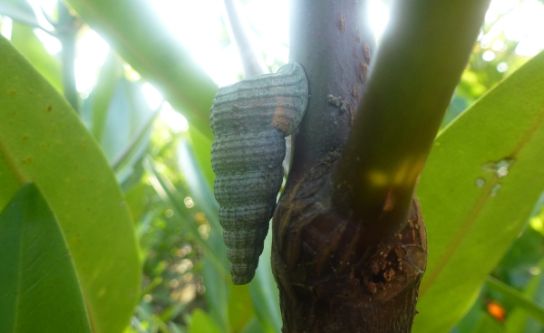
Restoration efforts have resulted in a thriving habitat that supports a variety of wildlife, including crabs, mudskippers, birds, prawns and snails. Erika: ‘During our yearly inspections, we’ve seen locals enter the mangrove forest with fishing apparatus, so it’s likely that there are small-scale fishing activities happening at the site.’
Needless to say, Witteveen+Bos Singapore has far surpassed carbon neutrality with this project. More importantly, it has created a place where local flora and fauna and the community can thrive.
Importance of systems analysis, ecological expertise, and local knowledge and collaboration
Successfully restoring mangroves requires a systematic approach that considers all aspects of the ecosystem, including hydrological, ecological, historical and social factors. Working with nature, rather than against it, is vital to achieving long-term sustainability.
As we look ahead, the experiences and outcomes of the Sei Jang mangrove restoration project offer valuable insights for future nature-based solutions. Witteveen+Bos is committed to promoting practices that support biodiversity, mitigate climate change, and contribute to building resilient ecosystems. Through initiatives such as this, we strive to inspire others on our shared journey towards a more sustainable and ecologically balanced world.
Mangrove planting