Gelatine district in Hasselt
New link in the Blue Boulevard
Gelatine district in Hasselt
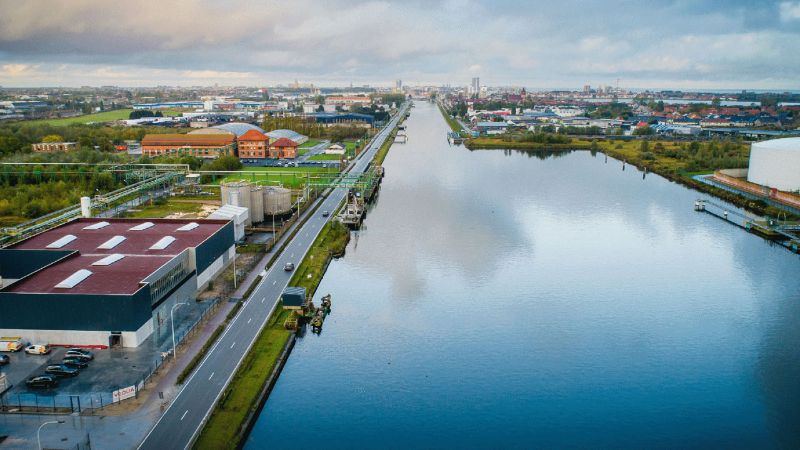
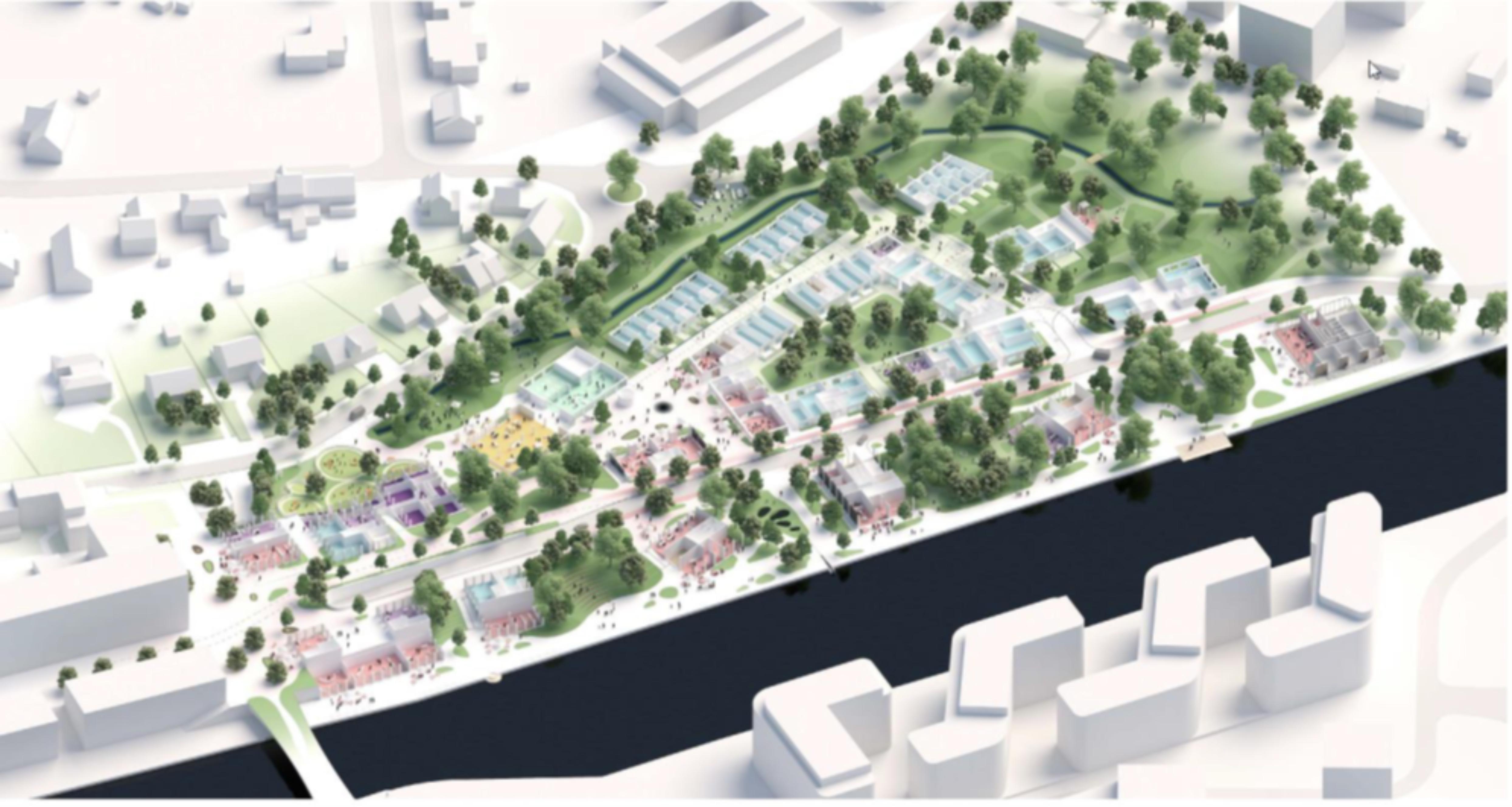
At the Hasselt Canal Basin, a new phase of development is getting underway: two subdivision applications that will transform the vacant site between Quartier Bleu and the Heilig-Hart neighbourhood into a future-oriented urban district. A place where living, greenery and water reinforce one another.
Within a complex context, Witteveen+Bos guided the two separate subdivision applications for clients BESIX Real Estate Development and Mommen Wegenbouw (Chateau Real Estate & Van Roey Vastgoed) through the permitting process. We delivered a legally and technically robust subdivision file that safeguards spatial quality while explicitly addressing local sensitivities.
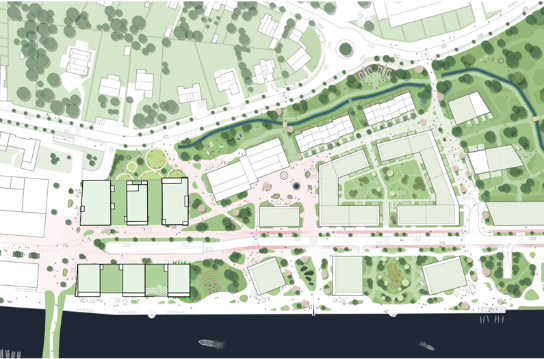
Clear structure in a complex setting
The site sits exactly at the transition between large-scale new building volumes and the fine-grained fabric of the Heilig-Hart neighbourhood. Local residents fear that new projects might once again form a ‘wall’ or block slow-traffic connections.
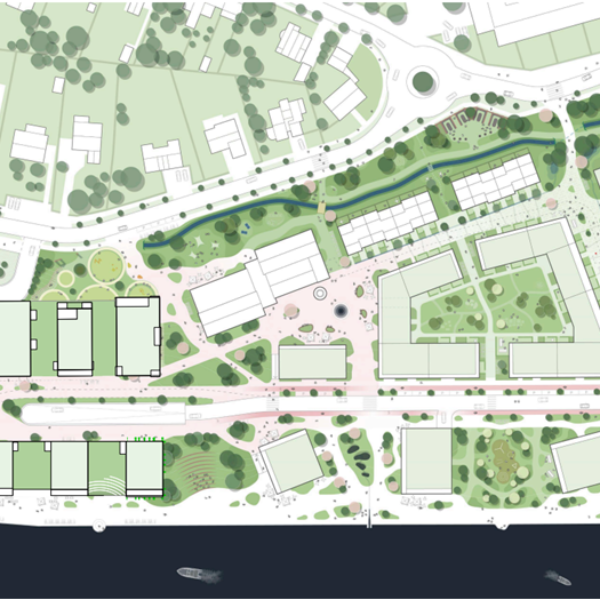
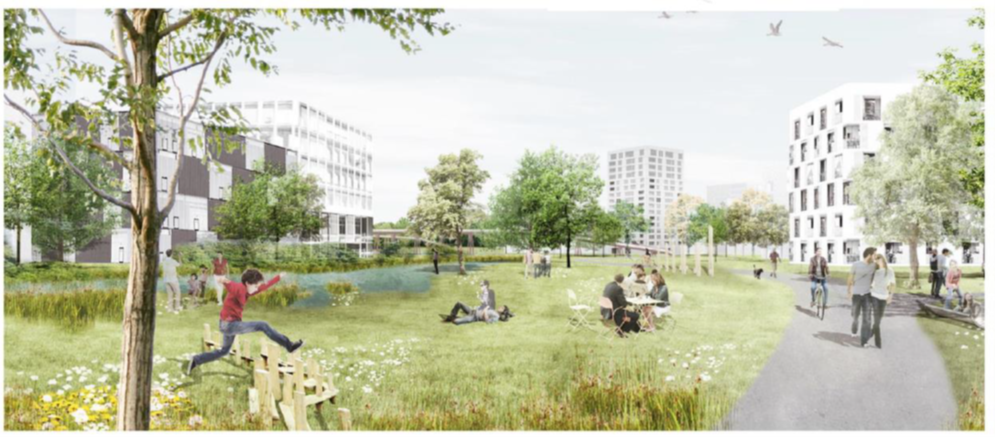
That is why the design strongly prioritised sightlines towards the water, permeable connections to the future park, and building volumes that respect the scale of the existing neighbourhood.
Role of Witteveen+Bos: process, file and substantiation
Our team took on full process coordination as well as the substantive preparation of the subdivision files. Our contribution included:
BESIX RED application
-
Process guidance and coordination:
We coordinated collaboration between the developer, the City of Hasselt, advisory bodies (including VMM and Fluvius), EIA experts, geohydrologists, mobility specialists (SUUNTA), design teams (Pauwels Design Office and Archipelago) and legal advisors (PwC Legal). Through clear, connective communication, we identified concerns at an early stage and translated them into concrete solutions within the file;
-
Complete preparation of the subdivision application file:
including subdivision plans (in collaboration with surveyors Van Opstal) and regulations; the urban planning components (paving, topography, sewerage); file elements for the construction of a new municipal road and public space; and a critical review of the EIA screening (Bureau DW).
Mommen Wegenbouw application
-
Process guidance and coordination:
We acted as the central link between the developer, the City of Hasselt, advisory bodies (including VMM, the Agency for Nature and Forests, and De Vlaamse Waterweg), EIA experts, mobility specialists (SUUNTA), design teams (Pauwels Design Office and De Architecten NV) and legal advisors (GSJ Advocaten). Through clear and proactive communication, we identified concerns early on and translated them into value-adding solutions within the file;
-
Complete preparation of the subdivision application file:
including subdivision plans (in collaboration with surveyors Van Opstal) and regulations; file elements for the discontinuation of a local access road; and preparation of the EIA screening. In addition, Witteveen+Bos prepared the dewatering study as well as the technical report required at a later execution phase.
Embedding spatial quality
- The subdivision serves as an assessment framework for all future building permit applications. Guarantees for visual permeability, green spaces, water integration and overall liveability have been firmly embedded, ensuring these principles remain intact throughout subsequent permitting stages. This subdivision further details the policy vision previously set out by the City of Hasselt in a master plan and spatial implementation plan for this development.
Beyond steering the substantive content of the files, we relieved our clients through proactive communication, clear structuring of priorities and next steps, and close coordination with all stakeholders involved.
Foundation for the next steps
The file has now been granted approval at first instance. Ongoing procedures and recent regulatory changes underline the importance of a well-substantiated subdivision as the foundation for all future environmental permits.
Once the subdivision is definitively approved, applications for the buildings and landscape works will follow. Only then will the first construction works begin.
Witteveen+Bos brought clarity, structure and substantive depth to this strategic urban regeneration project. The result is a subdivision that not only stands up legally, but also contributes to a liveable, well-connected and climate-resilient Hasselt Canal Basin.