Nature-inclusive transformer substations
Nature-inclusive transformer substations
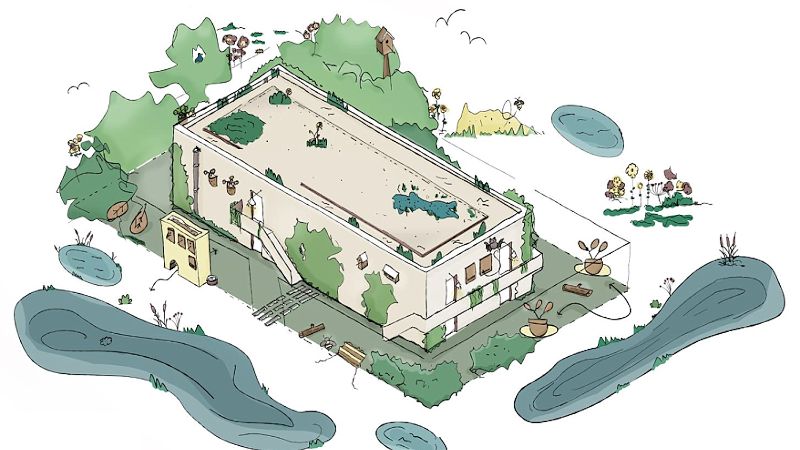
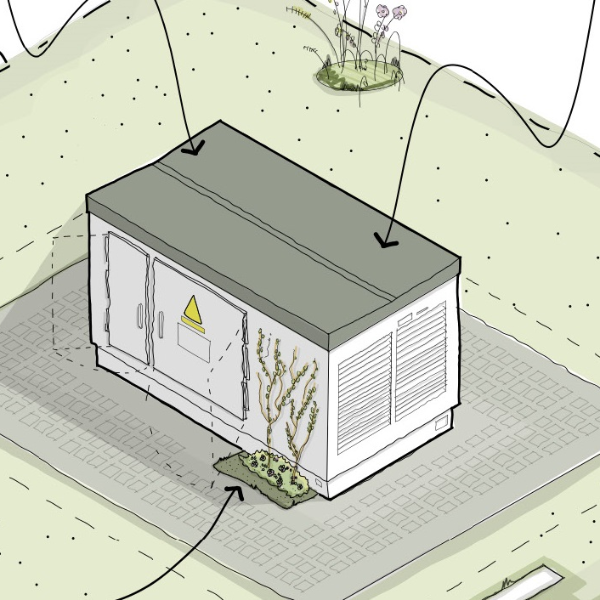
The negative effect of transformer substations and low-voltage substations on nature can be avoided in the future. They may even become places where nature can return and flourish, or they may act as a connection between natural elements.
Due to a growing demand for energy driven by businesses and private households, the number of low-voltage substations and transformer substations in public spaces is rising. Both in existing districts and in new urban developments. This construction task is a direct result of the energy transition and offers a unique opportunity to combine technical infrastructure with nature-inclusive measures. In fact, all low-voltage substations and transformer substations can collectively make a positive contribution to biodiversity in the Netherlands.
Shortlist of nature-inclusive measures
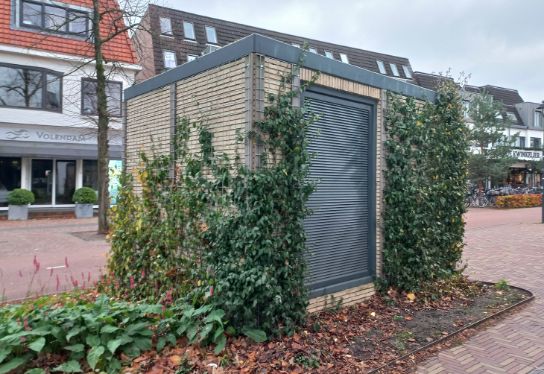
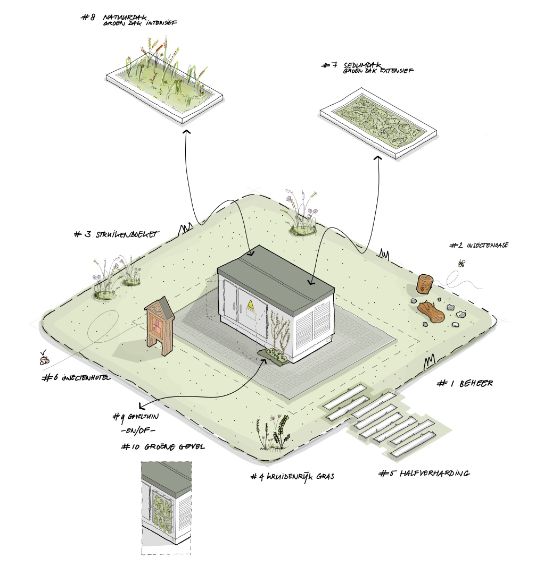
Together with ‘Collectief Natuurinclusief’ and ‘Studio Earthrise’, we have developed the shortlist of nature-inclusive measures for low-voltage substations. This shortlist identifies solutions that are ecologically valuable, that fit well in their surroundings and that are both technically and operationally feasible.
The shortlist consists of 10 unique measures (fact sheets), which each achieve a specific score in terms of their ecological and social value, operational effectiveness and cost. The shortlist indicates that there is high potential for applying nature-inclusive design when building low-voltage substations in urban areas. There are opportunities for standardisation here, both in terms of agreeing building-related measures with the supplier and in relation to the land around the substations.
Dialogue with grid operators
Is there sufficient support for implementing nature-inclusive measures on, at or near transformer substations? To verify this, Studio Earthrise contacted the grid operators, and we arranged a joint work session. Based on those discussions, it appears that grid operators are dependent on the suppliers of the substations when the building has to be physically modified. For example, modifications to the roof or façade. Another insight was that some nature-inclusive measures could be better implemented on, at or near other buildings in the urban area. Due to lack of space, for example, or from an ecological standpoint (at a safe height to offer protection against predators).
Some 500 new low-voltage substations will be built per year in the Netherlands in the coming period. The fact that the grid operators have only three suppliers for these substations represents a unique opportunity for standardisation. This will make it easier for grid operators to implement nature-inclusive measures.
These measures can be applied at scale (across several types of substation) and have a significant impact both ecologically and socially. Due to the growing construction task, investing in standardisation is cost-effective because of the large number of transformer substations that need to be built in urban areas.
Existing districts versus new urban developments
In existing districts, no allowance has been made for these new transformer substations. So part of the public space must be sacrificed for the substation. This might be greenery, but also parking spaces or parts of a pavement. In new urban developments, this can be resolved by including measures in the scope of the development itself, or by incorporating nature-inclusive solutions into the landscape near, at or on the substations beforehand. In all cases, there is a cost in terms of (public) space and, especially in urban areas, public space is too scarce to serve only one function. So nature-inclusive transformer substations can provide a solution, especially if they have an additional social function.
Coordination with stakeholders
In order to achieve consistency between nature-inclusive measures, coordination with the municipality, as the owner of the land, and other stakeholders is needed on a project-by-project basis. Through this approach, each party implements the measures appropriate to their objects, tasks and responsibilities.
Whether the nature-inclusive measures for the substations are feasible depends on:
- The extent to which the grid operator can independently make decisions in this respect.
- Coordination of the measures with the substation suppliers. Where no consultation with substation suppliers is required, the grid operator organisations can launch standardisation initiatives almost immediately, provided there is sufficient support.
- The attitude of the municipality concerned regarding the measures to be implemented. Grid operators often do not have enough space around transformer substations to implement major measures, but they can contribute ideas and expertise, and provide advice.
Are you curious about the measures we propose to make low-voltage substations and transformer substations nature-inclusive? Then take a look at the background report.
Want to know more?