Waternet process optimisation
Payback period of just months
Waternet process optimisation
How can water authorities lower their operational costs while simultaneously reducing their carbon footprint? Reducing the use of chemicals is one way to achieve this. Waternet engaged Witteveen+Bos to identify cost-cutting opportunities and prepare a solid business case.
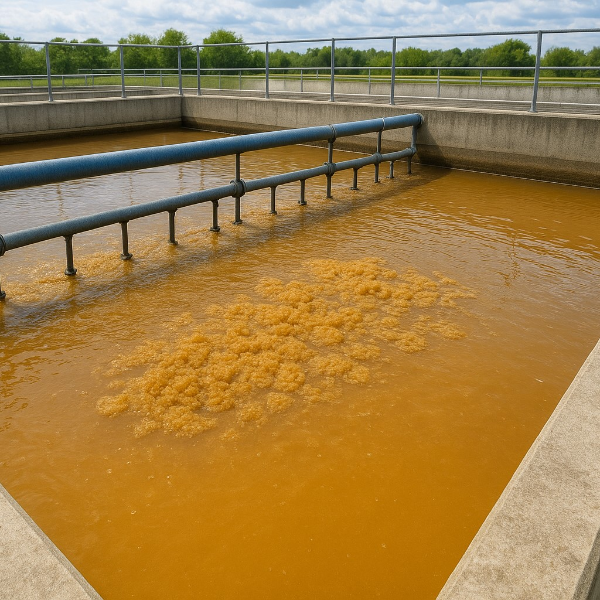
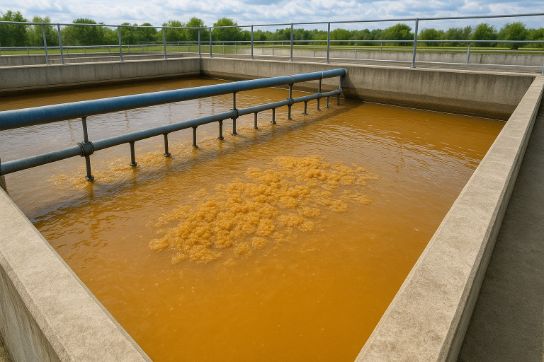
In the drinking water treatment process, ferric chloride is used to coagulate sulphates and phosphates, thereby eliminating water turbidity. Caustic soda is then added to neutralise the acidity. The operators at Waternet had already streamlined and improved this process to reduce the amount of chemicals used in the treatment process. The question Waternet put to Witteveen+Bos was: ‘Does putting further effort into optimisation make sense?’
Wide safety margin
‘We saw significant optimisation potential in this process, especially since the dosage had no measurable effect on drinking water quality. Given the variable input quality, you would expect a specific dosage to be insufficient from a certain point’, says Joost de Munk, a process technologist at Waternet. ‘That turned out not to be the case. This meant that the dosage was based on a wide safety margin to ensure that the quality standard was always met.’
Analysis at source
The probability of overdosing was almost 100 percent. The key question that needed answering was: ‘To what extent could this dosage be reduced without compromising water quality?’ This analysis focused on the input quality of the water source, specifically taking turbidity as the key quality parameter.
Turbidity fluctuates depending on the source of the water (i.e. groundwater, surface water) and other more time-related factors such as the (water) temperature, rainfall or shipping movements in the case of surface water as a source.
AI Model
As part of an internship assignment, Yoni Evers investigated the extent to which Waternet could reduce the dosage based on (more) accurate alignment with the parameters that determine input quality.
To achieve this, Yoni and experts at Witteveen+Bos developed an AI model that was trained by inputting historical data provided by Waternet. The model then calculated different scenarios based on varying parameters. Waternet validated the data and experts at Waternet and Witteveen+Bos closely coordinated the review process.
Significant savings
The study's conclusion: Waternet can save significantly on ferric chloride and caustic soda by dosing more accurately based on input parameters. These savings are so significant that the investment would pay for itself after just a few months (€k 10-50 investment, €k 500 savings).
Waternet took our advice to heart and developed an AI model. This has optimised the control arrangement. Greater savings in the use of chemicals are possible if the control arrangement can be tuned even more precisely. One way to do this is with a feed forward set-up where the output quality is continuously monitored and then translated into an adjusted dosage of ferric chloride and caustic soda.
Interested in achieving operational cost savings with AI modelling? Please contact: Erwin Visser or Gilian van Lenthe.
More information