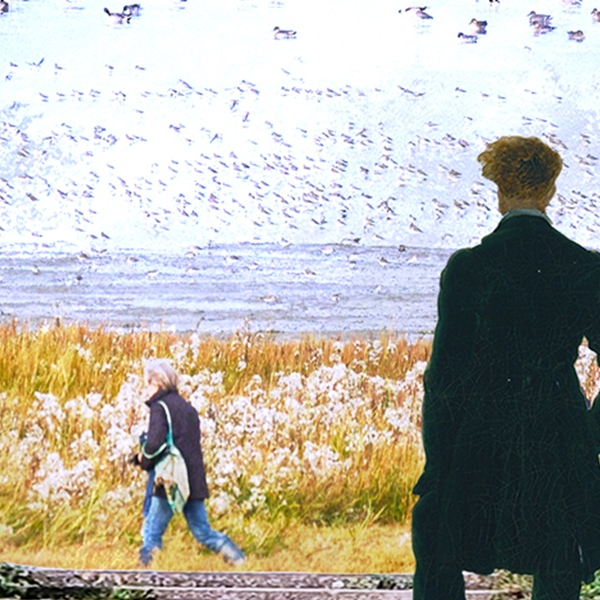
‘Waddenbaai’ loop
Recreational cycle route as a lever for biodiversity and the local economy
‘Waddenbaai’ loop
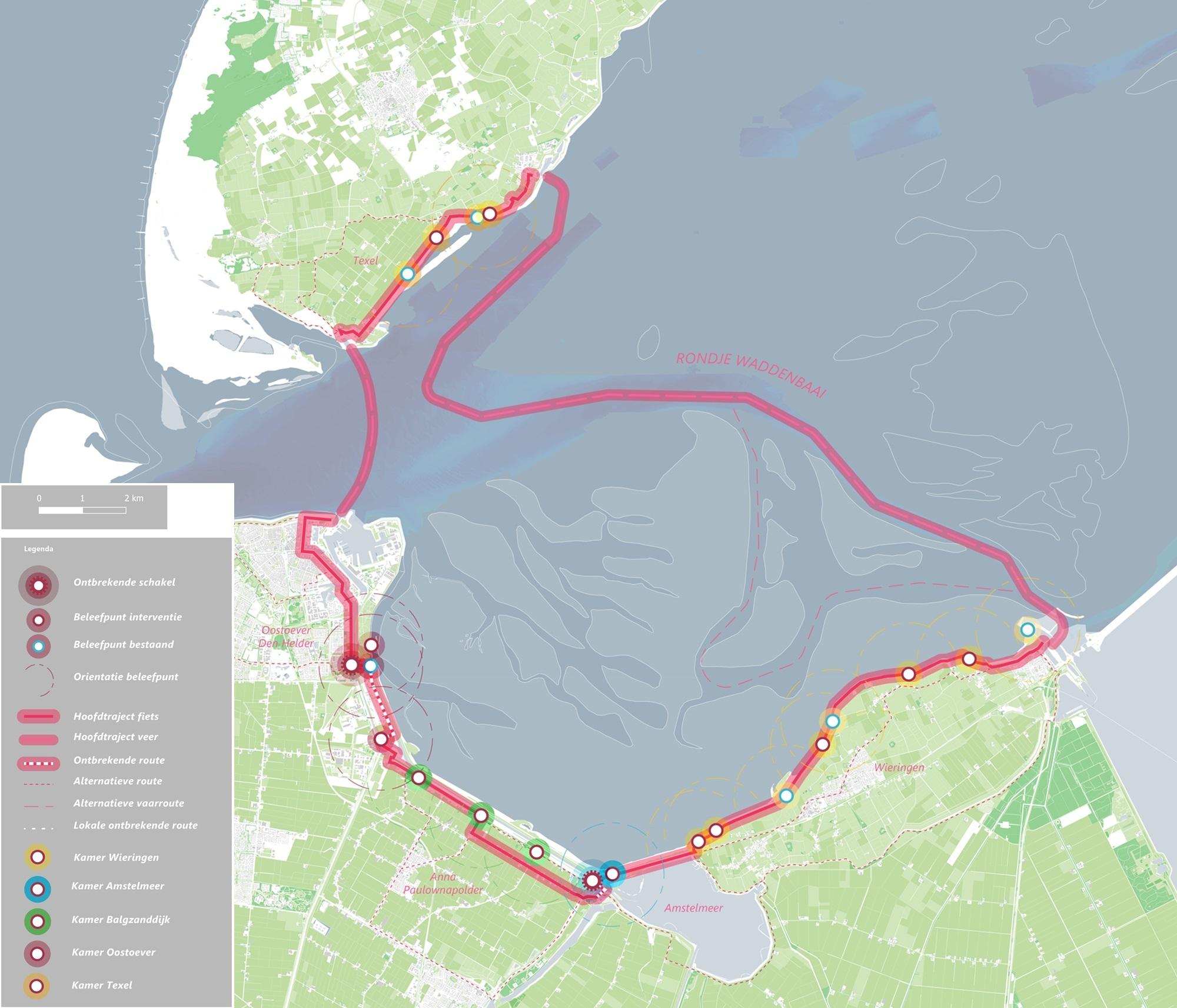
Commissioned by the province of North Holland, Witteveen+Bos, together with RO&AD Architects and Ginder, has developed a layered vision for the ‘Waddenbaai’ loop as an attractive recreational cycle route. What is special is that we, as the design team and client, have used the original request as a lever for a greater goal.
The ‘Waddenbaai’ is the name of the area between Texel, Den Helder and Den Oever. An area as large as the centre of Amsterdam within the Ring Road. But while our capital city is internationally renowned, the Wadden Bay has drifted into obscurity among the general public, despite its remarkable history and great diversity and uniqueness in character and quality.
Adding links
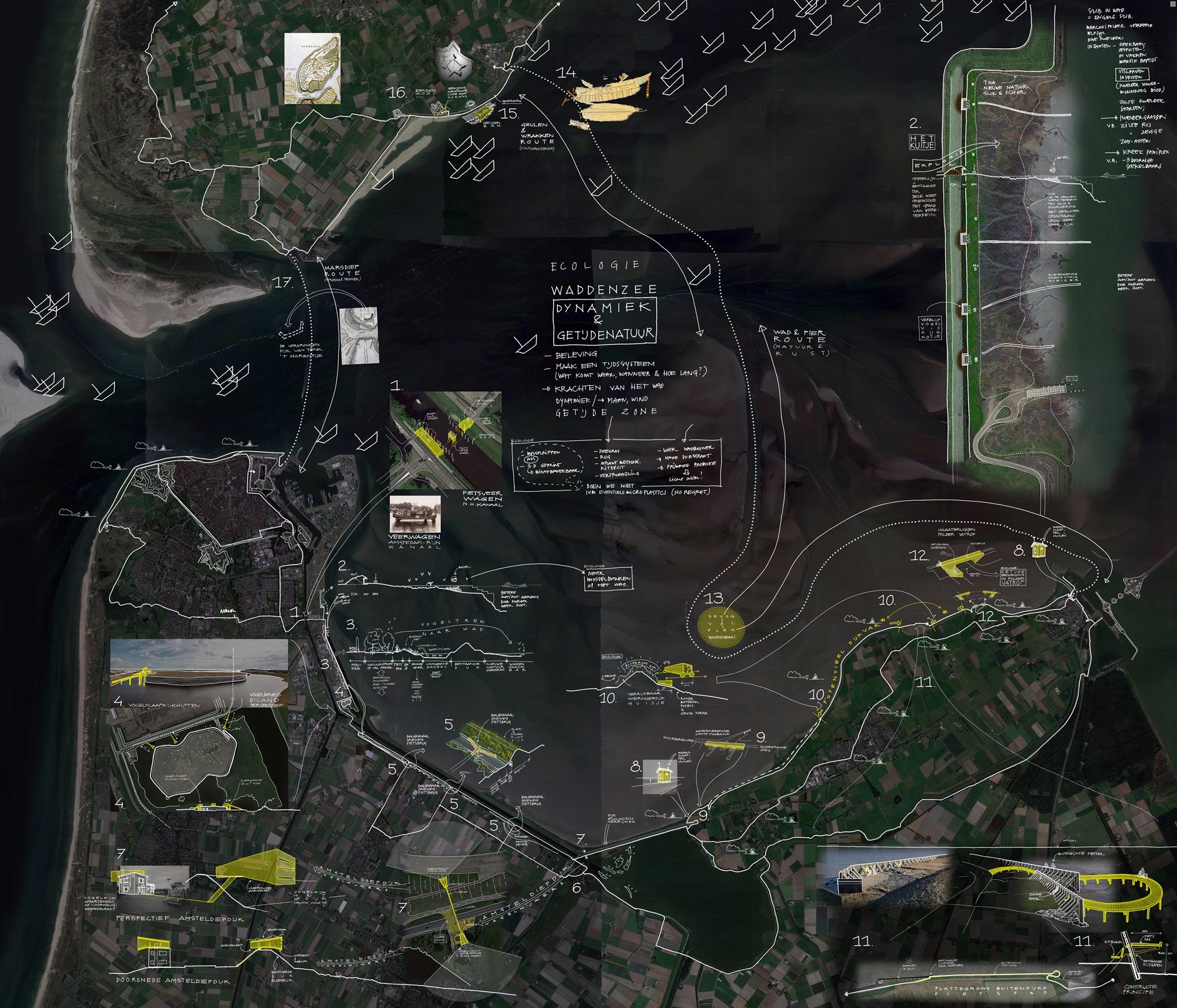
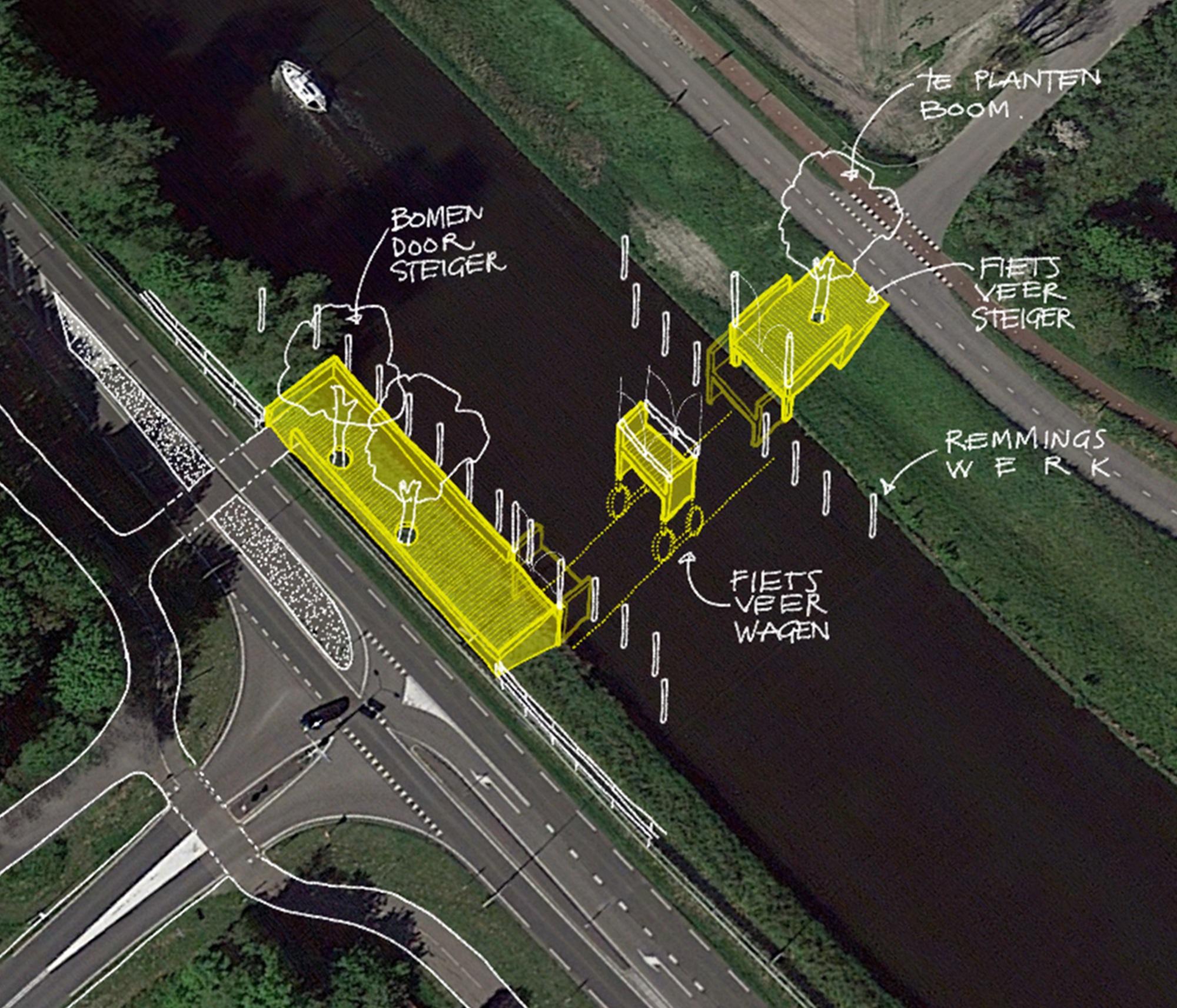
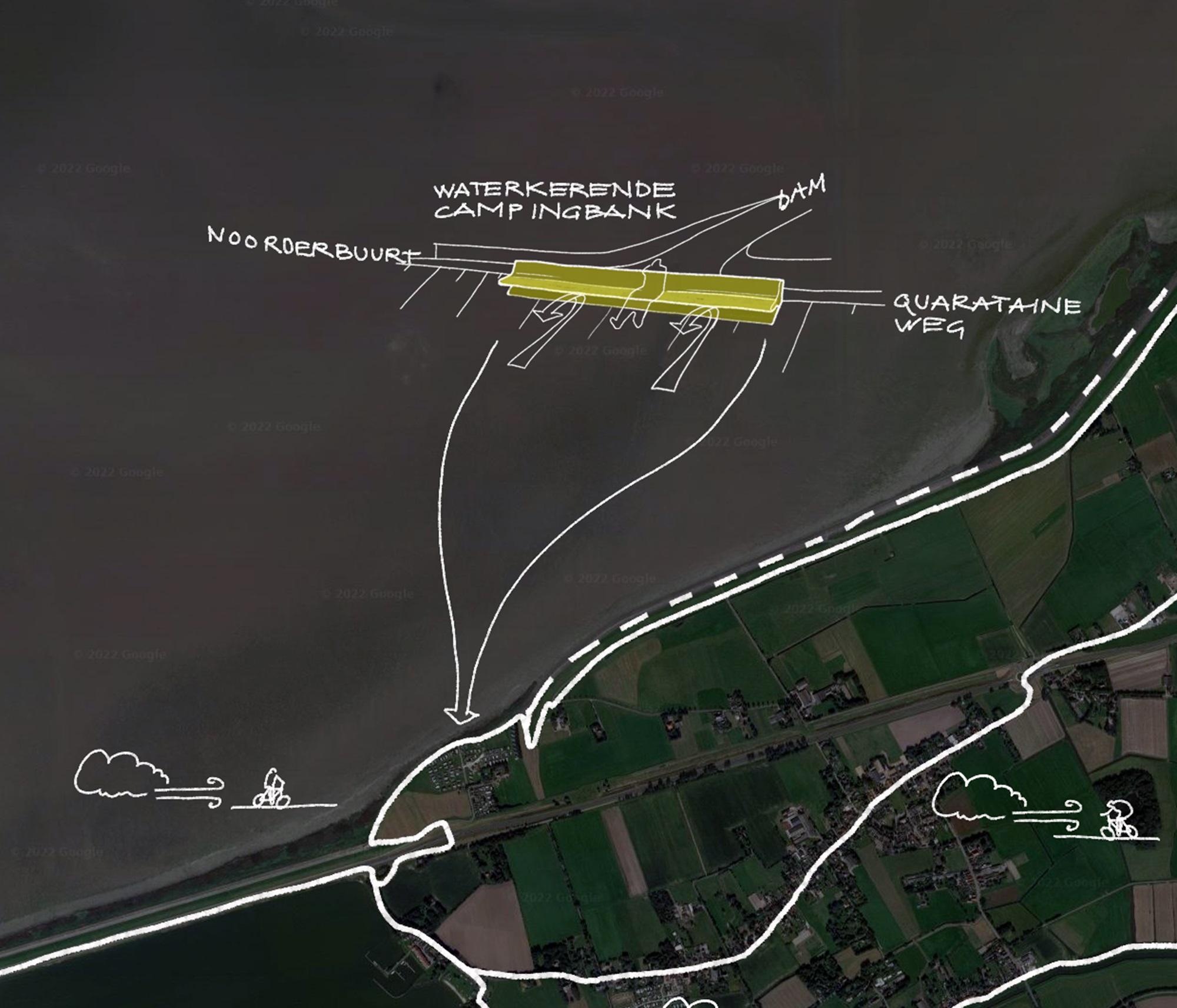
An important starting point on the way to a continuous route is to analyse the smaller local cycle routes and loops. A series of missing links have been added and new points of interest have been incorporated. The result is a continuous route: the ‘Waddenbaai’ loop, including a proposal for a new foot and bicycle ferry from Den Oever to Oudeschild (Texel).
Stopping biodiversity loss
The shared awareness that stopping the decline in biodiversity could be part of this route development was a joint motivation for the project team. The design research for a continuous cycle route therefore also includes opportunities to unlock and strengthen the ecological richness of the ‘Waddenbaai’. The route along the Balgzand Canal is illustrative. The addition of a necessary cycle path is combined with the conversion of a piece of farmland into a nature reserve. This creates not only a better cycle route but also more buffer space for the vulnerable bird breeding areas outside the dykes.
Boost for residents
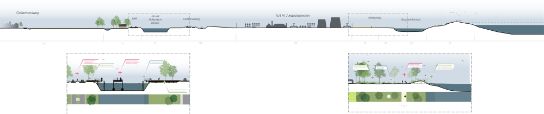
We have also combined increasing the attractiveness for tourists with a boost for the living environment. Logically, this is done by offering better cycling infrastructure for residents, which also reduces car dependency. But also by creating more points of interest and facilities along the route, as well as promoting a greener and healthier living environment.
Participatory project
This design research was explicitly carried out in a participatory manner. In addition to close cooperation with a local working group with representatives from the municipalities, the water board, Staatsbosbeheer (the Dutch Forestry Commission) and the province, discussions were held with local entrepreneurs and residents during cycling tours through the area.
More information?