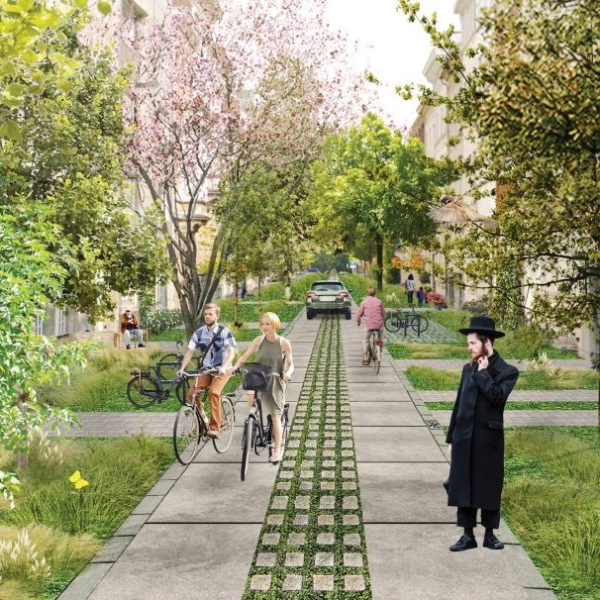
Urban area plans for water and greenery in Antwerp
Urban area plans for water and greenery in Antwerp
The City of Antwerp has started preparing for the future
Climate change is producing longer periods of heat and drought, coupled with less frequent but more intense rainfall. The consequences of this are experienced even more extremely in cities due to the prevalence of hard surfaces. With urbanisation also resulting in biodiversity loss, the combined effects on the living environment are significant. The City of Antwerp has started preparing for the future. Through urban area plans, it is anticipating future developments and giving concrete form to the ambitions of its water, climate and greenery plans, and to the conclusions of its drought study. On this project, phased and substantiated plans are being developed for a number of urban areas – initially, Stadspark, Brederode, Kiel and Tentoonstellingswijk, with a third assignment now underway for the Oud-Berchem-Zurenborg and Borgerhout areas.
The urban area plans are about making the respective areas of Antwerp more climate-resilient. In the initial studies, Witteveen+Bos drafted a plan with design firm De Urbanisten and communications partner Common Ground for the area surrounding the Stadspark park. Witteveen+Bos was responsible for the hydrological-technical and biodiversity component, and supported De Urbanisten and Common Ground in, respectively, design and participation.
Vito Timmerman from De Urbanisten and Witteveen+Bos project manager Ben Catry are collaborating on this project. Vito is involved as project manager in drafting the urban area plan for Oud-Berchem-Zurenborg and Borgerhout. Vito:
‘Together with the client, the City of Antwerp, we’re now looking at how we can apply the results of the plan to implement change in the areas. How can we make it as easy as possible for them? Our efforts have resulted in a comprehensive document, but what ultimately matters is which parts of it can be implemented to improve the areas’ climate-resilience.’
Ambitions
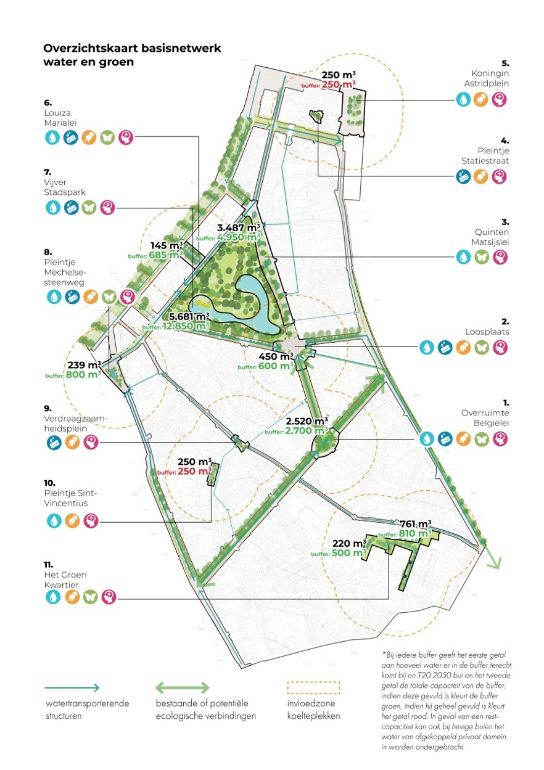
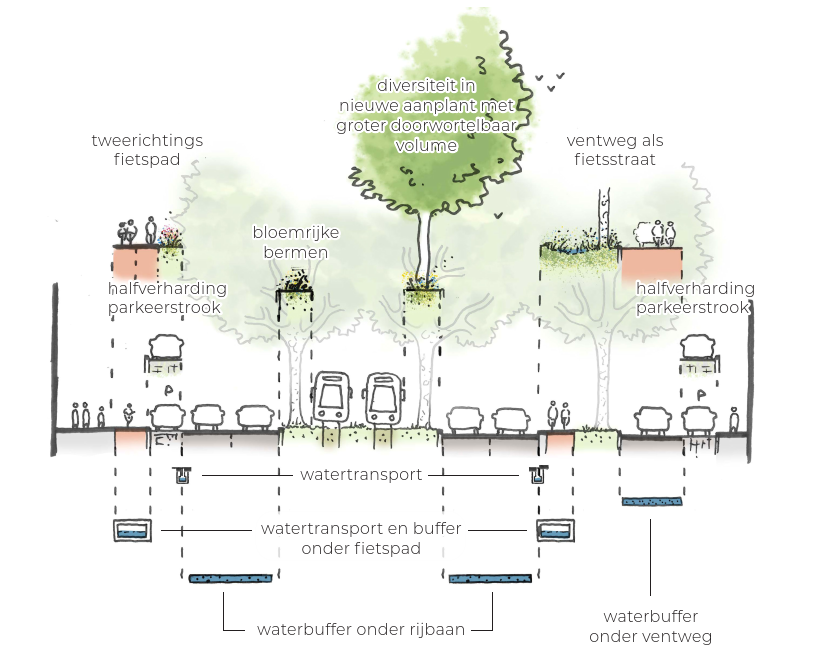
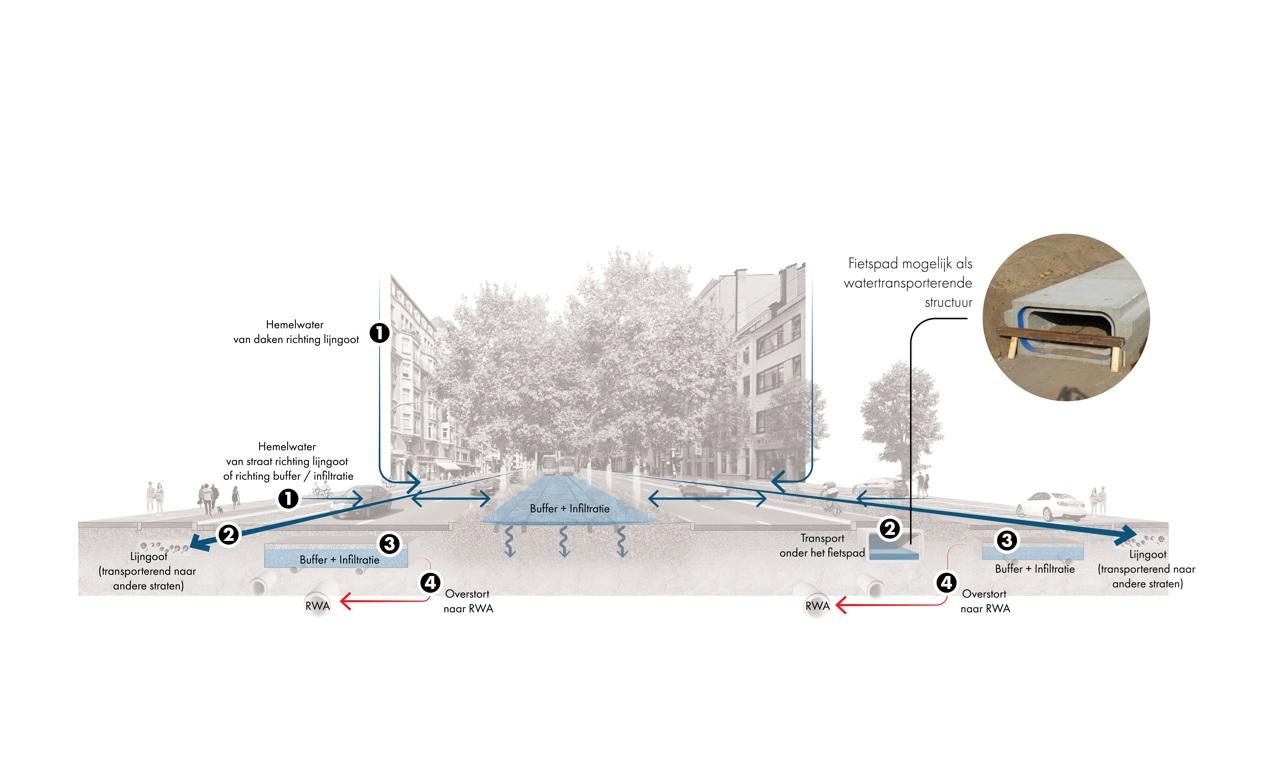
The urban area plans are aimed at building a climate-resilient Antwerp with a strategic water-and-greenery network. Ben Catry: ‘In these plans, we indicate specifically how and where water and greenery can be given strategic, high-quality locations. Redeveloping the urban areas will prevent flooding during instances of heavy rainfall – which are occurring more frequently and are more intense – but it will also result in water being retained and buffered. This will increase the supply of groundwater, which combats drought.’
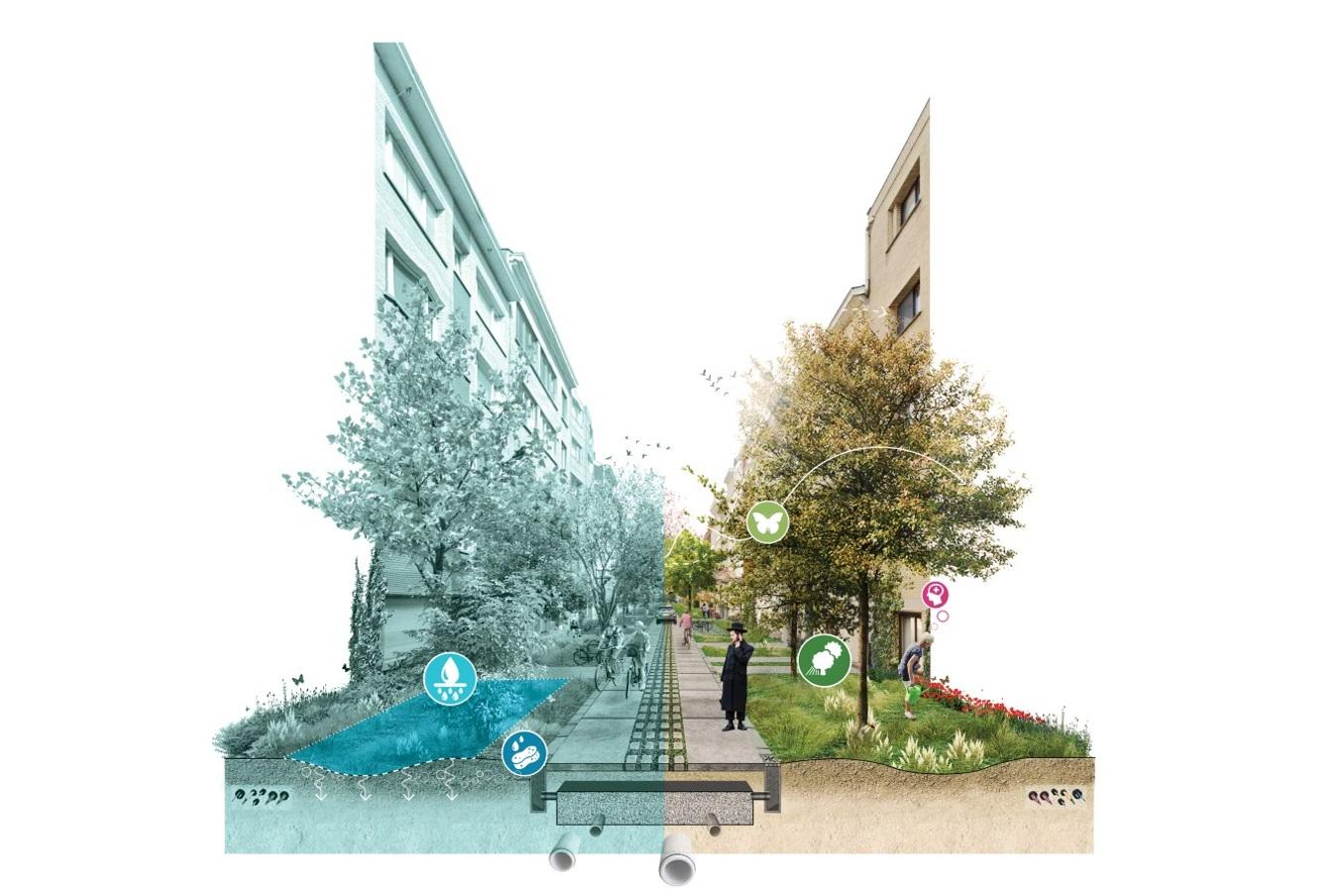
On top of this, the plans employ experiential greenery to reduce heat stress by offering shade and through evaporation. This greenery is strategically arranged to produce sufficient cooling spots for residents on hot summer days. The cooling spots are connected by green belts in strategic locations, creating an ecological corridor. Ultimately, the green locations and corridors will enhance the quality of the city and stimulate an increase in biodiversity, with the visible and tangible nature of these ecological structures increasing their experiential value and, in turn, raising climate awareness.
Phased plans
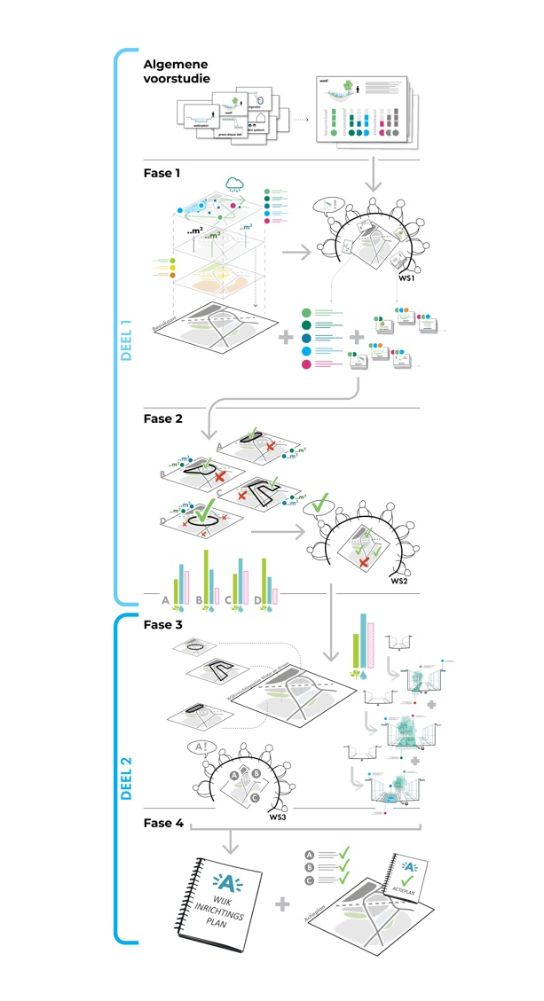
The plan is divided into four phases. In the first phase, a comprehensive analysis is made of the current and historical situation of the area and potential obstacles are identified. In the second, scenarios are outlined in which the predetermined ambitions are made concrete. The effectiveness of each scenario is then calculated, with the effective solution pathways being used to produce a concrete plan in the form of an accessible system-and-vision map. In the final phase, the strategies are incorporated into an action plan and accompanying communication plan.
Vito: ‘It’s important that the project is supported in the city. First and foremost, officials have to be behind it. At a later stage, when the plans are implemented on the streets, more participation will be involved. We have to have the support of residents too. The City of Antwerp is only responsible for public land, but we hope that the plans can also be contributed to from private spaces. It’s the task of the project team to determine how achievable the ambitions are.’

Our projects
Every year we work on almost 5,000 projects on water, infrastructure, environment and construction.
