Tunnel renovations project in Zuid-Holland
Tunnel renovations project in Zuid-Holland
Due to urbanisation and population growth, the intensity of traffic on Dutch roads is increasing. This has consequences for infrastructure, including tunnels. Of course, traffic flow through tunnels must remain as safe and smooth as possible. So to ensure that cities remain accessible and guarantee future road safety, five Rijkswaterstaat tunnels in the province of Zuid-Holland are being renovated between now and 2032.
Most of these public tunnels were constructed around the end of last century and the start of this one. As part of Tunnel Engineering Consultants (TEC) – since 1988, a permanent collaboration between Haskoning and Witteveen+Bos – we are working with Rijkswaterstaat to ensure the tunnels remain safe and usable for the next 30 years.
Coordination and integrated working
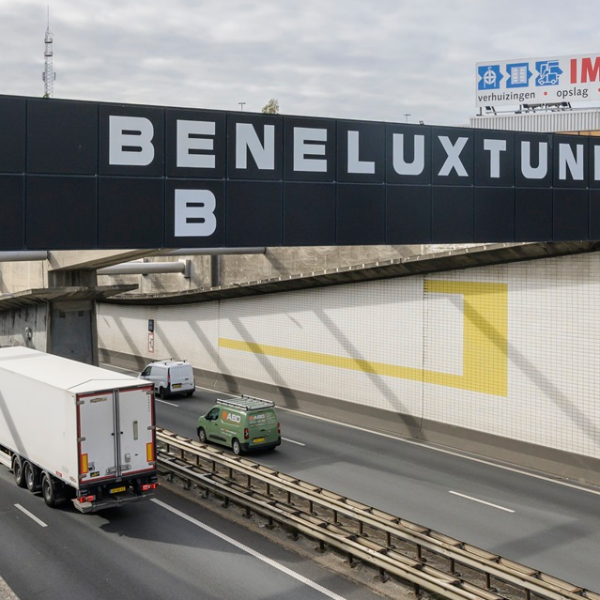
TEC has been part of the Tunnelrenovatie Zuid-Holland project (PTZ) for more than three years now. So far, each of the project’s milestones have been achieved on time, including the contract award for the Noord Tunnel and the start of contract preparations for the Benelux Tunnel. This year, we have tackled five tunnels in various phases, which requires coordination and integrated collaboration.
Greater efficiency through portfolio strategy
On this project, we are employing a portfolio strategy which involves bundling the renovation of several tunnels and using overlapping schedules. This allows us to accelerate design and renovation tasks. There are two portfolios, with portfolio 1 consisting of the Noord Tunnel (A15), the Benelux Tunnel (A4) and the Tweede Heinenoord Tunnel (A29), and portfolio 2 comprising the Drecht Tunnel (A16) and the Sijtwende Tunnel (N14). Whereas it used to take seven years to renovate a single tunnel, a portfolio approach reduces that to around four years. Together with the use of overlapping schedules – in which tunnels are renovated successively and partly in parallel – this is hugely beneficial.
Of course, renovating tunnels also entails risks – particularly when it involves five public tunnels as it does now. Our design aims to avoid as much disruption to current traffic as possible. To achieve this, we require integrated coordination with a wide range of regional stakeholders. We are also taking into account other major renovation projects in the region, so as to minimise traffic disruption as much as possible during the renovation works.
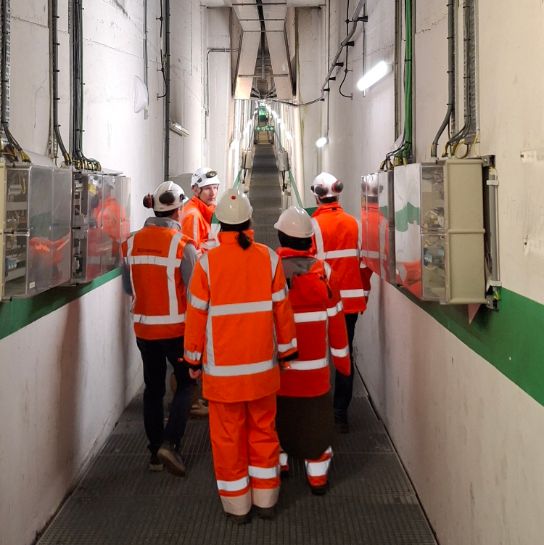
Knowledge from the past as blueprint for today
Despite the complexity of the project, we have so far renovated every tunnel more efficiently than planned. On the first two tunnels, an efficiency gain of 13 % was realised. This was primarily achieved by optimising processes using knowledge from previous tunnels and comparable projects. To facilitate this, a team exists whose primary task on PTZ is sharing knowledge.
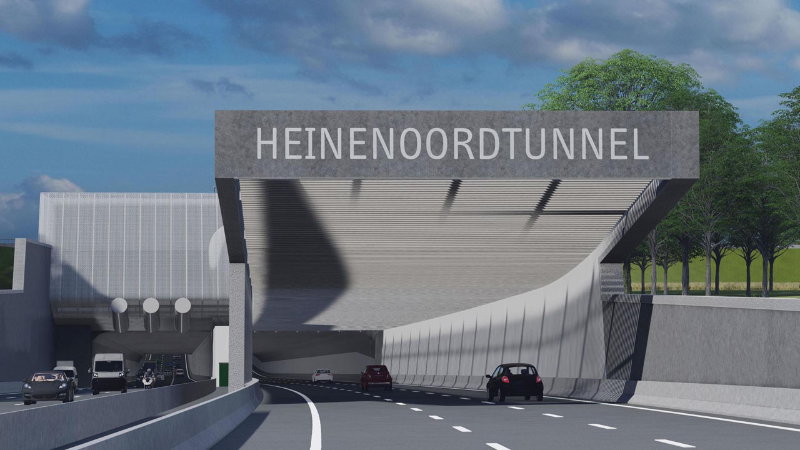
During renovation works on the Heinenoord Tunnel between 2018 and 2024, TEC accumulated significant knowledge that we can now apply on current projects. On top of this, with almost four decades of experience in tunnel engineering, TEC is among the best tunnel renovators in the world. It has also developed a tunnels master class which contributes to knowledge sharing and employee education in the tunnel market. On PTZ, we are putting those educational opportunities into practice.
‘We’ve been collaborating with TEC for three years now. Right from the start, we’ve devoted attention to the collaboration itself. This has resulted in a solid, effective foundation. As well as being about expertise, our collaboration with TEC is enjoyable and transparent.’
Rik Sonneveldt, PTZ project manager
‘We regularly discuss what’s going well and what could be improved in the collaboration. TEC experiences working together with Rijkswaterstaat as pleasant, safe and professional. We’re really pleased that we’ve developed such a great collaboration for a project as big as PTZ!’
Johan Kornet, PTZ project manager
Sustainable and circular
Besides the primary renovation task, the focus of this project is on circular and sustainable execution. This means, for example, striving for lower energy consumption and fewer cables in service tunnels, but also investigating possible connections to solar parks and wind farms in the area. In short, we are looking for ways to work more efficiently and sustainably during both construction and maintenance.