Toolbox for Women-Friendly Public Spaces
50 practical design principles for safe, inclusive and accessible public spaces
Go to the ToolboxToolbox for Women-Friendly Public Spaces
What is needed to create a city where everyone feels safe and welcome and can move about freely? Based on this question, a design study into safe and inclusive public spaces was carried out under the leadership of Witteveen+Bos. The result is the Toolbox for Women-Friendly Public Spaces: a practical resource offering 50 concrete solutions and design principles for inclusive public spaces.
Inclusive for everyone
By explicitly examining public spaces from a women’s perspective, barriers become apparent that are easily overlooked in traditional design approaches. This generates insights that contribute to a city that is not only more women-friendly, but also more inclusive, accessible and safer for everyone. This applies, for example, to older people and young families as well, as they have similar needs.
The research shows, for example, that sports and park facilities do not always meet the needs of girls and young women. Competitive sport often dominates. The toolbox therefore includes, amongst other things, design principles for spaces that explicitly encourage social activities, various forms of sport, play and leisure.
From research to practical solutions
The opportunities and challenges for a women-friendly and inclusive city were investigated through a literature review, field research involving walking interviews and surveys, and the expertise of various partners. The insights were then translated into design principles and tested in practice.
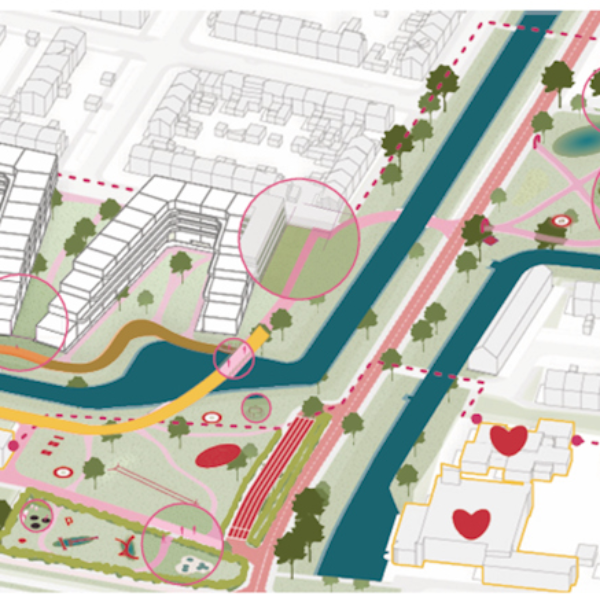
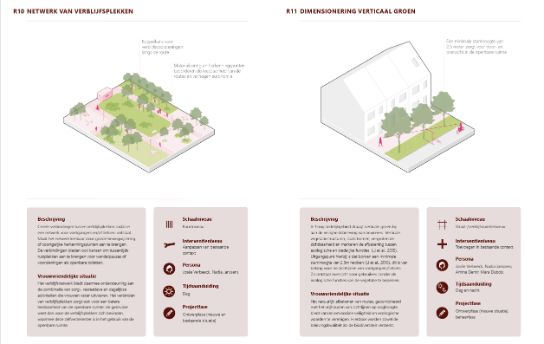
The principles have been categorised according to Kevin Lynch’s theory, which describes how people perceive and mentally structure a city. The toolbox distinguishes five spatial elements: points, routes, landmarks, areas and edges. In addition, various sub-themes were developed based on the work sessions and the literature, including lighting, play areas and management.
Different perspectives as a basis
An inclusive city begins with involving and taking into account different users. That is why the research team worked with fictional role models, or ‘personas’. These included a primary school-aged girl, a student, a young mother and a retired woman, all of whom were incorporated as perspectives.
‘A women-friendly public space is not created by a single, isolated intervention,’ emphasises Joosse. ‘It is created through bespoke solutions: by combining multiple design principles that reinforce and complement one another, tailored to the needs and the location.’
Work sessions: get started with your case study
Now that the toolbox has been launched, the expert teams at Witteveen+Bos will start working to apply the design principles to locations within these towns. On-site work sessions, in which we tackle a specific issue together with clients, are an effective and enjoyable way of working. During such creative work sessions, promising combinations of design principles quickly emerge to make that specific public space safe, inclusive and accessible.
Are you interested in such a creative work session or would you like to find out more about the Toolbox? Please contact Nonna Joosse (NL) or Marisa Borabo (BE).
Full Toolbox available for free
The Toolbox was created out of our ambition to contribute to a safe, inclusive and accessible public space. That is why we have decided to make the complete Toolbox available free of charge with immediate effect.
Click on the button to open the Toolbox. Once you have registered, you will have access to the full Toolbox containing 50 practical design principles.
A thank you to our partners
The research benefited from broad engagement from cities and municipalities in the Netherlands and Belgium. Arnhem, Breda, Deventer, Eindhoven, Groningen, Leuven, Leiden and Mechelen took part in work sessions during which interim research findings were reviewed, validated and assessed for applicability.
In addition, Prof. Dr Liesbeth Huybrechts of Hasselt University, Maaike Schravesande MRE on behalf of Heijmans, and Vincent Luyendijk, a specialist in healthy living environments at Openbare ruimtemakers voor Meiden, contributed to the research.
Want to know more about the Toolbox?