National Tactical Command
The operational headquarters of the Royal Netherlands Marechaussee
National Tactical Command
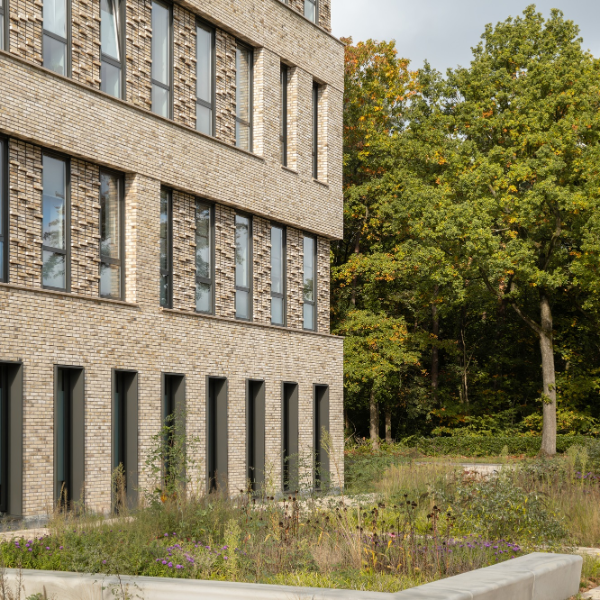
The National Tactical Command at Camp New Amsterdam is the operational headquarters of the Royal Netherlands Marechaussee. The location at Huis ter Heide houses various brigades and is an essential link in the central management of the KMar. Together with our advisors in construction, Installations Engineering, building physics and sustainability, a building has been realised with high standards of functionality and sustainability, which optimally meets the operational needs of the Royal Netherlands Marechaussee.
Sustainable design and healthy environment
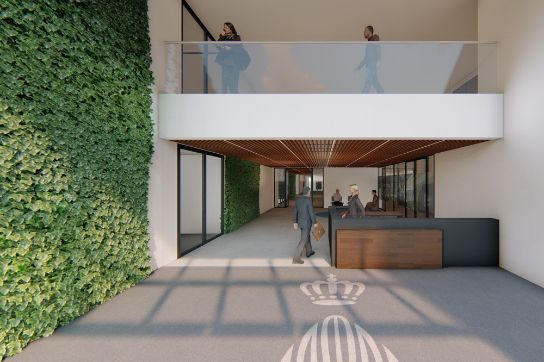
The building has an efficient, compact spatial design. Energy consumption is greatly reduced through the use of triple glazing, good insulation and a highly energy-efficient climate control system. Two large indoor gardens form the basis of the main structure and contribute to an attractive, healthy working environment for users. By integrating the indoor gardens, the surrounding interior spaces also receive optimal daylight.
Spatial structure and integration
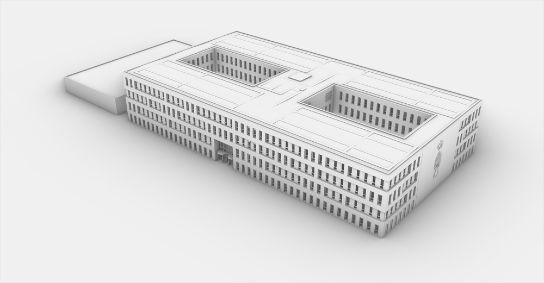
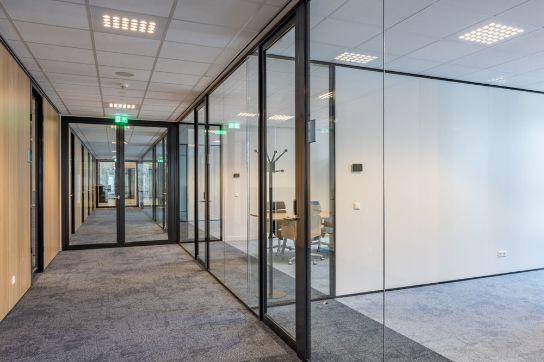
Inner gardens (1) contribute to daylight penetration in the office wings. Transparent interior walls and sustainable climate control systems result in an optimally comfortable indoor climate. Deep recesses that prevent unwanted heating allow for large window openings with plenty of daylight and a view to the outside.
The office wings are positioned on either side of a ‘service strip’ (2) with cores of lifts, (emergency) staircases and toilets. This allows each office wing to be flexibly arranged or closed off (3), while maintaining escape routes and access to toilets and access points.
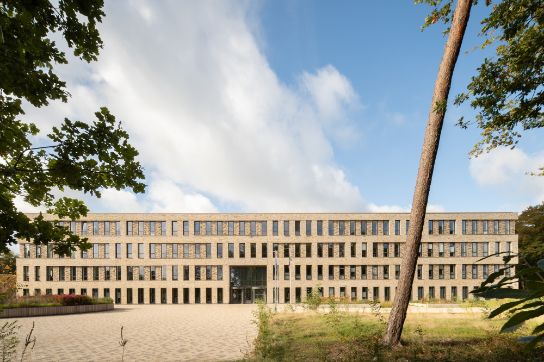
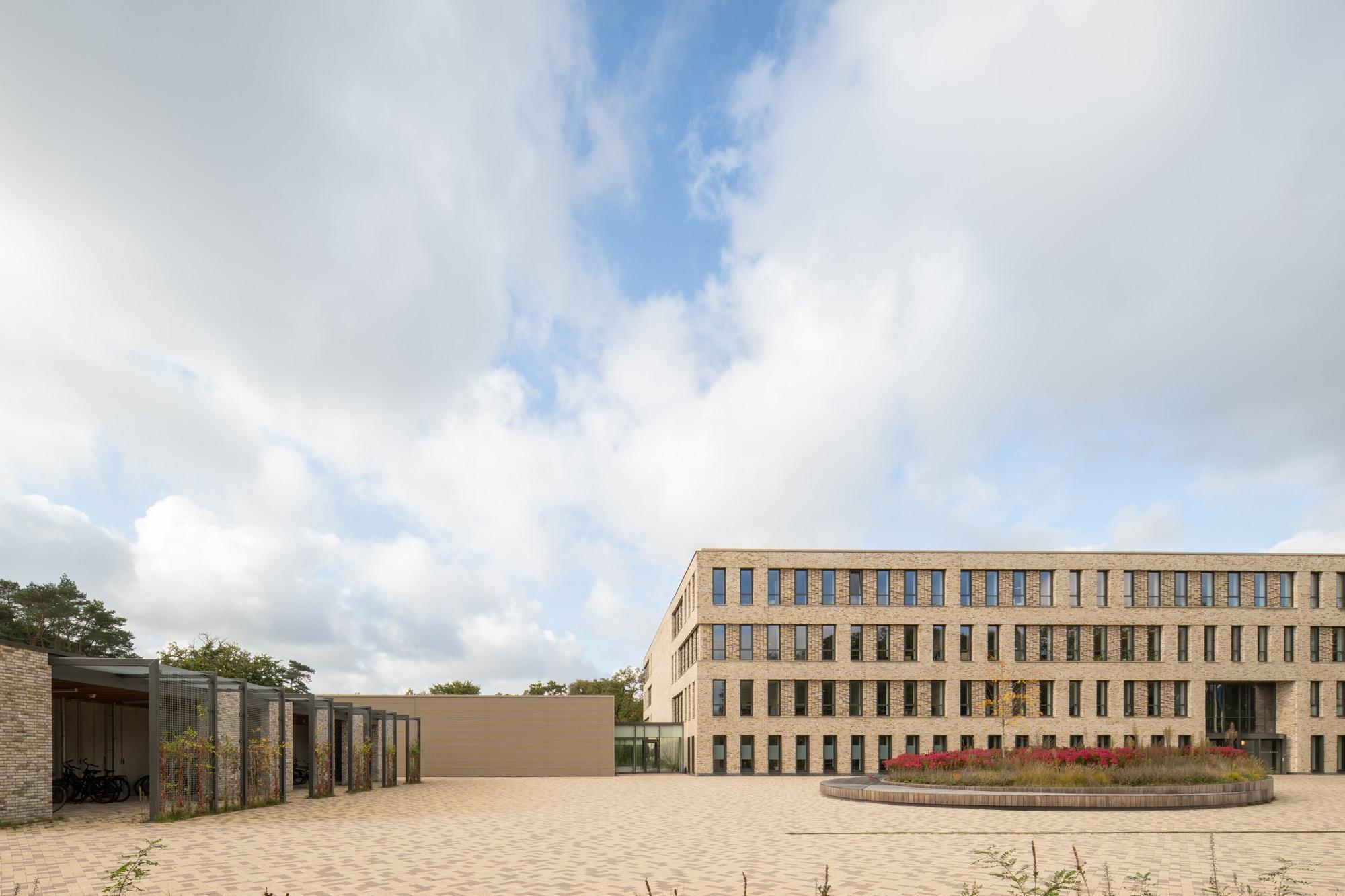
The main entrance, meeting rooms, public areas and lifts are located in the central core, easily accessible for teams and visitors via short walking distances (4). Long sightlines, indoor gardens and cores provide overview and orientation. The indoor gardens contribute to daylight for the spaces that can be included in a more secure zone. Secure zones are centrally and privately positioned and have no contact with external facades or public areas.

Solid and refined integration into the environment
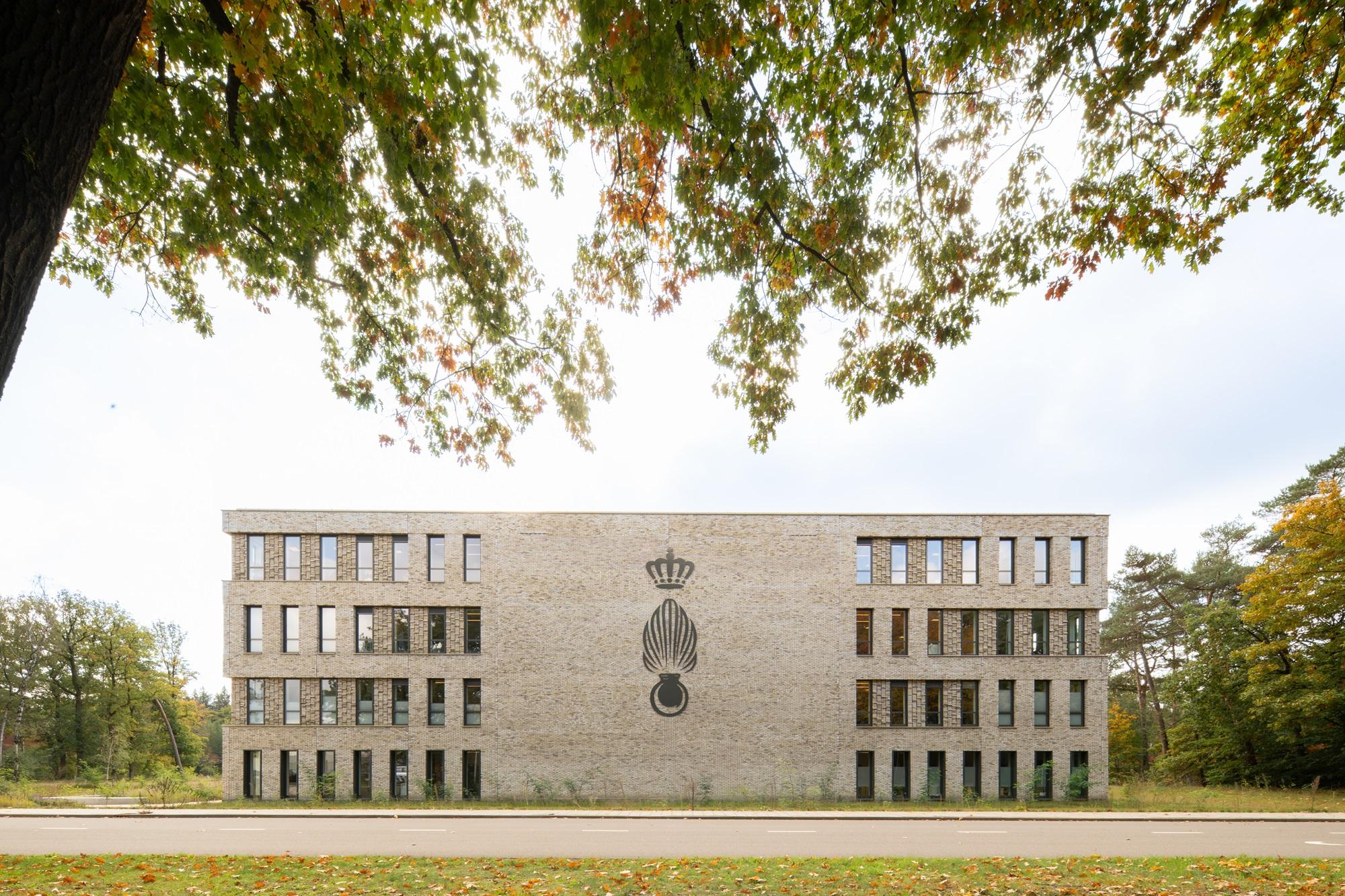
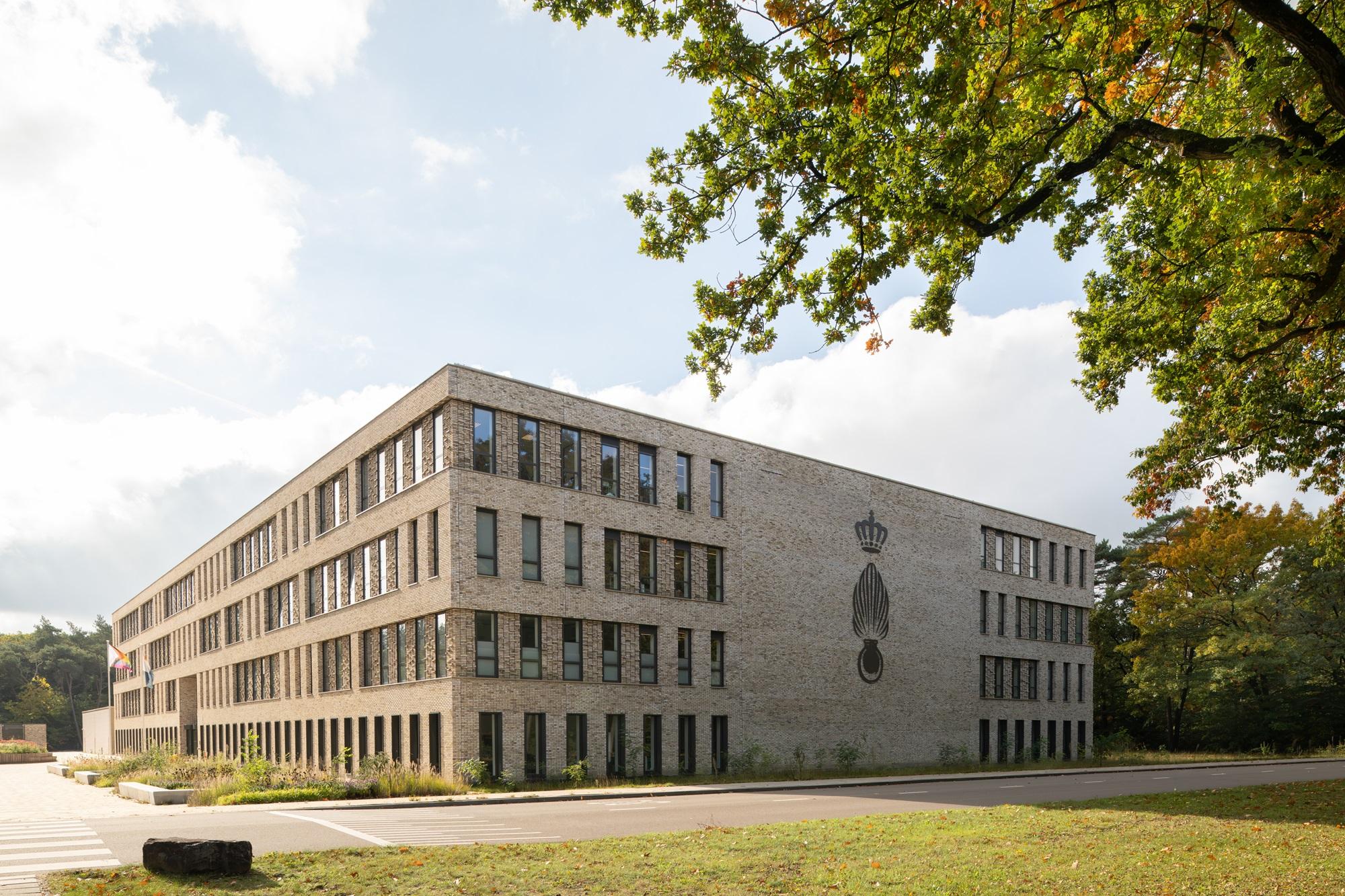
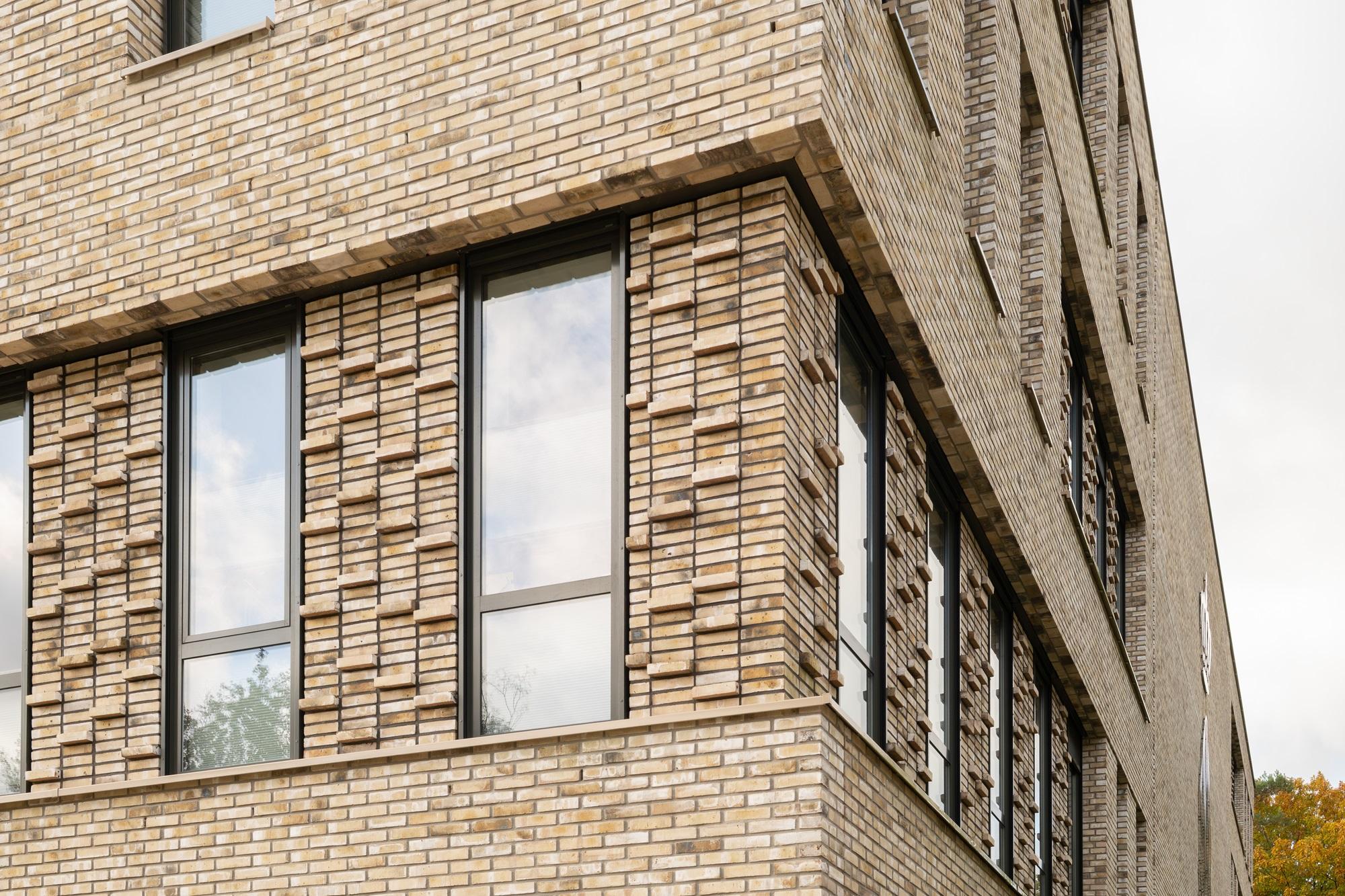
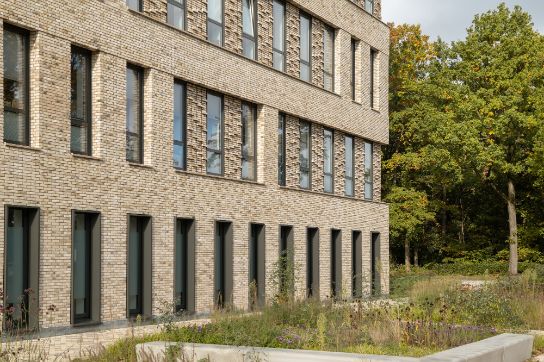
Up close, nuances in brickwork patterns and offsets are clearly visible in distinctive details. From a distance, the recessed glass entrance façade is prominent and accentuates the central axis of the building. The mixed brick façades refer to the forests and nearby sand drifts of Soesterduinen, but also to the camouflage patterns of the military: sturdy and full of character.
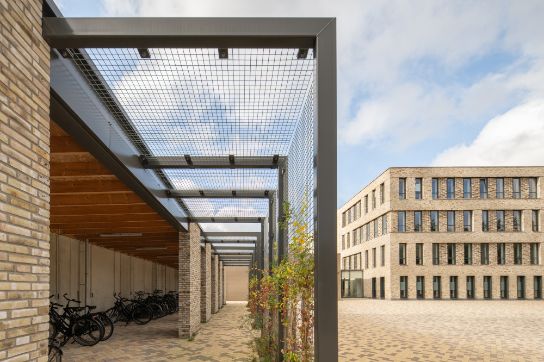
The building has a solid appearance and is also robust in a practical sense, thanks to easy-to-maintain materials that do not visibly age or become dirty. The soft natural sand, green and white tones of the façades blend naturally into the natural image of the forest edge in all seasons.
Boosting connection
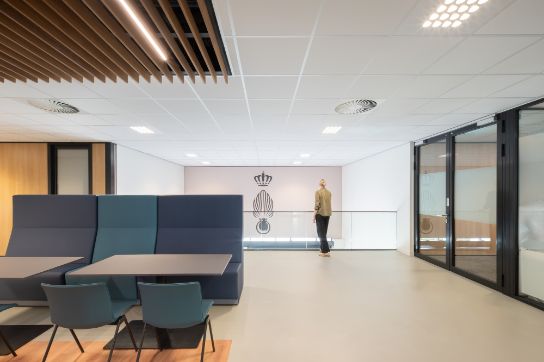
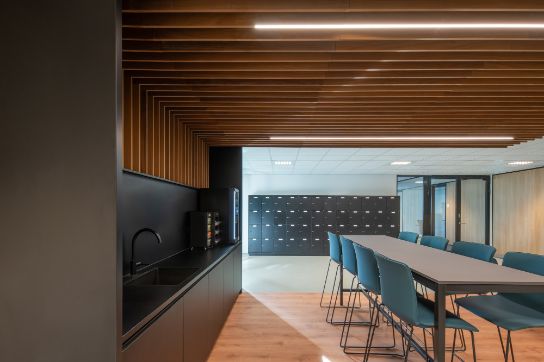
Depending on the activities of the various brigades, office wings can be linked and furnished. In accordance with the principles of Activity-Based Working, spaces are tailored to the work of the specific brigade and the individual employee: land-based workstations, informal meeting areas, small and large consultation rooms, concentration rooms, phone booths and brainstorming rooms. The work café on the ground floor and the kitchenettes invite people to meet. The multifunctional kitchenette areas are strategically (between brigades) and recognisably located at the ends of the corridors and can be flexibly arranged as a seating area, workplace or informal meeting place.

More information?


Our projects
Every year we work on almost 5,000 projects on water, infrastructure, environment and construction.
