Evaluating Wadden Sea management plan
Foundation for next generation of Natura 2000 management plans
Evaluating Wadden Sea management plan
Rijkswaterstaat is taking the lead in managing 25 Natura 2000 areas in Dutch national waters. This also means assuming responsibility for their management plans. The management plan for the Wadden Sea Natura 2000 area was adopted in 2016. At the end of 2022, it was extended until 2028. Rijkswaterstaat asked Witteveen+Bos to evaluate it ahead of the next generation of management plans.
The purpose of the evaluation? To gain insights on conserving habitat types, Habitats Directive species, and bird populations, as well as changes in the management and use of the Wadden Sea, and the success and failure factors of the current management plan. These insights were then used to create recommendations for improving future management plans for other Natura 2000 areas.
Dealing with uncertainties and conflicting interests
A diverse range of interests are represented in the Wadden Sea. Economic interests conflict with natural interests, which made evaluating the area’s management plan and devising new plans a complex process involving many stakeholders. On top of this, there was not always a sufficient amount of quantitative information on conservation targets or use and management. This made it necessary to obtain additional information from anecdotal sources. These included interviews and other personal communication with parties such as land management organisations, competent authorities, and research institutes.
Targets generally not being achieved
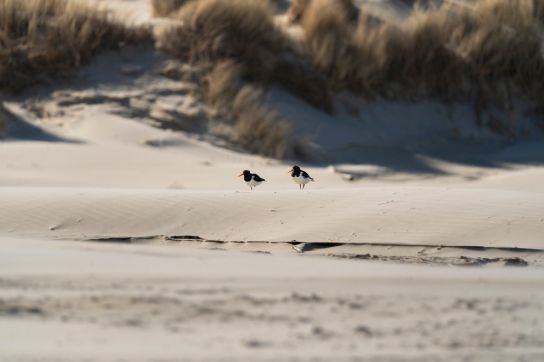
Our analysis revealed that many of the Wadden Sea Natura 2000 area’s conservation targets are not being achieved. A major cause of this is unsatisfactory habitat quality, which can lead to insufficient rest and food for fauna. Autonomous developments such as climate change also play a part. The insufficient amount of rest offered to fauna is a consequence of increased use of the Wadden Sea, together with a failure to consistently comply with requirements. During the period covered by the previous management plan, recreational use and activities related to civil works (e.g. construction and maintenance of cables and pipelines, shipping, and dredging) particularly increased. In contrast, the intensity of most fishing activities – such as mussel farming and prawn fishing – remained the same.
Success and failure factors
After evaluating target achievement and inventorying management and use, we conducted an analysis based on these findings to identify a range of success and failure factors. The main success factors for target achievement were general mosaic grazing of salt marshes and the creation of breeding islands (although this could lead to a decline in surface area for habitat types). Important ecological failure factors included excessive soil disturbance in the sublittoral (the area that is generally always under water); disruption for birds and seals due to multiple uses of the sea; climate change; predation on the eggs and young of breeding birds; and a lack of dynamics in and natural rejuvenation of salt marshes. The main failure factors for process, organisation and implementation were incomplete monitoring of Natura 2000 values, insufficient monitoring and enforcement capacity, and enforcement difficulties due to limitations in the Nature Conservation Act.
Identifying problems
Based on our evaluation of targets and identification of problems – and, as a result, our identification of success and failure factors – we made recommendations on how targets can be achieved in the future. These recommendations included limiting the intensity of certain uses (e.g. soil-disturbing activities); further extending protection of the breeding habitat; establishing monitoring programmes for species such as the root vole and harbour porpoise; and conducting research into the cumulative disturbance that results from multiple uses of the Wadden Sea.
In short, our evaluation provides a solid foundation for the development of new Wadden Sea management plans. The analysis and recommendations provided by Witteveen+Bos contribute to a management strategy that protects natural assets while allowing for responsible use of the Wadden Sea.