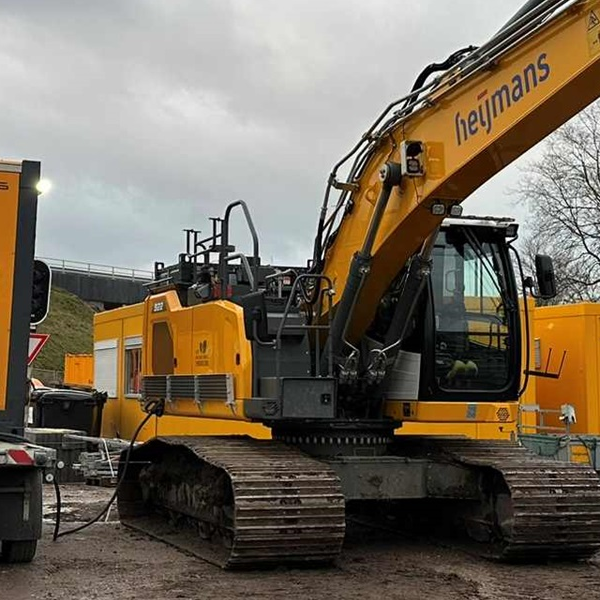
Emission-free construction
Lessons learned
Emission-free construction
Housing, infrastructure, the energy transition: the challenges facing the construction industry are imposing. At the same time, the industry – whose activities generate emissions that impact on nature (nitrogen), the climate (CO2), and public health (NO2, particulates) – is seeking to become more sustainable.
Clean and emission-free construction (SEB) creates opportunities to reduce emissions while improving health and safety for workers and reducing noise impact in the surrounding area. For these reasons, clean and emission-free construction is high on the agenda in both the public and private sectors.
But transitioning to clean and emission-free construction is not without its challenges. For TenneT, Witteveen+Bos investigated where the potential problems lie and how they can be addressed. Our recommendations included the following steps and lessons learned.
Think before you act
A structured approach is crucial, with insight being an essential prerequisite for effectively reducing emissions. First, find out which activities and equipment generate the most emissions. Then, apply appropriate measures to the design.
Before considering electrification, for example, check whether measures can be applied to reduce and/or flatten energy demand. Also, the amount of excavation required can be reduced by choosing the location wisely, and the amount of labour by using prefabricated structures. In TenneT’s case, total emissions can often be halved purely by applying measures in the design phase.
Finally, once all possible energy-saving measures have been applied to the design, consider electric construction equipment and logistics-related solutions.
Low-hanging fruit
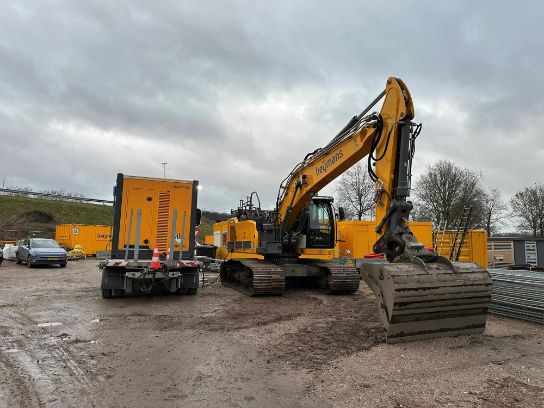
If electrification does become necessary, start with the low-hanging fruit: construction equipment that requires less power will significantly reduce emissions. Focus on equipment that is used for long periods and has a relatively low weekly peak consumption.
Also look into what is possible with a standard construction-site grid connection. By using the connection for construction activities during the day and for charging equipment at night, for example, it can be optimally exploited. The figure below shows the electrification potential of each type of grid connection.
Finally, take several small steps. If more power is needed than the connection can provide, a project will quickly become increasingly complex and more expensive. This means extra battery packs, additional logistical requirements, more equipment, the risk of downtime, and complicated scheduling.
Our recommendation: choose simple and relatively inexpensive electrification across all projects, rather than maximum electrification on a few pilot projects. If a high degree of electrification is desired, then appoint an energy manager to ensure the grid connection is maximally exploited.
TenneT: on-site charging opportunities
We developed the following roadmap to assist TenneT in organising charging opportunities on its construction sites:
Step 1: Is the existing grid connection sufficient?
Step 2: Can the planned new connection or upgrade be realised sooner?
Step 3: Can a temporary construction-site connection be requested?
Step 4: Are suitable connections available in the (immediate) vicinity of the construction site?
Step 5: Employ a generator and/or batteries.
Exploit grid connections in the surrounding area
Grid congestion can complicate plans to conduct construction work on an increasingly electrical basis. Organising sufficient power can be a challenge on pipelines and cable corridors too. To make electricity-powered construction possible nevertheless, consider using grid connections in the surrounding area. Examples of sources include parties that generate their own electricity and those with a high-usage connection.
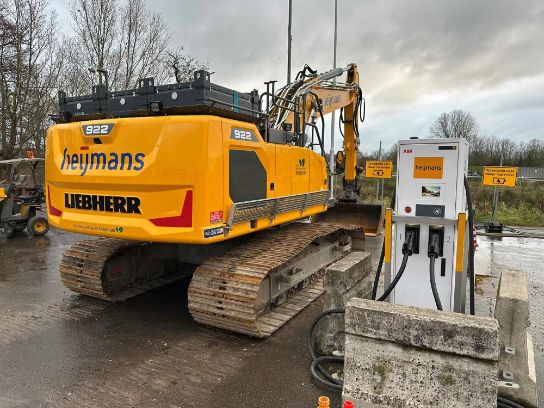
As a first step, wind farms and solar parks can be approached for a direct connection, possibly through a solution such as a battery switching station. Charging stations are an alternative option, with truck stations usually being more suitable for construction equipment than car stations.
If neither of these options is possible, contact can be sought with nearby businesses that generate their own electricity or do not constantly use their high-usage connections. These parties could include waste incinerator plants with CHP or steel processing companies, where high energy demand only occurs during the day.