Design research in the Northern Meuse Valley for dyke reinforcement in Steyl
Building on heritage while ensuring water safety
Design research in the Northern Meuse Valley for dyke reinforcement in Steyl
Recent floods have once again highlighted the need for dyke reinforcement in Steyl, Limburg. At the same time, the nationally protected village landscape with its current dyke, quay wall and adjacent buildings calls for smart and responsible design choices. The design research by Witteveen+Bos, Michel Heesen architectuur and H+N+S landscape architects combines both ambitions.
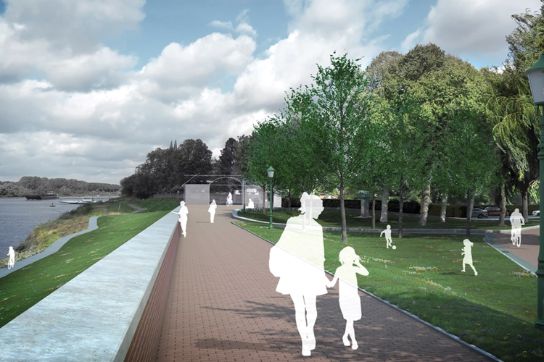
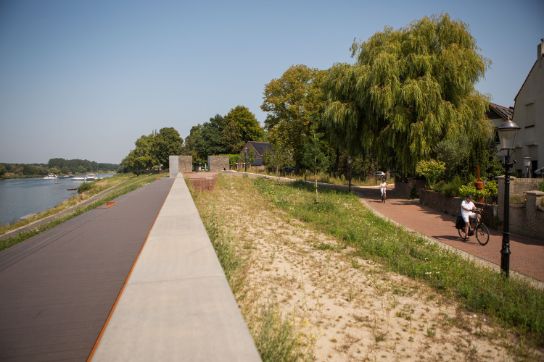
This project is part of a larger programme of dyke reinforcement in the Northern Meuse Valley, commissioned by the Limburg Water Board. At Steyl, dyke reinforcement has been chosen through the application of a vertical, self-closing barrier. This barrier must be realised with respect for the current (and protected) village view: an ensemble of monastery buildings on a green dyke.
We carried out both the exploratory study and the detailed design, translating the results into the aesthetic programme of requirements (EpvE). This sets out the framework and the reference design. Based on the EpvE, the contractor (Dijkzone alliantie) developed the landscape design and carried out the work. Witteveen+Bos was involved in this project up to and including the award of the contract to the contractor.
‘Balcony on the Meuse’
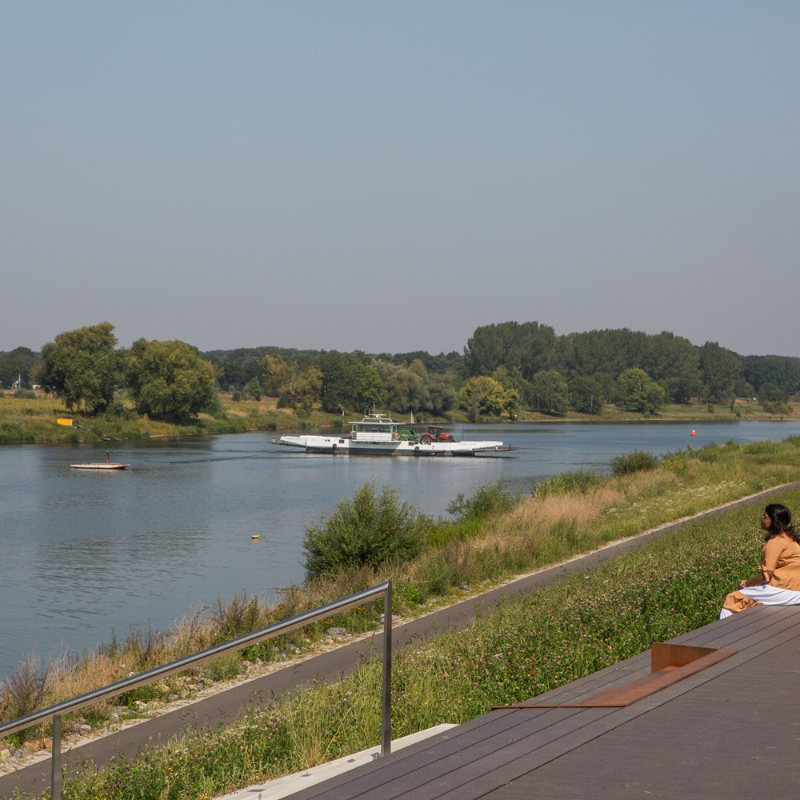
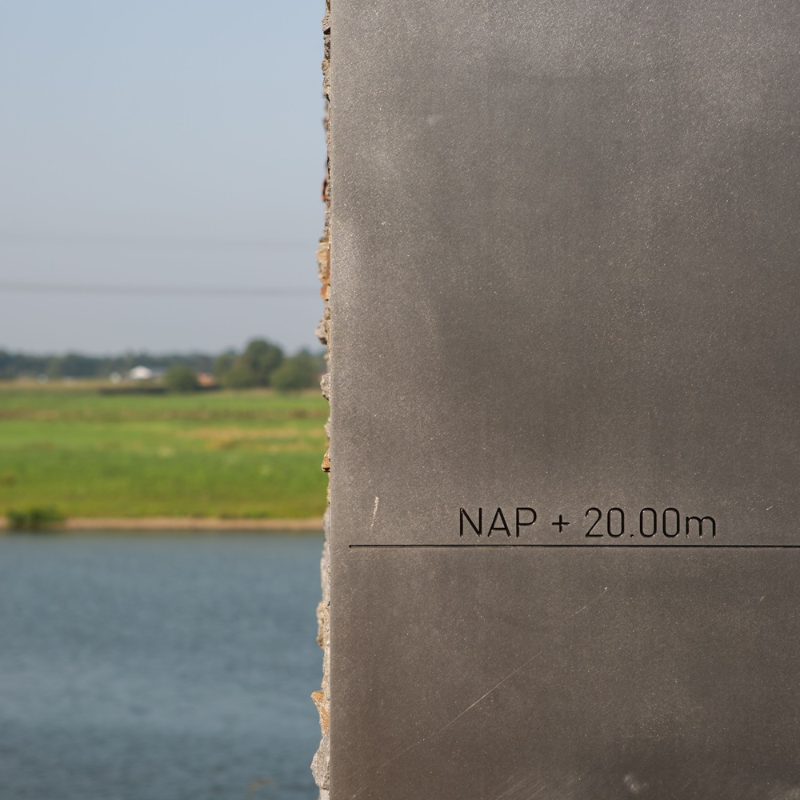
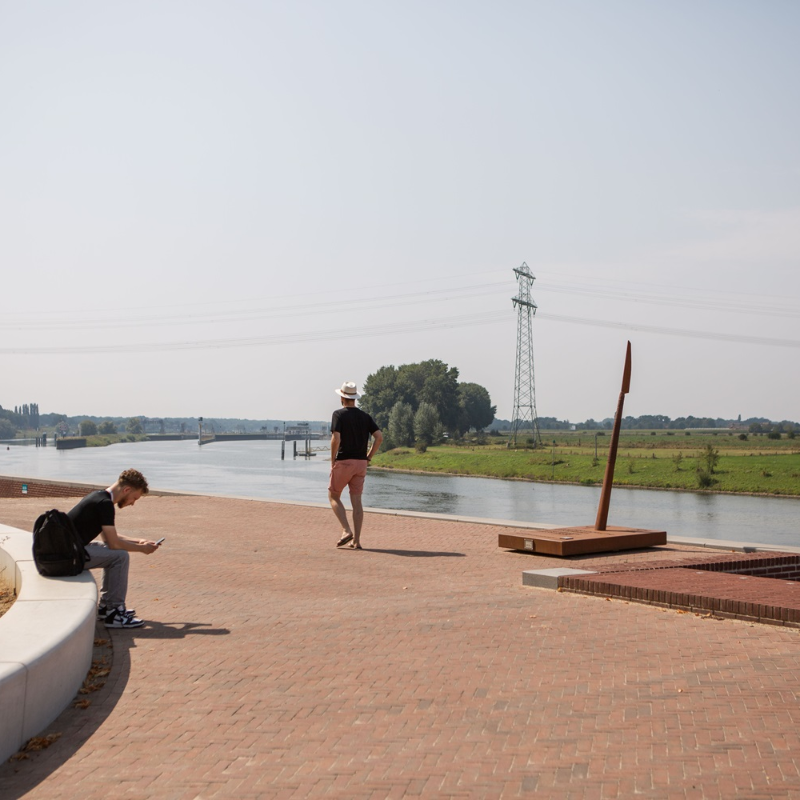
In order to transform the “balcony on the Meuse” into an attractive meeting place, the following spatial principles were applied in the design:
- unobstructed view of the Meuse;
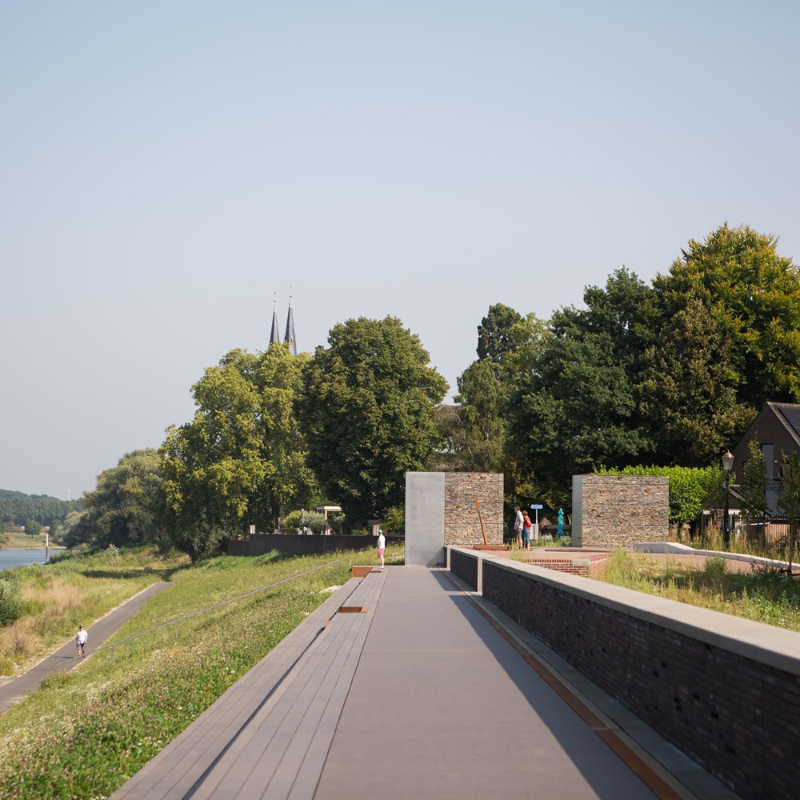
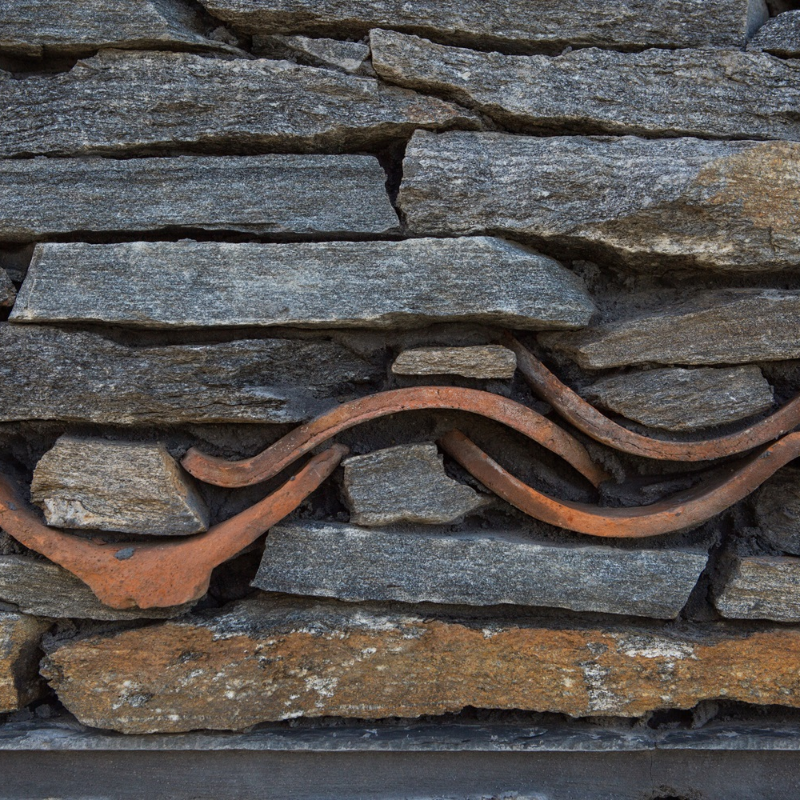
- coherence: the new flood defences visually blend in with the character of the monastery village of Steyl and the existing green dykes;
- viewed from the river, the flood defences and layout of the public space are in balance with the scale and character of the Meuse landscape;
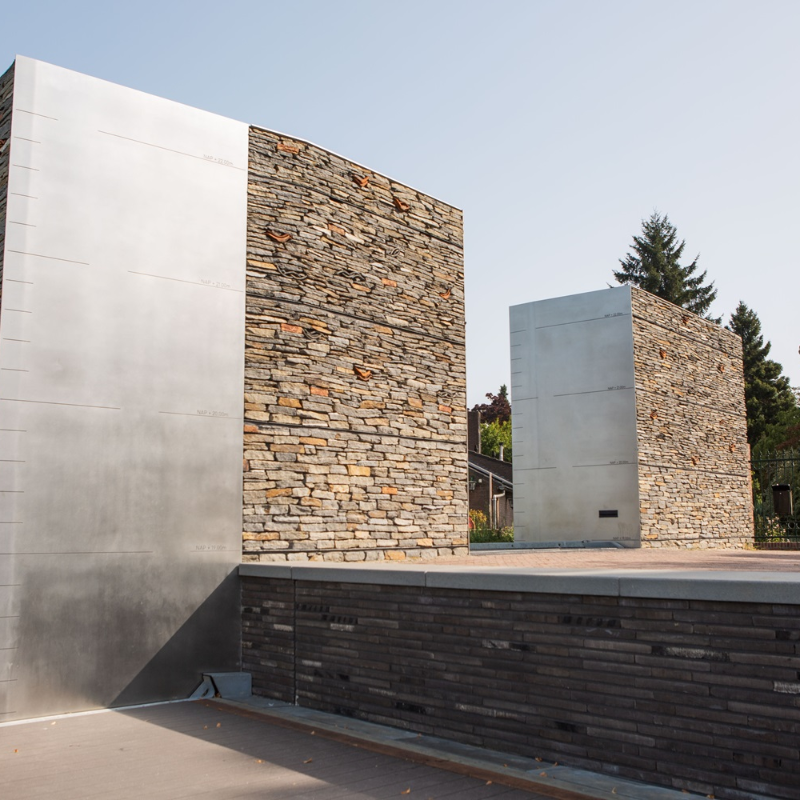
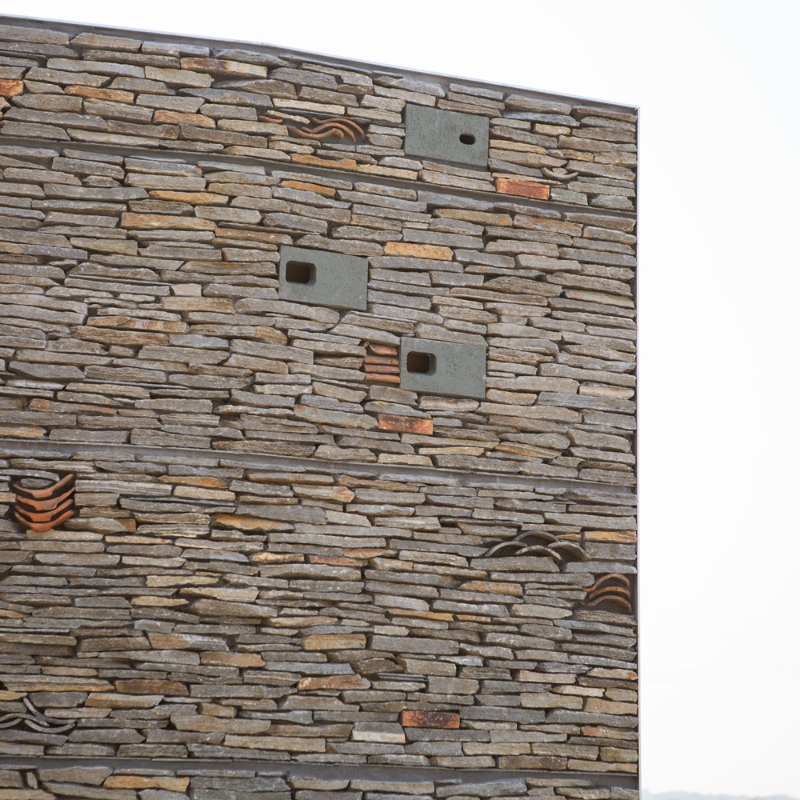
- on the inner dike side, the flood defences and layout of the public space match the character of Steyl as a tranquil monastery village with cobbled streets and brick garden walls;
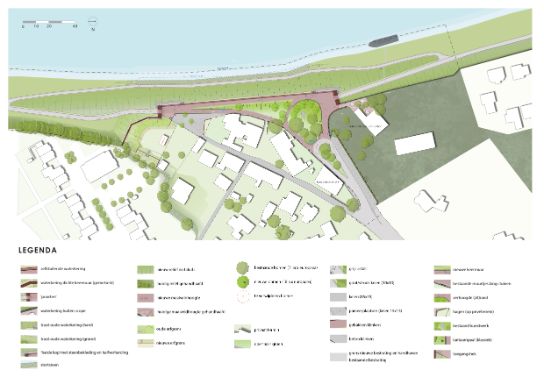
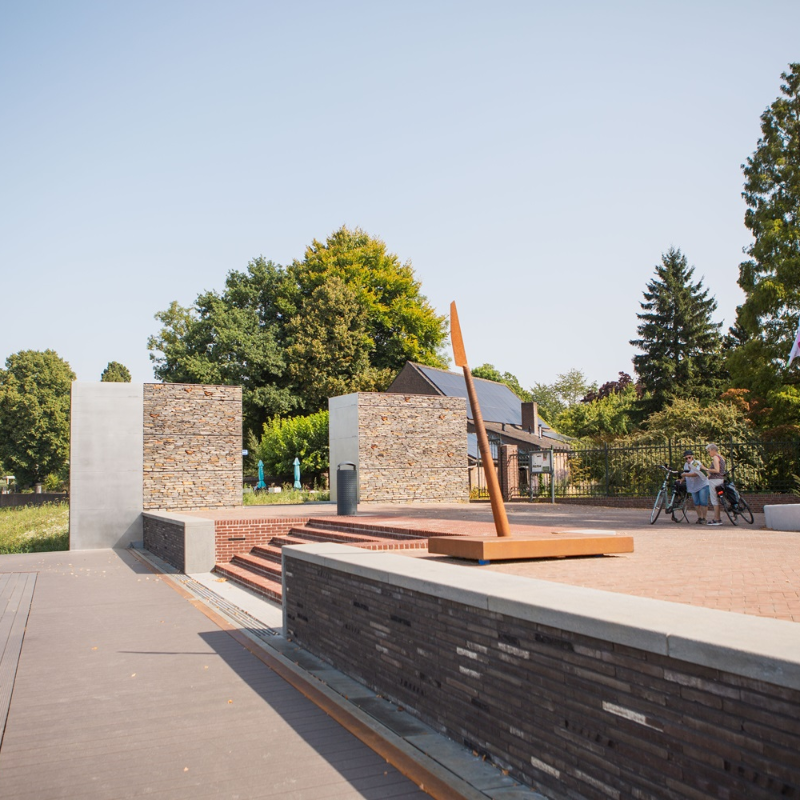
- new flood defences used as accents: two ‘gates’ mark the transition between the inner and outer dykes, as well as the transition between the self-closing flood defences and the permanent flood defences.
Improving the quality of life
Witteveen+Bos, Michel Heesen architectuur and H+N+S have also focused on the details to make ‘the balcony on the Meuse’ a pleasant place to be. The square is welcoming to pedestrians and cyclists: parking spaces and car traffic have been moved to the “flanks” of the square.
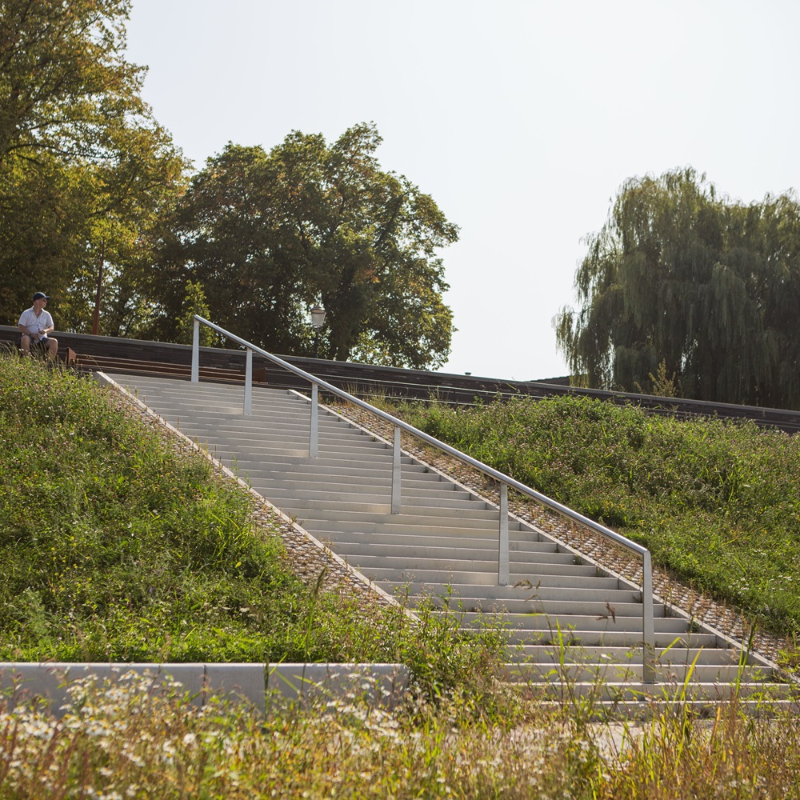
The main cycle routes run from Maasstraat under two gates. By also creating a connection outside the dykes, a triangle of cycle routes has been created. The park itself is greener, larger and has been given an even stronger identity. A natural integration of the ground level elevation has been achieved with a green embankment along the barrier.
Participation
The creation of a pleasant public space (spatial quality), water safety requirements and technical parameters have been jointly defined as core values. This ensures a process that strives to achieve a balance between utility value, experiential value and future value. Through discussions with local residents and stakeholders, additional ideas for the design of the public space have been explored and compiled.
This basis of equality transcends ‘fitting in’ spatial quality within a technical solution or adding 'design’. The result is a design that offers the contractor clear starting points for innovative implementation.