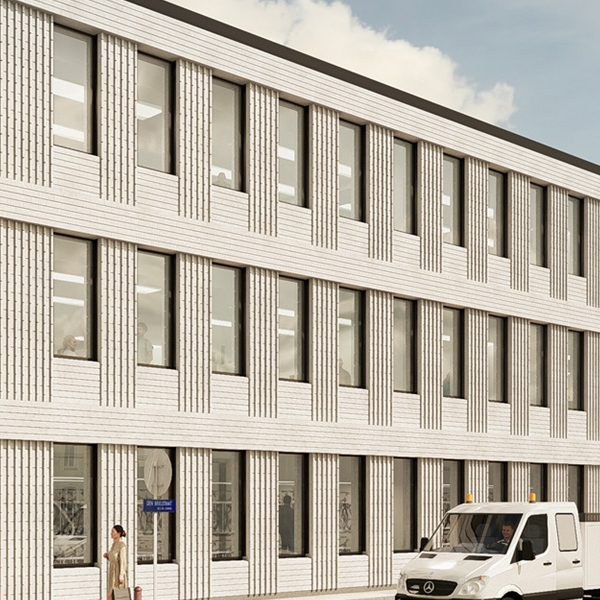
Circular municipal depot on Den Brielstraat
Harvested from former depot and residual material from Leidsche Plein
Circular municipal depot on Den Brielstraat
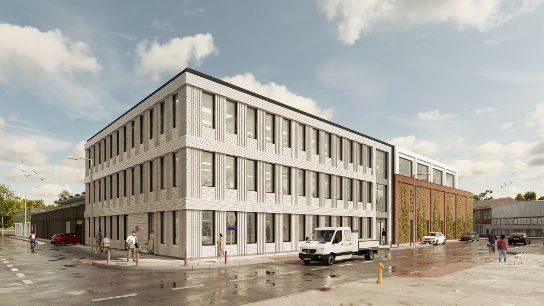
The municipal depot on Den Brielstraat is one of the new construction projects in the City of Amsterdam's ‘Transition depots and transfer points’ programme. Witteveen+Bos designed the building, the site and part of the quay. The focus was on smart use of space, efficient business operations and future-proofing. The municipal depot houses the Enforcement and Supervision Department (THOR) and the Public Works Department, which is responsible for maintaining green spaces, public spaces, tunnels, bridges, locks and quays.
Safe and functional
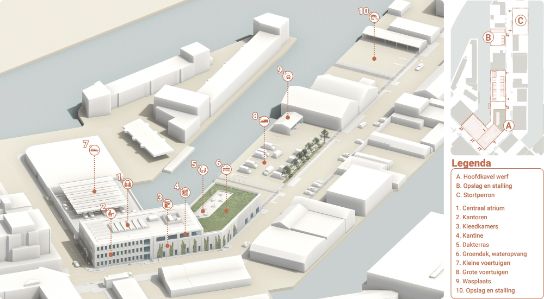
On the compact main plot, the building, site and quay have been designed with explicit attention to safety and short walking distances. Small vehicles are parked under and on the parking deck, right next to the entrance. On the ground floor near the reception desk and warehouses and on the first floor near the changing rooms. The large vehicles are parked on the other side of the building, next to the washing areas. Storage and parking spaces that are used less frequently are provided on a more distant plot, as is the tipping platform. Public and private accesses are separated, as are various transport flows.
The plinth of the building is an extension of the yard with warehouses, storage and workshops. All workshops are located in the main building, so that employees can use the facilities (canteen, changing rooms) and so that the civil engineering workshop can be supervised from the adjacent workplaces at height.
Atrium as hub
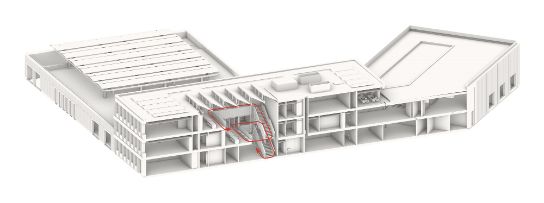
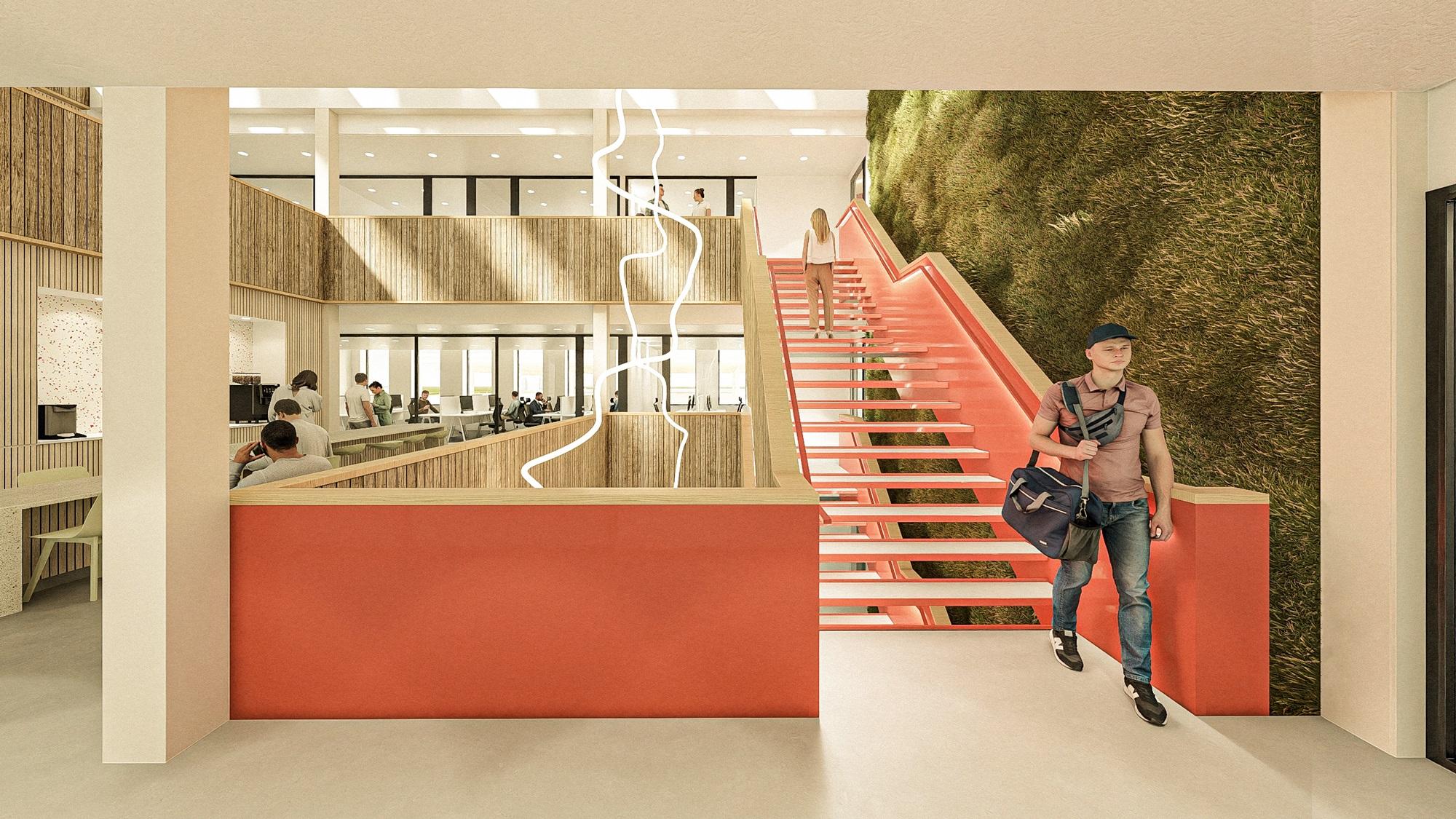
The atrium is the hub of the various functions housed in the building. Access from the public space, the work yard and the parking deck are centrally located here on the ground floor and first floor. Short walking routes and long sightlines have been designed from this centre. The central open staircase, lift and toilets are strategically positioned at the transition between office and field service functions.
Terraces for meeting
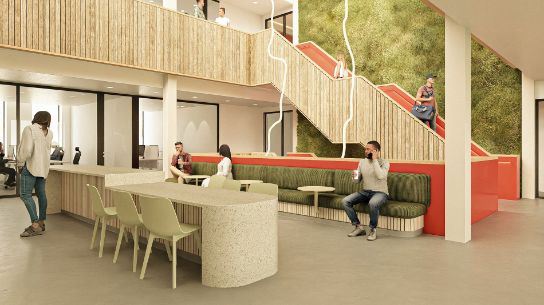
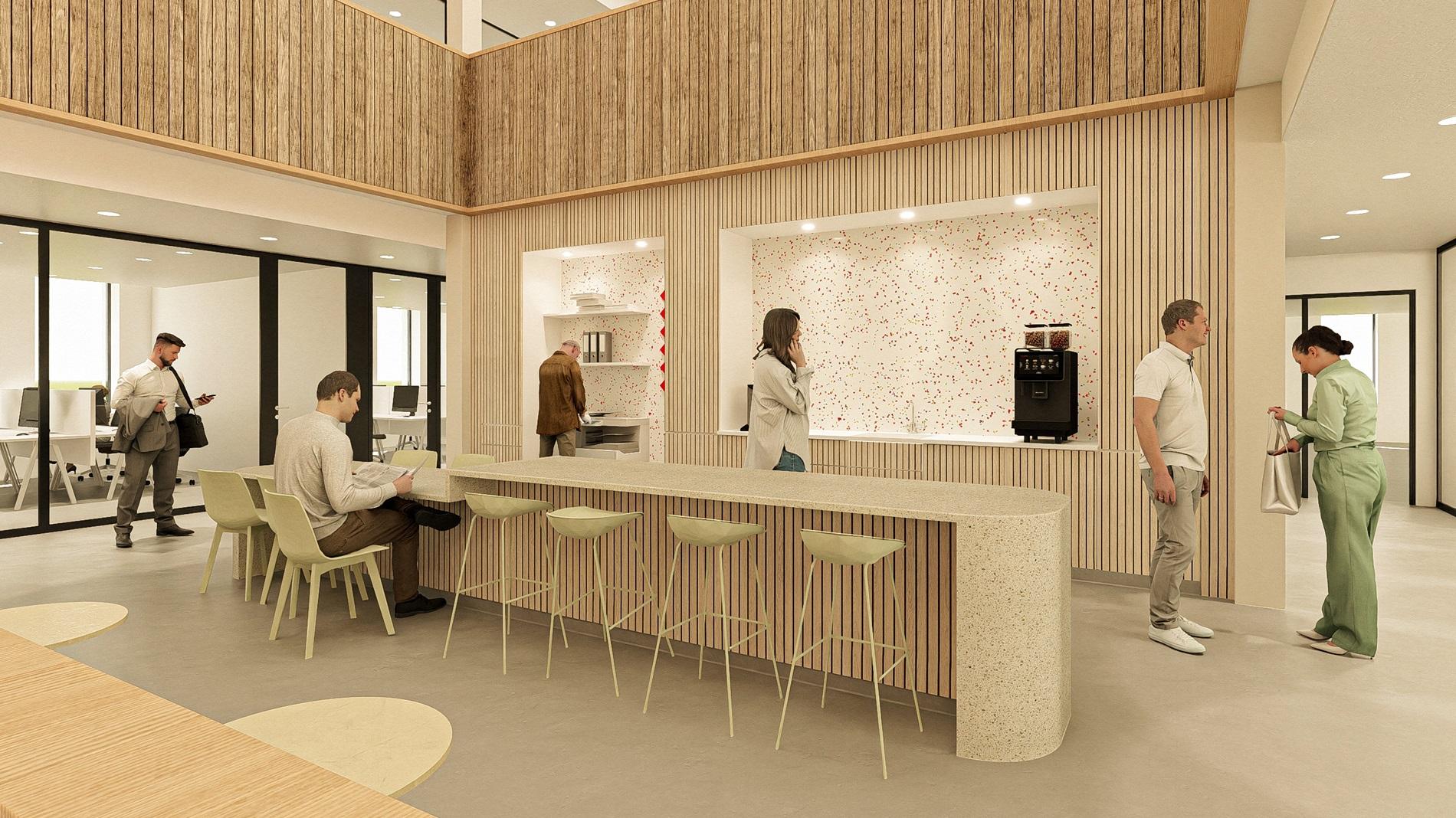
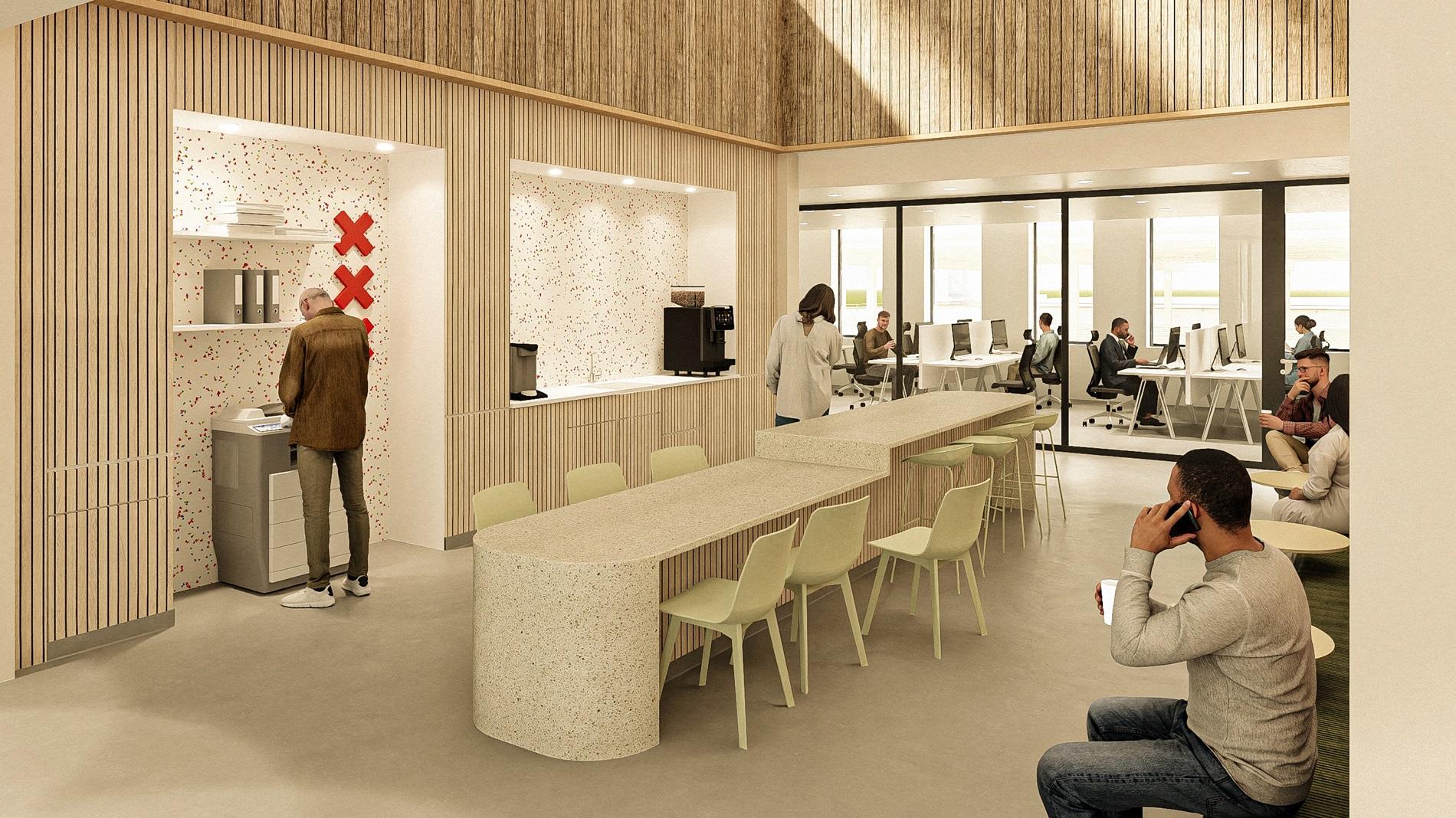
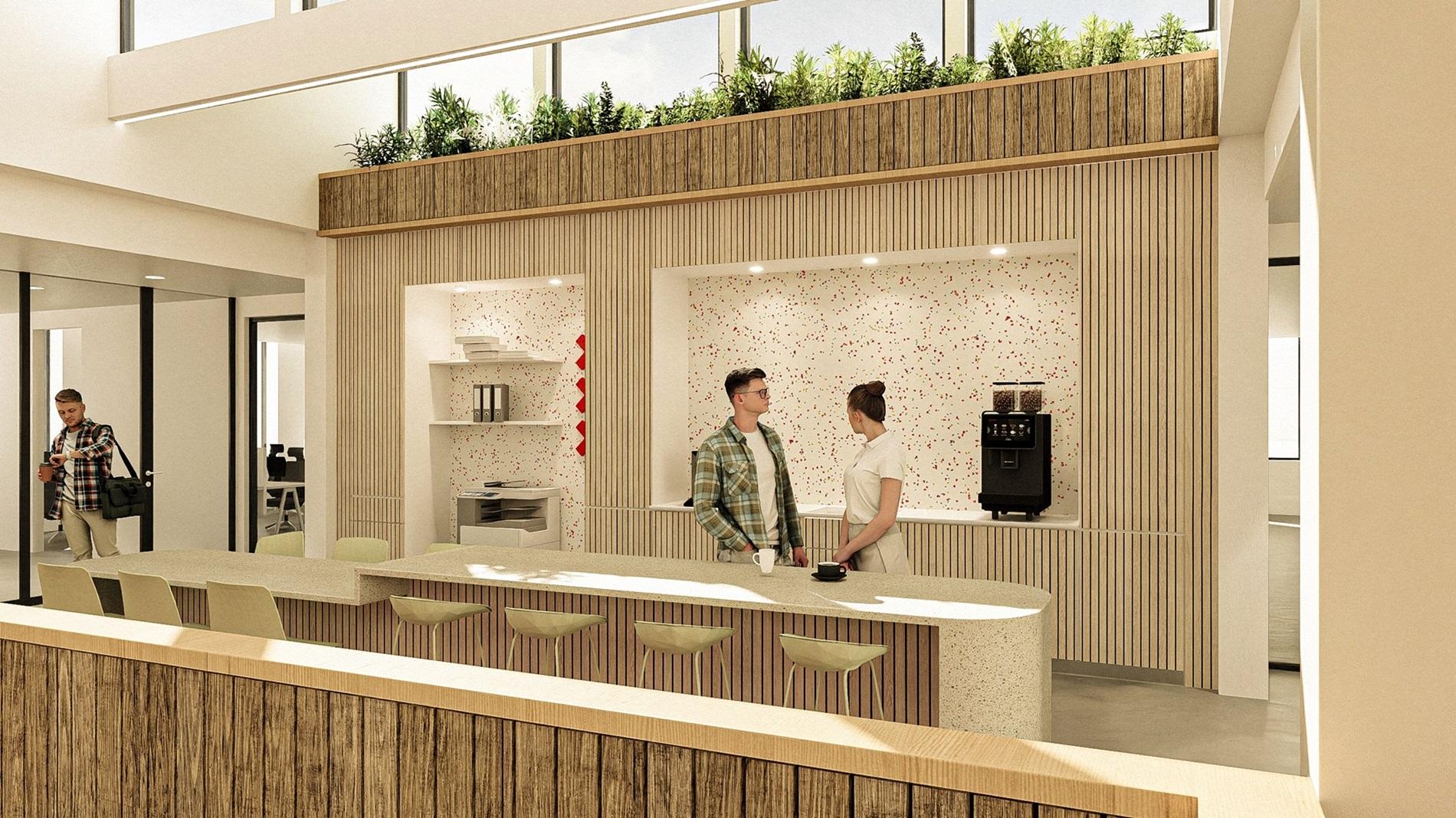
The central atrium is also the social heart. It physically and visually connects the various functions and departments. It provides orientation and encourages movement and (informal) meetings. The stepped shape opens upwards. Kitchenettes on the “terraces” facilitate social cohesion and information exchange between users.
Comfortable and sustainable
On the upper floors, the office workspaces are organised in a ring around the atrium with daylight on two sides and a view of the meeting places in the atrium. The sawtooth roof brings indirect daylight from the north deep into the building and blocks direct sunlight from the south. The cores in the middle are used for functions that do not require daylight or where people only stay for a short time. Optimal daylight reduces energy consumption for lighting.
In addition, the compact building shape, high-quality insulation and centrally positioned installations (with short pipe runs) minimise energy and material consumption. To further reduce energy requirements, parapets have been chosen where the façade can be optimally insulated, while daylight enters deep into the building. The deep recesses of the windows contribute to reducing the cooling load with their sun-shading function.
Circular use of materials
Reused materials were chosen for both the construction and the façade finish. First, we looked at which materials from demolition or residual waste could be reused. New materials with a high degree of reusability at the end of the building's life were then selected. The construction consists largely of steel columns and beams from the current shipyard that have been reused and bio-based wooden hollow core slabs.
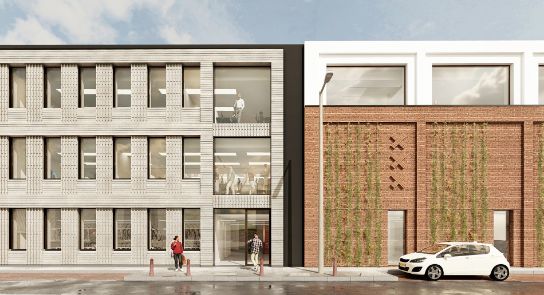
The façades use leftover natural stone from the redevelopment of Leidse Plein, as well as steel cladding from the current shipyard. The warm red colour of the brick façades references the industrial buildings in the immediate vicinity. Here too, circular materials are the starting point, through the use of reused facing bricks.
Ecological and climate-adaptive
The green façades contribute to biodiversity and reduce heat stress. The green roof on the workshops has crates under the substrate that retain rainwater, so that it can be drained slowly during peak showers.
The canopy above the parking deck reduces heat stress and has PV panels that provide the site with sustainable energy. Bat boxes have been integrated into the south side of the building. This zone offers ecological potential due to its proximity to water and different façade orientations, allowing bats to move to warmer or cooler façades.
More information