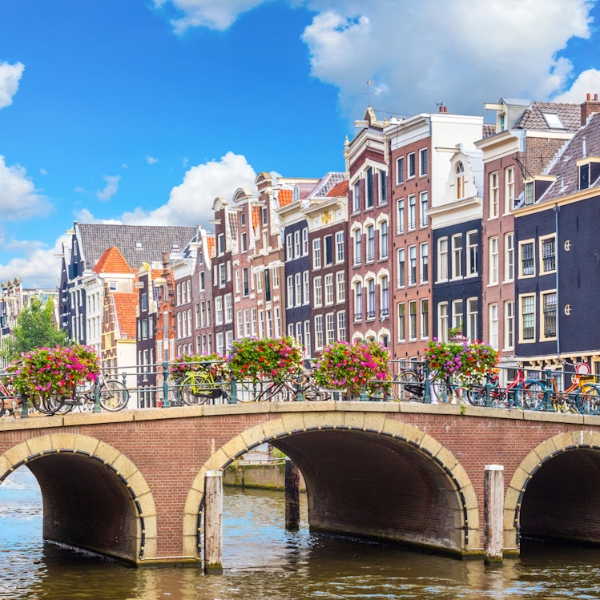
National Heath Conference 2025
Collaborating for the energy transition
National Heath Conference 2025
Welcome to Witteveen+Bos! We are delighted that you have found the time to visit our website after attending the National Heat Conference.
Below you will find more detailed information about the services we highlighted during the congress. Click on the link to go directly to the expertise you are interested in.
Would you like to know more or discuss a specific issue? Please contact the specific domain expert.
Go directly to:
Plan-MER for the heating programme
For many local authorities with concrete heating plans, a plan-MER is a mandatory part of the heating programme. A plan-MER ensures that environmental sensitivities are added as decision-making information.
Witteveen+Bos supports municipalities in researching and developing the (environmental impact) report by combining knowledge of heating, the environment and socio-economic issues. ‘An integrated view of the heat transition is important. This allows you to develop a heat programme that is in balance with the various urban sustainability challenges,’ emphasises Anika Steenstra, heat transition advisor.
NRD for Rotterdam heat programme
Witteveen+Bos has recently been working on the Scope and Level of Detail Memorandum (NRD) for Rotterdam's 2026 heat programme.
The municipality of Rotterdam has decided to broaden the plan-MER and also to investigate environmental factors in an Environmental Impact Report (OER).
This means that, in addition to environmental impacts, social and economic impacts will also be taken into account for the Heating Programme. The NRD is a first step towards a detailed heating programme. It describes the approach to the environmental study.
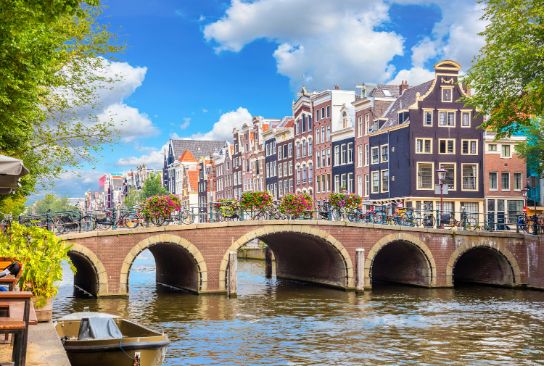
Balanced approach
Witteveen+Bos supports municipalities in their research by combining knowledge of heating, the environment and socio-economic themes. This ensures an approach that is balanced with various urban sustainability challenges.

Making social real estate more sustainable
Local authorities and social real estate owners have a key role to play in accelerating the energy transition. Witteveen+Bos provides support in making strategic choices and realising concrete, future-proof solutions.
To ensure that making social real estate more sustainable is clear, feasible and affordable, we bring user experience, technical feasibility, regulations and financial possibilities together in a single plan.
“Examples include investigating connections to collective heating networks, combining climate-adaptive and circular measures, or mapping out the situation,” explains expert Dirk-Jan Medendorp.
Integrated approach
Our approach is always integrated: we bring user experience, technical feasibility, regulations and financial possibilities together in a single plan. The focus is on choosing the right route to sustainable heating: clear, feasible and affordable.
Local and national ambitions
We advise on identifying sustainability measures, choosing the right strategy and making optimal use of natural maintenance moments. In doing so, we take into account local and national ambitions, such as achieving CO₂ reduction, natural gas-free real estate and circular construction principles.
We believe that making social real estate more sustainable starts with an integrated vision. Our experts combine in-depth knowledge of building physics – such as thermal principles, energy flows, (day)light and acoustics – with high-quality expertise in the field of mechanical and electrical installations.
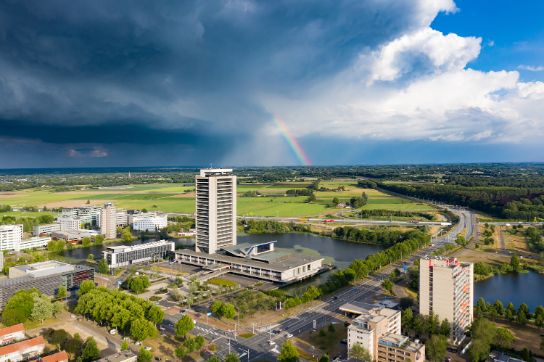
Flexible response
This enables us to design buildings that are not only energy-efficient and comfortable, but can also respond flexibly to new heat sources, such as sustainable heat networks and all-electric solutions. Together with our clients, we are building a future in which social real estate is a model of sustainability, innovation and comfort.

Neighbourhood implementation plan: achieving natural gas-free together
To become a climate-neutral society, the Netherlands must become natural gas-free. Local authorities face the challenge of working with residents, based on mutual trust, to find an alternative heat supply. An alternative that is feasible, affordable and comfortable.
‘Developing a neighbourhood implementation plan is, above all, a joint process. It involves residents, housing associations, the local authority and network operators,’ says Casper Hügel, Sustainable Energy Systems Advisor.
Social change challenge
The heat transition is not only a technical issue, but also a social change challenge. The challenge takes place in a dynamic environment. The Netherlands is awaiting the Collective Heat Act (Wcm), the nitrogen crisis is causing delays in construction projects and grid congestion is hampering the large-scale roll-out of heat solutions.
The nature of the challenges and their complexity require a constructive, inquisitive attitude and broad knowledge of various disciplines. When developing neighbourhood implementation plans (WUP), Witteveen+Bos combines its knowledge and experience of heating technologies and community building with that of its partners.
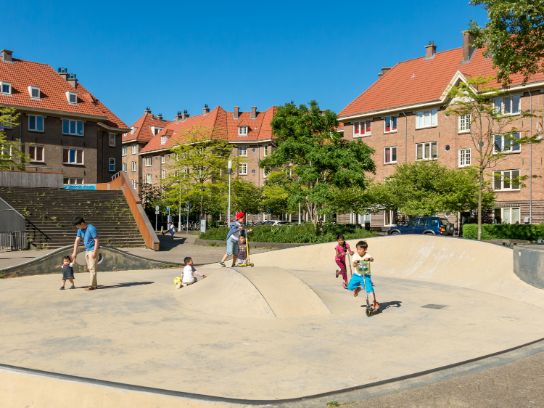
High-quality WUP
This includes engineering knowledge, from building physics to infrastructure and from cost estimates to network impact, as well as expertise from ecologists, process facilitators and specialists in participation, finance and permits. ‘With the right knowledge in the project team, the process, support and quality of the WUP all benefit.’

Design and engineering of heating networks and installations
A heating network is only sustainable if sustainable energy is also used for heat generation. This requires a heating installation. Witteveen+Bos has extensive experience in designing heating installations for companies such as WarmtelinQ and Vattenfall.
The design of heating networks and heating installations brings together many disciplines: in addition to process knowledge, in-depth knowledge of mechanical engineering, piping, electrical engineering, architecture and civil engineering is also required.
Errors in space estimation
‘More than once, errors are made in space estimation, which has a negative impact on costs and realisation,’ says Robert Kools, Energy Systems specialist. The locations for heat networks almost always touch existing urban infrastructure, both above and below ground.
This makes it complex to assess the risks involved in the realisation of a heat network. The result is a high degree of uncertainty and margin in (provisional) cost estimates. ‘With our broad engineering experience, we protect municipalities from setbacks by using technical knowledge for realistic space calculations.’
Detailed experience
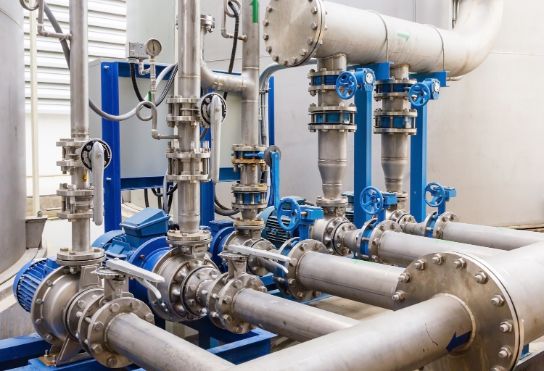
One of the factors contributing to uncertainty is calculating the space required for a heating installation. This is a combination of insufficient insight into which functions are needed (such as pumps, heat exchangers, a peak and backup facility, pressure maintenance facility, heat buffers) and how much space these auxiliary installations require.
Witteveen+Bos has detailed engineering experience, not only in designing the necessary installations, but also in making an accurate early estimate of the space required.
WarmtelinQ and Vattenfall
Our experience includes designing heating installations for WarmtelinQ (Delft pumping station and WOS Leiden) and Vattenfall (De Sleutel and WOS Vondelingenplaat), among others. We also collaborated on the design of the heating station for Gildenwijk in Gorinchem.