E&S Insights Newsletter edition 1
E&S Insights Newsletter edition 1
Welcome to the very first edition of Witteveen+Bos’s E&S Insights Newsletter. The purpose of this newsletter is to inspire, inform, and connect you with the evolving field of E&S (environmental and social) impact assessments, which we are proud to help drive forward.
In this first issue, we would like to share:
- key takeaways from the international AI in Impact Assessment conference in Bologna;
- news on timely E&S project risk management with the ProjectAtlas and our E&S Quick Scan;
- a column on the need for a human touch.
AI in Impact Assessment: highlights from Bologna
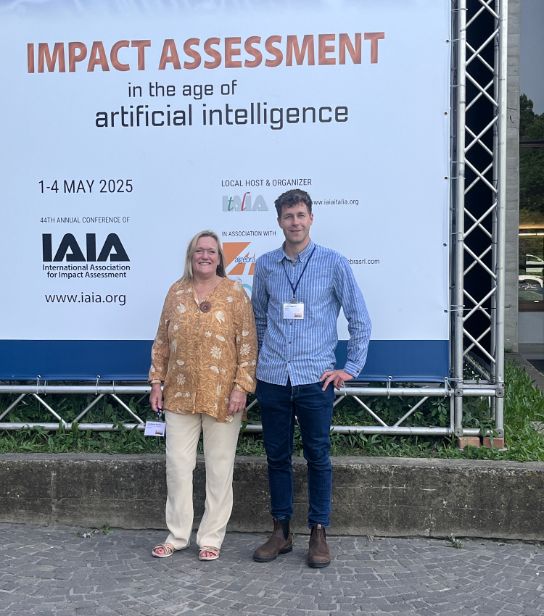
Together with more than 1,000 other professionals from over 80 countries, we participated in the AI in Impact Assessment conference in Bologna, organised by the International Association for Impact Assessment.
Over four days, we explored the evolving role of artificial intelligence in our field, while also sharing our expertise on enhancing impact assessments with digital tools and GIS (Abel) and integrating nature-based solutions into our work (Jacobiene).
At Witteveen+Bos, we are innovating rapidly – by upskilling our people and integrating new solutions into our workflows. Attending this event has strengthened our understanding of how AI can actively and responsibly be leveraged in E&S impact assessments.
We would like to share the following six noteworthy AI-based tools with you.
Six interesting AI-based tools
Ready to use
Malena – Malena is an AI tool designed to assess the quality of environmental impact assessments. It helps generate concise executive summaries, maintain oversight of complex documentation, and conduct systematic quality checks. Malena is currently available free of charge.
Aino World – Aino provides AI-powered analyses of geospatial (GIS) material, enabling users to quickly familiarise themselves with new areas and baseline surveys. Through advanced spatial analytics, this tool makes it possible to quickly obtain a comprehensive understanding of project sites.
Kobo Toolbox – Kobo Toolbox is an open-source platform for data collection, management and visualisation. It is used all over the world for research and socially beneficial activities. With a strong focus on usability and applicability in a diverse range of practical contexts, it is particularly useful for collecting environmental and social field data. This tool is currently free (supported by donations).
Upcoming tools
FAO ESSHub – an online platform being developed by the Food and Agriculture Organization, intended to enable the streamlined creation of baseline reports.
World Bank C-ESRS Assistant – a support tool to help align assessments with new sustainability reporting standards.
ADB tools – the Asian Development Bank previewed several innovations.
ADB Genie is a new geospatial tool, while the MATALAS platform aims to provide additional support to impact assessment professionals.
Column: AI and the need for a human touch
Artificial intelligence has become a clever assistant in many fields, and E&S impact assessment is no exception. Modern AI can scan satellite images, track pollution, analyse census data, and extract insights from reports. This powerful data-crunching muscle can be a useful partner in the early stages of E&S assessments, helping consultants and regulatory agencies deliver fast, data-driven insights.
But in this age of powerful AI, it is important that we continue meeting people face to face – especially those who are directly impacted by a project. During a field visit on one coastal project, for example, consulting with the community revealed that a planned flood barrier would block access to a small fishing inlet essential to local livelihoods.
This insight had not been obtained through satellite data or planning documents; it came from walking along the shore with local fishers. It is these people, the most vulnerable – those whose voices are least likely to appear in official records – who need this human touch the most.
As impressive as AI can be, it is important that we remember what it is and, in particular, what it isn’t. Although AI can offer clarity and efficiency, it has never experienced human connection, and it does not possess the wisdom or empathy that comes from that experience. The most meaningful E&S assessments have always been about more than just numbers and maps – they are about the lives and hopes of the people who are impacted.
The most important social impacts are often deeply rooted and hard to quantify, and sometimes they are only spoken about quietly. They rarely appear in spreadsheets or databases.
How will a planned road change the daily rituals of a local community? What consequences will a new factory have for a sacred area, or for a fishing ground passed down through generations? These questions are not academic; they impact on the core of people’s identities and futures.
As we embrace the speed and scope offered by AI on E&S assessments, let us also remember its limitations. Let us use AI not to replace our human touch, but to enhance it. And let us remember that in the field of E&S assessment, true impact goes beyond data – it’s about applying wisdom.
Jacobiene Ritsema, senior expert Social and Environmental Impact Assessment

Cutting-edge tools and approaches
ProjectAtlas: instantly map E&S data for new project areas
Our all-new ProjectAtlas tool was launched this year. This proprietary internal tool is designed to provide comprehensive insights – at the click of a button – into the environmental and social baselines of new project areas around the world.
As E&S consultants, we often work in new and unfamiliar environments, each time facing unique local realities such as new languages, customs and physical conditions.
To support rapid and effective onboarding in any location, we developed ProjectAtlas.
This platform aggregates dozens of online data sources, including geospatial maps, socioeconomic statistics per country, high-resolution satellite imagery.
And also biodiversity data, demographic information, IUCN datasets, and more.
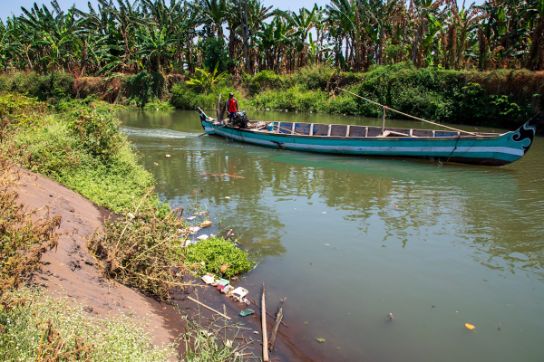
With this cutting-edge tool, we can quickly and thoroughly understand the context of new project areas. This enables us to provide fast, high-quality advisory services regarding local sensitivities and minimise negative project impacts.
ProjectAtlas is also invaluable for due diligence assignments, on which identifying environmental and social risks at short notice is crucial for our clients.
Interested in a demo? Contact Abel to schedule a session and see ProjectAtlas in action!
E&S quick scans for sustainable port development
It is one of our biggest challenges: embedding environmental and social aspects from the start in sustainable project planning. This is also true of the ports sector. Often, the design process is already at an advanced stage before the environmental and social impact assessment begins. But with our E&S Quick Scan, an impact assessment can be conducted in the prefeasibility phase.
The E&S Quick Scan is an agile tool that identifies potential environmental and social impacts early on, providing quick, comprehensive insight at the very start of a project.
Power of the E&S Quick Scan
- Conduct initial investigation into environmental and social context (the baseline)
- Assess triggers and requirements of international E&S standards (such as the IFC Performance Standards)
- Summarise anticipated risks and opportunities
- Deliver actionable, design-related recommendations
Robust E&S risk management
The E&S Quick Scan is a practical, proven tool for ensuring the integration of environmental, social and governance considerations into infrastructure projects. Applying its methodology early on in a project’s life cycle reduces risks, maximises benefits, and brings us closer to truly sustainable outcomes in the ports sector and beyond.
Our tool also aligns with the increasing need for robust E&S risk management to secure project financing from international institutions, obtain local permits, and support sustainable ambitions.
Case study: port project quick scan
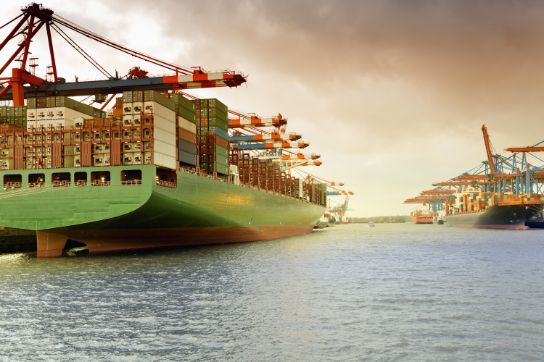
A recent project in the ports sector highlights the value of the E&S Quick Scan. On this project, early analysis identified various red flags, including potential mangrove loss and the risk of reduced income due to overfishing.
At the same time, positive opportunities were identified: improved port safety, economic progress, labour and gender mainstreaming, and options for moving the port to a more sustainable location. The recommendations which resulted included the development of science-based management plans to help prevent excessive and illegal fishing.
Want to know more?